


42 articles
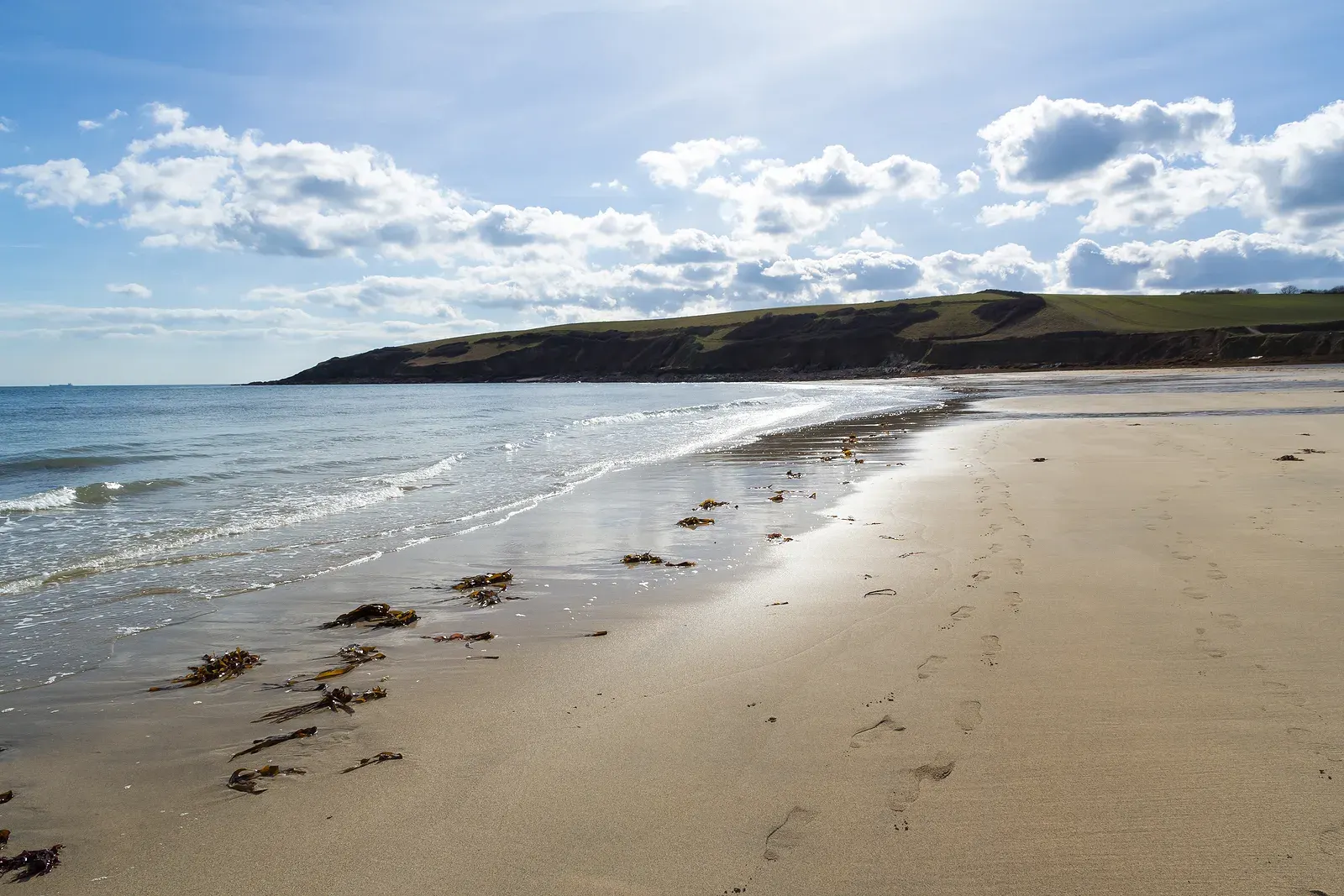
Crantock Beach is a spectacular wide sandy beach near Newquay in Cornwall, best known for its sweeping golden sand, rolling surf, and the winding River Gannel that curves around its edge. It’s particularly popular with surfers, families, dog walkers, and nature lovers looking for a slightly quieter alternative to Fistral Beach.
This guide covers everything you need to know before visiting Crantock Beach — including tides, parking, dog rules, surfing, facilities, and local tips.
At a Glance
- Sand type
- Wide golden sand (huge expanse at low tide)
- Dog rules
- Dog friendly year-round (seasonal restrictions may apply to certain areas)
- Parking
- National Trust car park & Crantock Beach car park
- Best for
- Families, surfers, paddleboarding, walking, nature lovers
- Nearby
- Polly Joke Beach (1.2 Miles), Fistral Beach (1.3 Miles), Towan Beach (1.5 Miles)
Crantock Beach images
Beach Type & Physical Characteristics
Crantock Beach is one of the most scenic beaches in North Cornwall, backed by rolling sand dunes and framed by dramatic headland views towards West Pentire and beyond.1
Is Crantock Beach sandy or pebbly?
Crantock Beach is a true sandy beach with fine golden sand throughout. There are no large pebbles, making it ideal for barefoot walking and children.
At low tide, the beach becomes enormous, stretching for hundreds of metres and connecting visually towards the Gannel Estuary. At high tide, the usable sand reduces but there is still space to sit unless tides are exceptionally high.
What is the sand like?
- Soft, golden sand
- Comfortable for barefoot walking
- Excellent for sandcastles
- Becomes compact and perfect for games at low tide
It’s one of the best Cornwall beaches for traditional bucket-and-spade days.
How do tides affect Crantock Beach?
Tides dramatically transform Crantock Beach:
- Low tide: Vast open sand, rock pools, and easier estuary crossings
- Mid tide: Ideal balance for swimming and surfing
- High tide: Beach narrows; estuary fills quickly
The incoming tide can move fast near the River Gannel channel, so always pay attention to beach safety flags and RNLI lifeguards.2
Dogs
Is Crantock Beach dog friendly?
Crantock Beach in Cornwall is dog-friendly all year round, with no seasonal restrictions on the main beach, making it ideal for, this, pet owners. Dogs must be kept under close control, especially near cliff edges and in the dunes.
Are dogs allowed year-round or seasonally?
Dogs are generally allowed year-round. Early mornings and evenings are particularly popular with dog walkers. Nearby alternatives like Holywell Bay and Perranporth Beach also offer expansive year-round access.3
- Year-Round Access: Dogs are welcome on the sand, , dunes, and the adjacent River Gannel area at all times.
- Safety & Control: The National Trust advises keeping dogs under close control, ideally on a lead, due to steep cliffs, grazing livestock, and potential adders in the dunes.
- Facilities: A nearby café is available, but visitors should bring their own supplies for their dogs, such as water,.
- Beach Access: The beach is popular and can get busy, but offers vast space for walking,.
Swimming, Surfing & Water Safety
Is Crantock Beach safe for swimming?
Yes — when lifeguards are on duty. RNLI lifeguards patrol the beach during peak season (typically spring through autumn, including half term and summer holidays).4
Always swim between the red and yellow flags.
Be cautious near:
- The River Gannel channel
- Strong currents on outgoing tides
- After heavy rainfall
Is Crantock good for surfing?
Absolutely. Crantock is one of North Cornwall’s favourite surfing beaches.
Here’s why:
- Consistent Atlantic swell
- Less crowded than Fistral Beach
- Suitable for beginners and intermediates
There is often a surf school operating during peak season.
Families
Is Crantock Beach good for families with children?
Yes — when lifeguards are on duty and children are supervised.
- Lifeguards: RNLI lifeguards patrol Crantock Beach during the main season (typically spring to autumn, including summer holidays and half term). Always swim between the red and yellow flags.
- Waves: The beach is popular with surfers and bodyboarders, so waves can be stronger than on sheltered coves. On bigger swell days, conditions are better suited to confident swimmers.
- River Gannel: The River Gannel estuary creates currents, especially on an outgoing tide. The channel can shift position, so keep children away from deeper moving water.
- Tides: At low tide, the beach is vast and ideal for play. At high tide, the beach narrows and water reaches the dunes more quickly.
- Sand & space: Soft golden sand and wide open areas make it one of the more family friendly beaches near Newquay.
In short: Crantock Beach is safe for kids in normal summer conditions with RNLI cover — but like many North Cornwall surfing beaches, it requires tide awareness and active supervision.
Accessibility
Is there disabled access at Crantock Beach?
Crantock Beach offers partial disabled access, but it is more limited than central Newquay beaches.
- Parking: Blue Badge spaces are available at the National Trust car park and Crantock Beach car park.
- Access route: The main path to the beach slopes down through sand dunes. It is reasonably wide but becomes sandy and uneven closer to the beach.5
- Surface: There is no promenade, boardwalk, or beach matting. Access onto the main sandy beach is over loose sand.
- Toilets: Public toilets are located near the car park, though accessible facilities may vary seasonally.1
Overall, visitors with limited mobility can reach the upper beach area, but independent access across the sand is difficult without assistance.
Is Crantock Beach suitable for pushchairs and wheelchairs?
Crantock Beach is partly suitable for pushchairs, but less suitable for standard wheelchairs.
- Pushchairs: Larger-wheeled or all-terrain pushchairs can manage the main access path, though soft sand near the beach may require extra effort or assistance.
- Wheelchairs: Standard wheelchairs are likely to struggle on the sandy dune paths and deep sand. An all-terrain or beach wheelchair would significantly improve access.
- Tide impact: At low tide, the firmer, compact sand closer to the shoreline is easier to move across than dry upper sand.
In summary, Crantock Beach is not one of the most accessible beaches in North Cornwall, but with planning, suitable equipment, and assistance, access is possible to parts of the beach.
Is the beach good for walking?
Yes — Crantock Beach is excellent for walking and one of the best coastal walking spots near Newquay in North Cornwall.
- Low tide: Vast stretches of firm, compact sand make it ideal for long shoreline walks. You can walk towards the Gannel Estuary, Penpol Creek, and beneath the West Pentire headland.
- Coastal paths: The South West Coast Path runs above the beach, offering spectacular cliff-top walks with views towards Holywell Bay and beyond.
- Scenery: Sand dunes, river views, and dramatic Atlantic coastline make it one of the most scenic Cornwall beach walks.
- High tide: Walking space reduces, but dune paths and headland trails remain accessible.
Crantock Beach is particularly popular with dog walkers and early-morning walkers looking for quieter conditions and panoramic sea views.
See: Best Walks in Cornwall: Local’s Guide to Coastal & Countryside
Facilities & Access
- Parking: National Trust car park and Crantock Beach car park are the main parking options. Spaces fill quickly in summer and during half term, often by mid-morning.6
- Toilets: Public toilets are located near the main car park. Facilities may vary seasonally, so check opening times when visiting.
- Disabled Access: Access to the beach is via sandy, sloping dune paths. Blue Badge parking is available close to the entrance, but full access onto the sand is limited due to soft terrain.
- Food & Drink: A seasonal National Trust café, ice cream options, and nearby pubs and cafés in Crantock Village provide refreshments. Expect queues during peak summer periods.6
- Beach Access: Entry to the beach is mainly through sand dunes from the car park. The South West Coast Path runs above the beach, offering alternative walking routes with views over the coastline.
Things to Know Before Visiting
Crantock Beach is one of the most scenic natural beaches near Newquay in Cornwall, but it is a tidal Atlantic coastline that requires some planning. The beach is famous for its wide golden sand, dune-backed shoreline, and the estuary of the River Gannel. Visitors should pay close attention to tides, parking availability, and wind conditions to make the most of their visit.
- The beach changes dramatically between low tide and high tide.
- Some walking and play areas disappear when the tide rises.
- Rock pools and estuary channels are exposed at low tide.
- Parking in the National Trust car park often fills early in summer.
- The best beach experience is usually at mid to low tide.
- Winds from the east or south-east often create cleaner surfing and water conditions.
- The sand dunes behind the beach are environmentally sensitive — please stay on designated paths.
- The channel near the estuary can move position, so supervise children near moving water.
- Seasonal RNLI lifeguards patrol during peak visitor months for safety.7
- The beach is a popular spot for surfers, walkers, and families seeking a quieter alternative to nearby beaches such as Fistral Beach.
Best Time to Visit
Best month: June or September (warm but quieter)
Best tide: Mid to low tide
Best wind direction for surfers: East or south-east
Quietest times: Before 9am or after 6pm
Evenings here are magical, especially when the sun sets behind West Pentire.
What the Locals Say
Locals love Crantock because it feels wilder than Newquay’s central beaches. The sand dunes give it a natural feel, and the River Gannel makes it unique among Cornwall beaches.
It’s often described as:
- “Fistral without the crowds”
- One of North Cornwall’s most beautiful beaches
- A favourite for paddleboarding and kayaking on calm days
Final Verdict
Visit if you want:
✔ A wide sandy beach
✔ Family friendly space
✔ Surf without intense crowds
✔ Scenic dune-backed coastline
✔ Dog friendly year-round access
Skip if you want:
✘ Flat promenade access
✘ Urban facilities
✘ Guaranteed easy wheelchair access
Crantock Beach is one of the best beaches in Cornwall for combining natural beauty, surf, estuary adventure, and traditional seaside charm.
See: Best Beaches in Cornwall – The Ultimate Guide
Article Sources
- Visit Cornwall (2026) Crantock Beach. Available at: https://www.visitcornwall.com/things-to-do/beaches/crantock-beach (Accessed: 4 March 2026). Visit Cornwall[↩]
- Explore Cornwall (2026) Crantock Beach & The Gannel. Available at: https://explorecornwall.uk/beach/crantock-beach/ (Accessed: 4 March 2026). Explore Cornwall [↩]
- National Trust (2026) Visiting Crantock Beach with your dog. Available at: https://www.nationaltrust.org.uk/visit/cornwall/crantock-beach/visiting-crantock-beach-with-your-dog (Accessed: 4 March 2026).National Trust[↩]
- RNLI (2026) Crantock Beach – lifeguarded beaches. Available at: https://rnli.org/find-my-nearest/lifeguarded-beaches/crantock-beach (Accessed: 4 March 2026). RNLI [↩]
- AccessAble (2026) Crantock Beach – accessibility guide. Available at: https://www.accessable.co.uk/national-trust/access-guides/crantock-beach-national-trust (Accessed: 4 March 2026). AccessAble [↩]
- National Trust (2023) Visiting Crantock Beach. Available at: https://www.nationaltrust.org.uk/visit/cornwall/crantock-beach/visitor-information-crantock (Accessed: 4 March 2026). National Trust[↩]
- Visit Newquay (2026) Crantock Beach – TR8 5RN. Available at: https://www.visitnewquay.org/things-to-do/crantock-beach-tr8-5rn-p470203 (Accessed: 4 March 2026). Visit Newquay[↩]
- National Trust (2025) Safety at Crantock Beach. Available at: https://www.nationaltrust.org.uk/visit/cornwall/crantock-beach/beach-safety-at-crantock-beach (Accessed: 4 March 2026). National Trust
Frequently Asked Questions
Crantock Beach is located near Newquay in Cornwall. The easiest route is driving to Crantock village, then following signs to the National Trust car park or Crantock Beach car park, both about a 10–15 minute walk from the sand through dunes.
Yes. Crantock Beach is a popular spot during July and August, especially on sunny weekends and school holidays such as half term. However, it is usually less crowded than nearby Fistral Beach.
The quietest times are early morning (before 9am) and evening (after 6pm) in summer. Midday to mid-afternoon is the busiest period.
Both are quiet, but early morning is usually the calmest with fewer visitors, softer light, and better walking conditions along the sand and near the River Gannel.
Yes. Parking is available at the National Trust car park and the Crantock Beach car park. Spaces often fill by 10am in summer.
Yes. A seasonal National Trust café operates near the car park offering snacks, drinks, and ice cream, though queues can form on busy summer afternoons.
Yes — Crantock Beach is generally dog friendly year-round, with only small seasonal summer restrictions in some areas.
Yes. Pubs and cafés are available in nearby Crantock Village, a short walk from the beach.
Yes. Public toilets are located near the National Trust car park, though some facilities are seasonal.
Yes. Crantock Beach is one of North Cornwall’s best natural beaches, offering golden sand, dunes, surfing, walking and family friendly space in a scenic setting.
Written by
Rob has a background in publishing. After a 15-year stint in London and travelling the world, he returned to Cornwall to throw down roots. Fuelled by an insatiable appetite for knowledge and projects, he craves Cornwall, ribs Devon and deploys a strict ‘jam first’ policy!
42 articles published on Cornwall.co.uk
Read more from Rob →


Comments
No comments yet — be the first to share your thoughts.
Leave a comment
Your email won’t be published. Comments are checked before they appear.