

35 articles
St Austell’s not here to perform for you. It gets on with its day – deliveries in the square, people ducking into cafés between errands, buses sliding past the market house – whether you’re watching or not. The hills around it hold the pale scars of the china clay mining that changed the landscape, and just beyond are gardens, bays, and harbours that feel like a reward for looking further. You can arrive thinking it’s a stop on the way to somewhere else and leave with a head full of odd details – the way the light hits the rooftops after rain, the sudden smell of the sea on a warm afternoon, or the fact that half the locals seem to know exactly where you’ve just been.
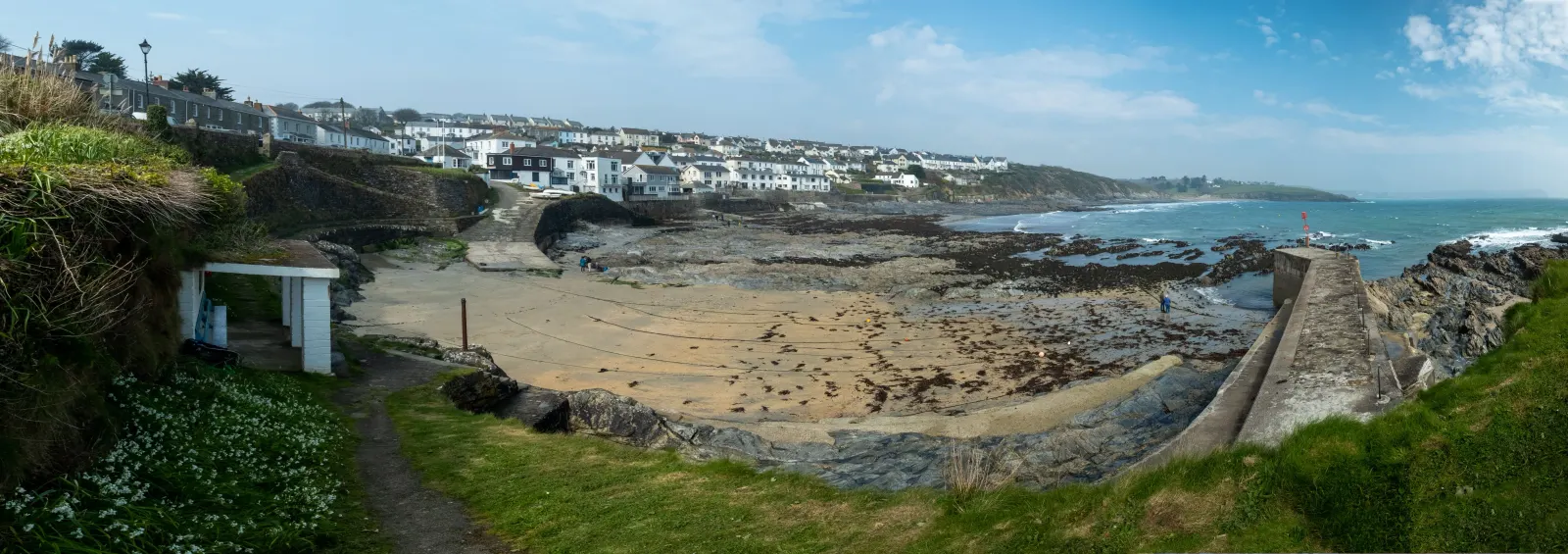
St Austell images
Things to See and Do in St Austell
You can fill a day here very easily, and not just because the hills will work your legs if you let them. The town has its landmarks – some grand, some less so – and just outside are bays, gardens, and old harbours that have starred in films, postcards, and a few people’s holiday daydreams. Whether you’re here for the history, the sea air, or just a slow wander with the occasional coffee, St Austell puts enough within reach to keep you busy without needing a timetable.
Historical Attractions
St Austell has had the kind of past that’s written in stone – literally. If you know what to look for, the town’s history peeks out from behind each weather-worn corner.
Holy Trinity Church: You can see the tower long before you step through the gate, and when you do, it’s worth taking your time. This Grade I-listed church dates to the 13th century, though the tower – faced in silvery Pentewan stone – went up in the late 1400s. Its walls are a gallery in themselves, carved with apostles, saints, and even a striking Trinity group over the Annunciation. Inside, the light catches the stone in a way that makes the centuries seem closer, and it’s one of the few places in the St Austell area where you can stand and take in six hundred years of local life all at once.1
The Market House: Right in the heart of the town centre, the Market House has been part of St Austell since 1844. It was built in a grand Italianate style – all granite and arches – but it’s never been just for show. In its early years, it was the place where locals haggled over produce, argued about bread prices during the 1847 bread riots, and even gathered to hear speeches from political heavyweights like Gladstone and Churchill, and step inside today and you still get a sense of that energy. The vaulted market hall has a soft echo that makes you lower your voice without meaning to, and upstairs the old assembly room feels like it’s waiting for the next crowd to roll in.2
Wheal Martyn Clay Works: If you want to understand St Austell, you have to understand its china clay mining, and this is where you start – Wheal Martyn is the UK’s only museum dedicated to the industry, set on the grounds of a working clay pit. The outdoor trails take you past towering mica drifts and rusting machinery, while the indoor galleries trace the story of kaolin from its discovery in the 18th century to the award-winning ceramics it helped create. It’s industrial heritage you can walk through – sometimes ankle-deep in pale dust – and it gives you a real sense of the scale of clay country.3
Menacuddle Well: A short stroll from the bustle of St Austell town brings you to Menacuddle Well, a 15th-century granite well house in the woods. Locals once swore by its healing powers – arthritis, ulcers, you name it – and it still feels pretty magical, and definitely a place where you wish the stones could talk. The path to the well runs alongside the river, shaded by trees that turn gold in autumn, and the sound of the water spilling from the spout is the kind of small detail you remember long after you’ve left. There’s even a strand of folklore about a “black beast” seen in the area, which feels suitably gothic when the mist hangs low.4
Charlestown Harbour: Less than two miles from the centre, Charlestown is so well preserved it often feels like stepping onto a film set – which is no accident. The harbour, built at the end of the 18th century for the export of copper and later china clay, still houses tall ships and stone quays that have doubled as 18th-century Cornwall in more than one adaptation of Poldark. The old storehouses now hold the Shipwreck & Heritage Centre, which dives into the area’s maritime history, but you don’t need a ticket to soak up the atmosphere – just walk the quay wall on a still evening and you’ll see why filmmakers keep coming back.5
Family Activities
St Austell doesn’t just keep the grown-ups entertained – it’s the sort of place where children end up discovering things you didn’t even plan for. One minute you’re watching them dash across a sandy bay, the next they’re peering into a Victorian tunnel or convincing you that, yes, a second ice cream really is a cultural necessity. Between the beaches, the big attractions, and the odd surprise tucked away down a side road, there’s plenty here to keep everyone happily distracted.
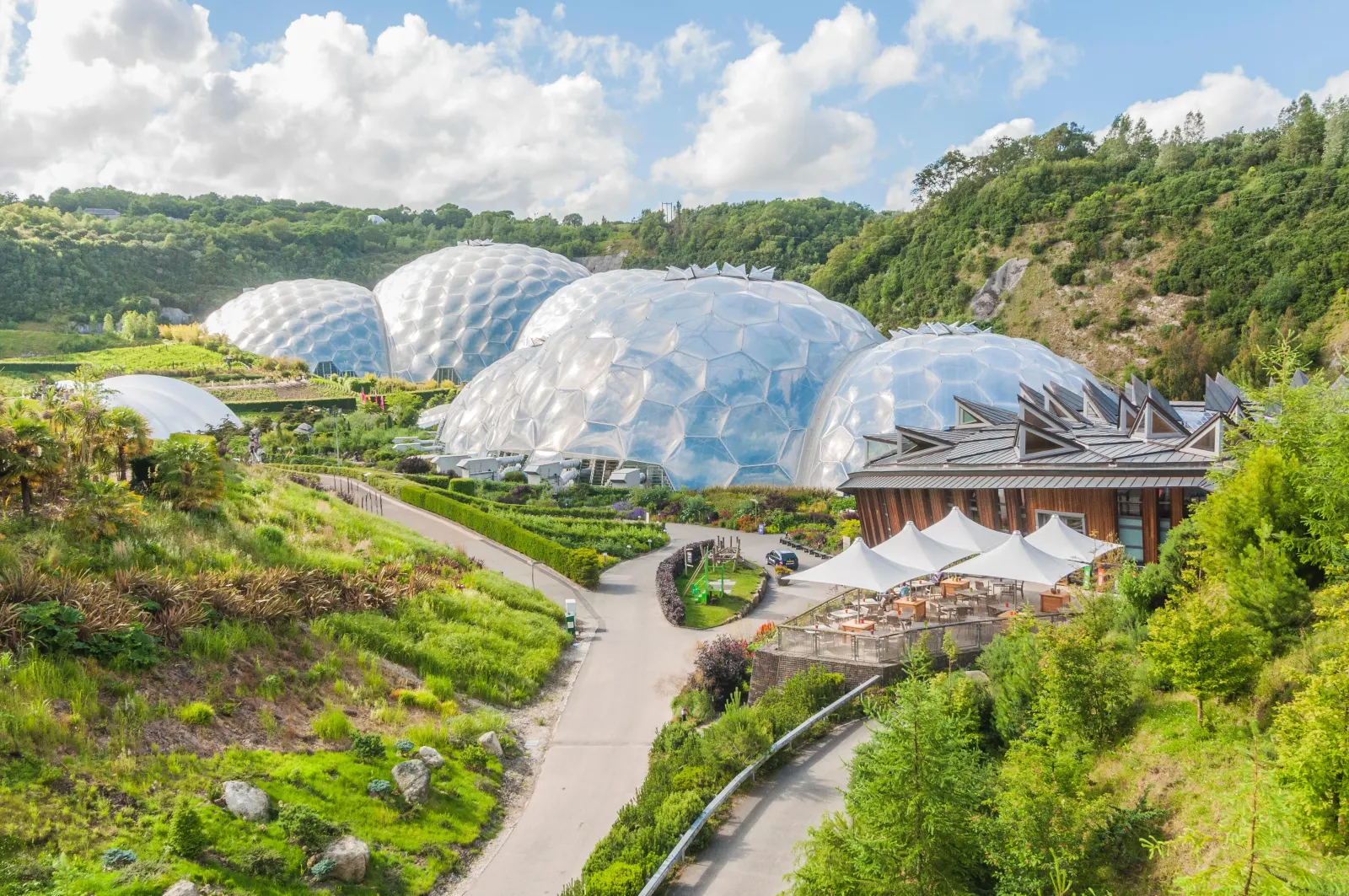
Eden Project: Yes, it’s famous, yes, you’ve seen the photos of this tourist attraction, but nothing really prepares you for the moment those biomes rise up in front of you like giant soap bubbles. The Eden Project6 isn’t just about plants, though the rainforest dome is the closest you’ll get to the tropics without leaving the United Kingdom, it’s about clever, hands-on exhibitions, outdoor play spaces, zip wires, and enough undercover space to keep you happy if the clouds roll in.
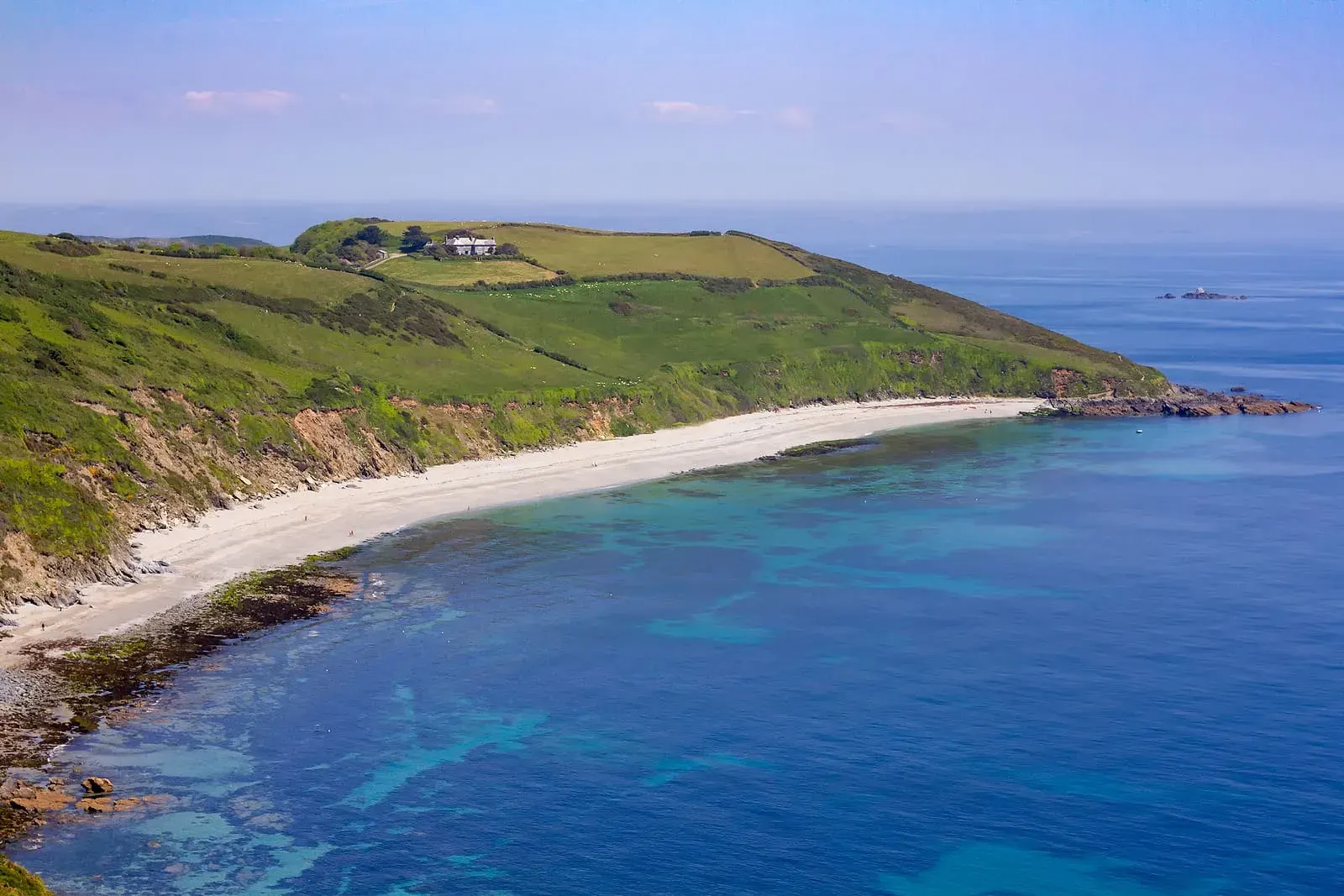
Porthpean Beach: On a calm day, this sheltered cove is as close to a natural paddling pool as you’ll get, and it’s shallow enough that parents can relax a bit. If the tide’s out, the rock pools are an easy win for kids armed with a net and a questionable level of patience.
Kidzworld Adventure Play: Kidzworld7 is not your average soft-play zone. Here you get roller skating tracks, trampolines, indoor slides (four, at least), a “Cannon Arena” with light-up targets, a pirate play zone, dodgems, mini-golf, and even climbing frames. Parents can decide if they want that coffee to come with a side of exhaustion…
Pentewan Valley Trail: If you’ve got older kids or teens to entertain, hire bikes and follow this easy riverside route8 down to the coast. It’s flat, traffic-free, and lined with enough scenery to tempt them into taking the odd break from their phone.
Outdoor Activities
St Austell’s outdoors can be as gentle or as full-throttle as you like – you can sink into a deck chair and watch the tide inch in, or you can be halfway up a cliff path before you realise you’ve left your snacks in the car. Either way, the town makes it ridiculously easy to swap one kind of scenery for another thanks to its beaches, trails, gardens, and a coastline that insists on being photographed.
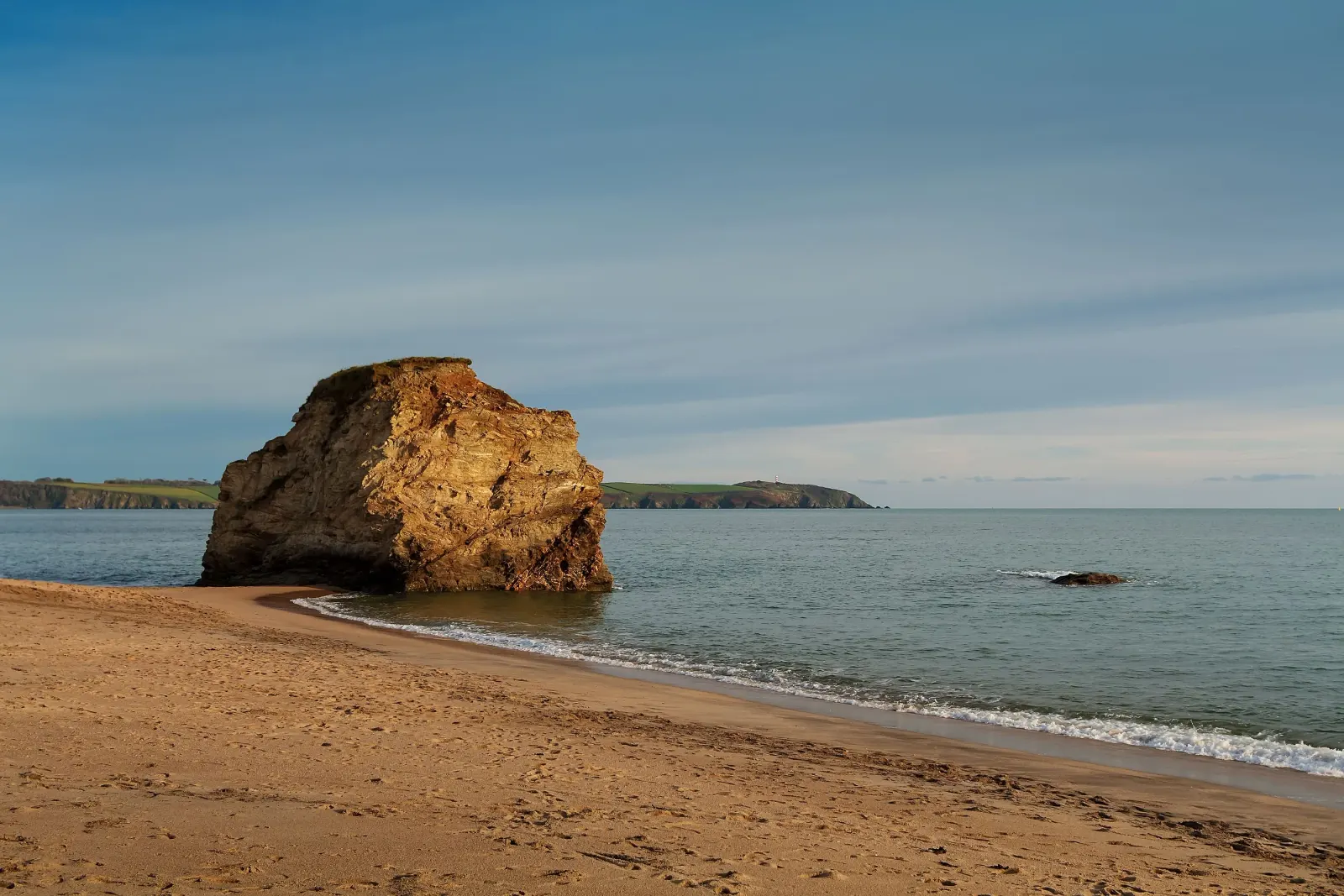
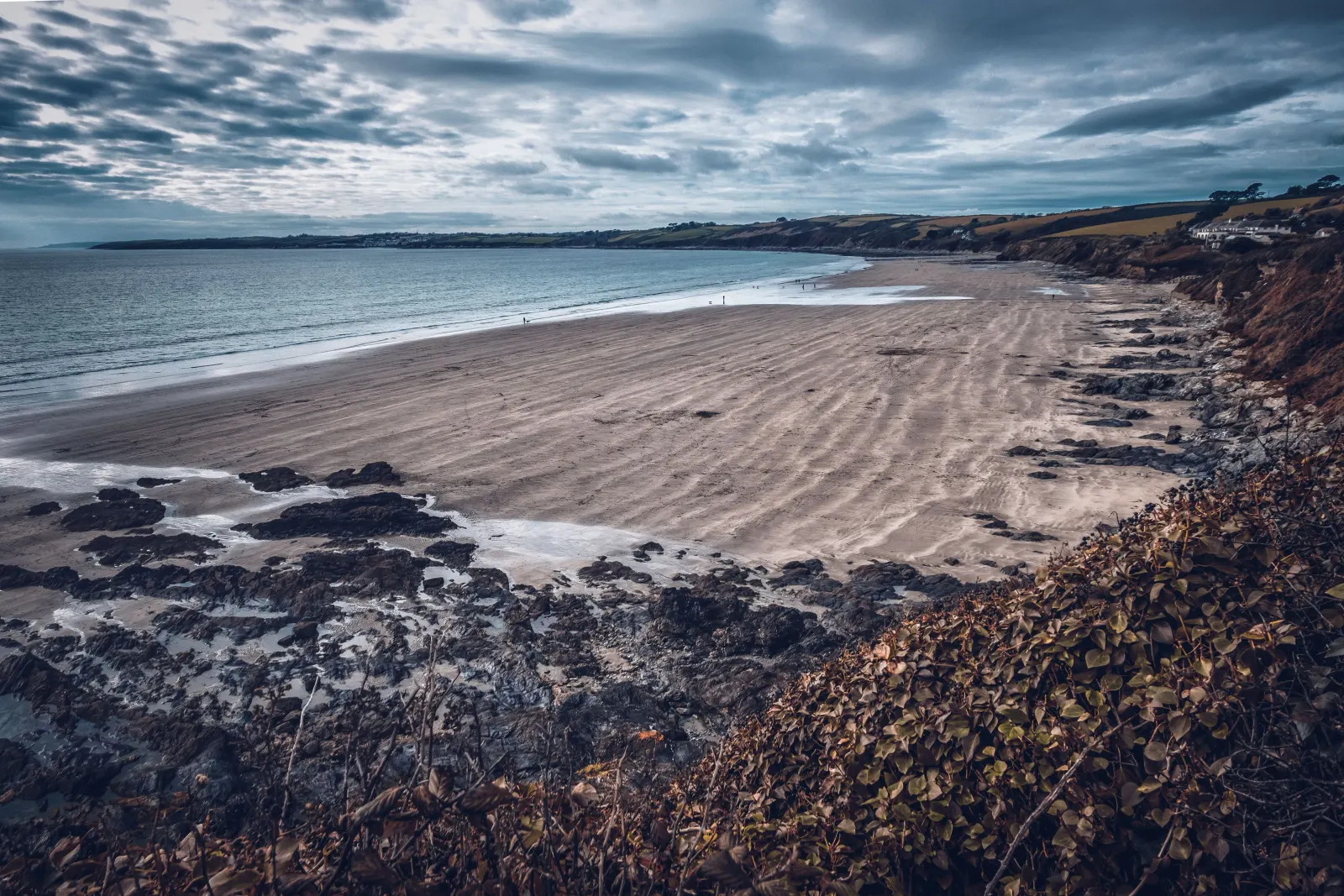
Carlyon Bay: If you like your beaches with a sense of scale, Carlyon Bay delivers. It’s long enough that you can find a quiet patch even in August, and big enough to handle the odd beach volleyball game without someone’s towel becoming collateral damage. See: Carlyon Bay Beach Guide.
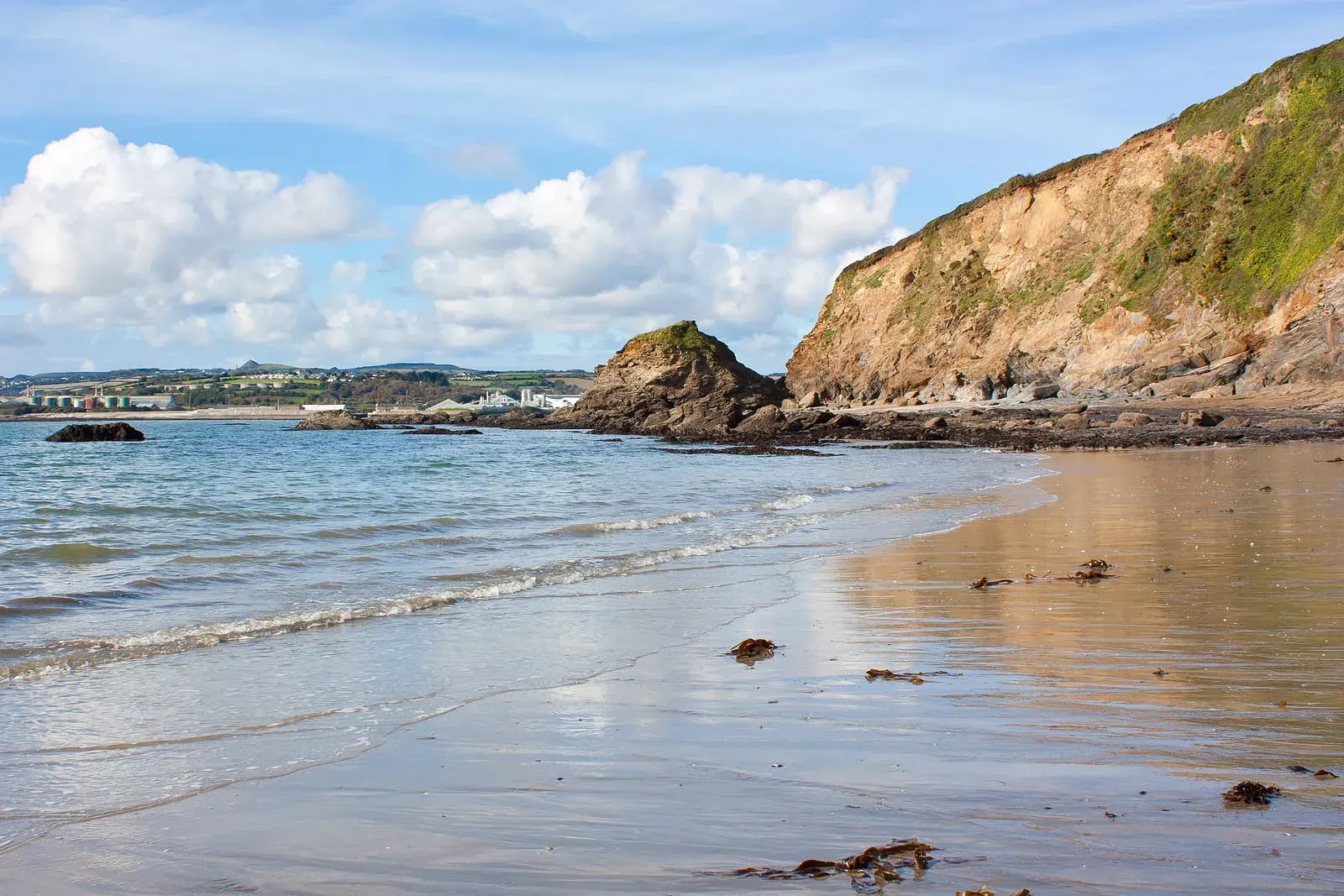
Pentewan Sands: Five minutes from town and you’re staring at a stretch of sand that could easily pass for somewhere Mediterranean – on a good day, anyway. It’s great for swimming, paddleboarding, or just claiming a spot and refusing to move until it’s time for chips.
Clay Trails: These walking and cycling routes take you straight through Cornwall’s industrial heartland – the china clay industry9 in full panoramic form. The white spoil heaps rise like snow-capped hills, and the air smells faintly mineral if the breeze is right. It’s great for photographers, cyclists, or anyone who likes their exercise with a bit of history on the side.
Porthpean Watersports: Kayaks, paddleboards, and sailing lessons all run out of Porthpean, where the water’s usually calm enough to coax beginners into giving it a go. And if you’re more ‘watcher’ than ‘doer’, the shoreline makes a fine vantage point for supervising with an ice cream.
The Lost Gardens of Heligan: Although not in the town itself, Heligan is bound into St Austell’s story. Once a grand estate garden, it was lost under brambles after World War I, when most of the gardening staff were killed in the trenches. It lay hidden for decades until its rediscovery in the early 1990s, when a massive restoration brought it back to life. Now it’s a living record of Victorian horticulture – walled gardens, subtropical ferns, and those famous “Mud Maid” and “Giant’s Head” sculptures hidden among the greenery. It’s a reminder that history isn’t always in stone; sometimes it’s alive and growing, just waiting to be.10
Food and Drink
If St Austell’s history is written in stone and clay, its present is told in pasties, pints, and menus full of the tastiest treats. You’ll find the staples – fish so fresh it still looks a bit surprised, cream teas that could start a Devon–Cornwall debate – alongside the kind of cafés where they remember your coffee order by day two. Whether you’re in the mood for a pint from St Austell Brewery, something sweet after the beach, or a slow dinner with a view of the bay, there’s no shortage of reasons to turn one meal into two.
Cafés and Coffee Houses
You can tell a lot about a town by how it does coffee, and St Austell does it with variety…
The Tall Ships Creamery: If you’re anywhere near Charlestown, you’ll smell the waffle cones before you see them. Yes, the name says creamery, but the coffee here is worth a detour, especially if you pair it with one of their towering sundaes or a slab of locally baked cake, or maybe even a gorgeous Cornwall cream tea.11
Little Bay Café: Just off the town centre, Little Bay feels like it was built for rainy days and second breakfasts. The coffee is strong enough to wake you properly, the toasties have that perfect just-melted middle, and the staff have mastered the tricky art of being friendly without hovering.12
Short & Strong Café: A quick hop to Charlestown brings you to Short & Strong,13 where the espresso really does live up to the name. The interior has a cosy-but-busy hum, and there’s usually someone behind the counter who will slip in a comment that makes you laugh before you’ve even taken your first sip.
The Ark Coffee Shop: Set inside a converted church, The Ark is all soft lighting and the smell of fresh baking, and it’s somewhere you can read in peace or chat away an afternoon without anyone nudging you to order more. The cappuccinos are reliably good, but the lemon drizzle cake is the thing people tell you to come back for.14
Pubs
There’s no shortage of places in St Austell to end the day with something cold in your hand and a plate of something comforting in front of you, and the trick is choosing whether you want harbour views, live music, or just a quiet pint where nobody minds if you’ve got sand on your shoes.
The Rashleigh Arms: A short stroll from the tall ships and cobbled harbour, The Rashleigh Arms15 is the kind of pub that manages to work for both summer evenings and winter afternoons. It serves St Austell Brewery ales, has a menu that’s not afraid of hearty portions, and if you’re lucky enough to bag a seat outside, you can people-watch while the harbour does its slow, timeless thing.
The Western Inn: This one’s for the real-ale fans. The Western Inn16 sits a short walk from the railway station and has the sort of wood-panelled snug you end up claiming for the night. There’s a friendly, lived-in feel to the place with a few locals at the bar, a dartboard in the corner, and a sense that it hasn’t changed much in years (in a good way).
Hewas Inn: This roadside inn has been looking after travellers for over 200 years, and it hasn’t lost the knack. It’s big on local produce, generous Sunday roasts, and friendly service, with a bar that feels like it’s gathered more than a few stories over the decades.17
Breweries and Distilleries
St Austell might feel like it’s tucked between clay pits and coastline, but lift the lid and you’ll find places where spirits are distilled, wine is made from Cornish grapes, and craft ale flows at its source.
St Austell Brewery: This one’s the grandparent of Cornish beer… It was founded in 1851 and still family-run, and when you visit, you can tour the brewery, try a Proper Job IPA or Tribute on tap, and buy locally crafted beer in the shop. Bonus points for the Hicks Bar, where tasting flights feel like a toast to South West tradition.18
Knightor Winery: Just above St Austell Bay, this working winery grows its own vines and turns them into still, sparkling wines and even vermouth. You can pop in for a tasting, book a tour, or join one of their outdoor feasts when the weather is on your side.19
Bosue Vineyard: Near St Ewe, Bosue is a petite family-run vineyard producing artisan still and sparkling wines, along with oak-aged grape brandy. Tuck into a tasting where every drop is made on-site and bursting with Cornish character.20
Farm Shops
If you’ve ever wondered what Cornwall tastes like, farm shops are the place to start, and here in the St Austell area, they’re less about ticking off a shopping list and more about wandering around, spotting something you didn’t know you needed, and leaving with a bag full of it anyway.
Trevithick & Trays Farm Shop & Café: A few minutes out of town, Trevithick & Trays manages to feel homely even on a busy Saturday, and alongside the café’s fresh pastries and lunches, the shop shelves groan with Cornish cheeses, chutneys, local honey, and veg that looks like it actually came out of the ground this week.21
Lobbs Farm Shop: A stone’s throw from Heligan, Lobbs is a family-run shop specialising in meat from their own farm. You’ll also find local veg, dairy, preserves, and a freezer section full of ready-made Cornish meals – handy for self-catering holidays.22
Places to Stay in St Austell
Picking where to stay in St Austell isn’t just about a bed for the night – it’s about deciding which version of Cornwall you want to wake up to. Do you want to open your curtains to the clink of halyards in Charlestown harbour? Or are you more of a “robe, spa, and breakfast I didn’t cook” type? Here’s where you can make that choice, without getting totally overwhelmed.
Expedia.com:
If you’re the sort who wants to compare ten places in five minutes and filter out anything without free car parking or a sea view, Expedia.com will keep you sane. The map tool’s perfect for figuring out if you’re more Carlyon Bay than town centre. Check availability and best prices.
Best Value Hotels:
For a comfortable stay at a reasonable price, St Austell offers a good range of well-rated mid-range hotels—ideal for exploring the town, nearby beaches, and attractions like the Eden Project. Check latest deals & availability.
Boutique & Character Stays:
If you’re after something with more personality, St Austell has a mix of boutique guesthouses, traditional inns, and cosy countryside stays full of Cornish charm. Check latest deals & availability.
Dog-Friendly Places to Stay:
Bringing your dog along? Many stays in and around St Austell are pet-friendly, with easy access to coastal paths, woodland walks, and open countryside. Check latest deals & availability.
Self-Catering & Cottages:
For extra space and flexibility, St Austell’s self-catering options include charming cottages, modern apartments, and peaceful rural retreats nearby. Check latest deals & availability.
Featured St Austell Hotels & Accommodation
Carlyon Bay Hotel:
This is the one for people who think sea views are a birthright. Perched on the clifftop above St Austell Bay, it’s all sweeping lawns, white tablecloths, and that satisfying crunch of gravel under your tyres when you arrive, and the spa is the kind that makes you forget your phone exists, the outdoor pool feels like a holiday postcard, and the golf course is as much about the scenery as the sport. Not cheap, but neither is the view. Check availability and best prices.
The Cornwall Hotel, Spa & Estate:
Here we’ve got a 19th-century manor that’s mastered the art of feeling luxurious without tipping into stiff formality; you can be in the infinity pool one minute, wandering 43 acres of parkland the next. The spa is properly indulgent, the restaurant one you’ll want to go back to, and if you time it right, you can nab a midweek deal that makes you feel like you’ve won something. Check availability and best prices.
Pier House:
This is for those who want to stay somewhere that’s practically a film set, because in Charlestown, it often is. The Pier House sits right on the harbour wall, meaning you can sip your morning coffee while tall ships sway below. Rooms are cosy but modern, the seafood is as fresh as it gets, and the sound of the tide will do a better job of lulling you to sleep than any playlist. Check availability and best prices.
Rashleigh Arms:
If your ideal base comes with a decent pint built in, this is your spot. A St Austell Brewery pub with rooms just steps from the cobbles, the Rashleigh Arms feels like the friendly neighbour who always has something on the stove. Breakfasts are hearty, the beds are made for lie-ins, and you’re a quick stroll from the harbour without paying harbour-view prices. Check availability and best prices.
Pentewan Sands Holiday Park:
This is the “throw the windows open and smell the sea” choice, with beachfront caravans, lodges, and pitches where you can watch the tide without leaving your bed. The facilities are solid (indoor pools, soft play, sports courts), and it’s about as family-friendly as it gets without feeling like a theme park.
Boscundle Manor:
A Georgian manor house that’s more “weekend escape” than “just somewhere to sleep.” There’s a pool, a small spa, gardens for aimless strolling, and the sort of atmosphere that makes you feel like you should have brought a book and left your emails unread. Check availability and best prices.
History of St Austell
Before the Clay: Sacred Wells, Beacon Hills and Quiet Fields
Long before the words “St Austell” meant anything to cartographers, people were up on Hensbarrow Downs, piling stones into one of Cornwall’s largest prehistoric cairns. Centuries later, locals were still making use of it, not to keep spirits happy, but to light beacon fires visible for miles.23 Down in the valley, a granite well-house appeared in the 15th century at Menacuddle Well. Pilgrims once drank its water for healing; Victorians preferred to sketch it from a safe, genteel distance.24
The earliest written mention of the settlement pops up in the 12th century, tied to the parish church of Holy Trinity. The late 15th-century tower – built from pale Pentewan stone and looking far too grand for what was then a sleepy village – still stares down the town centre25
18th–Early 19th Century: White Gold Fever
Fast-forward to the 1740s, and a Plymouth apothecary called William Cookworthy spots something unusual in the hills: kaolin, the mineral that would turn St Austell into the centre of Britain’s china clay industry.26 This “white gold” wasn’t just for fine teacups – it ended up in everything from paper to toothpaste, and by the turn of the century, clay was creating fortunes, reshaping the landscape, and coating laundry in a fine white dust.
Exporting it was another challenge. Enter Joseph Treffry, a man who looked at steep valleys and thought, he could work with them quite happily. And he did. He built Par Harbour (finished in 1840), the dual-purpose Treffry Viaduct in the Luxulyan Valley, and a network of tramways that moved clay from pit to port.26 Meanwhile, Charles Rashleigh developed Charlestown in the 1790s as a purpose-built port – neat Georgian houses for captains, deep-water dock for ships, and just enough ambition to keep the clay flowing.27
Over in Pentewan, a horse-drawn tramway opened in 1829, clattering along to the harbour. It was a good idea until the river silted up and ships couldn’t get in.28
Mid–Late 19th Century: Rails, Markets and Malt
By the mid-1800s, clay money was making its mark on the town, and The Market House opened in 1844, an Italianate pile that Historic England later called “one of the best market halls in the country.”29
The railway steamed in by 1859,30 plugging St Austell into the main line between Truro and Bodmin, and further afield to Penzance, Devon, and the wider South West. This meant faster clay exports, and, for the first time, a trickle of tourists arriving with parasols and time to kill.
One of the town’s great success stories started in 1851 when local wine merchant Walter Hicks brewed his first batch at the Seven Stars Inn. By 1893, St Austell Brewery had moved into a new site, producing beers that would win awards a century later.31
1900–1939: The Riviera Years
By the early 20th century, St Austell Bay was drawing the kind of crowd who travelled with trunks and hatboxes. Carlyon Bay Hotel opened in 1925, serving cream teas to royalty and politicians alike, and Porthpean and Duporth were the beaches of choice for locals, while day trips to Mevagissey or Fowey were practically a civic duty.
The clay industry modernised too, swapping horse-drawn wagons for more efficient transport and keeping the docks busy.
1914–1945: War and Work
The First World War claimed the lives of many local men, now listed on the town’s memorial, but in WWII, clay mining was a “reserved occupation”, meaning workers stayed put to keep up production.32 The coastline bristled with pillboxes and anti-tank obstacles, and evacuees arrived from London schools, the Lost Gardens of Heligan were requisitioned as a convalescent hospital,33 later housing American troops, and the St Austell Bay Hotel became a billet and training ground, with the ballroom doubling as a drill hall.
1945–1990s: Boom, Bust and Spoil Heaps
After the war, English China Clays consolidated the industry, operating on a scale never seen before. Some pits swallowed whole hamlets, and others were totally abandoned, leaving behind turquoise pools and white spoil heaps that looked almost Alpine.
In 1975, Wheal Martyn opened as a museum, preserving the pan-kilns, slurry pits, and drying chimneys of the clay industry. Par Docks stayed busy until the late 20th century, but deep-water export shifted increasingly to Fowey.
1990s–Present: Pits to Biomes
In the late 1990s, someone looked at a giant disused clay pit at Bodelva and thought, “This could use some enormous greenhouses.” The result was the Eden Project, opening in 2001 with its iconic biomes and a visitor centre that now attracts millions.
The Lost Gardens of Heligan were brought back from bramble-choked obscurity in the 1990s, while the Clay Trails gave walkers and cyclists a way to explore the industrial landscape without a hard hat.
Today, the town centre is a mix of old and new, the clay industry still sends hundreds of thousands of tonnes overseas, and St Austell’s story, from beacon fires to biomes, is very much still being written.
Modern Developments
St Austell has spent the past few decades shaking off the idea that it’s just “that clay town” and leaning into a more varied identity. The china clay industry is still here – you can’t miss the gleaming spoil heaps on the horizon – but the economy now also runs on tourism, retail, and services.
The Town Centre
The regeneration of the town centre has been a long-running project. The White River Place shopping complex opened in 2009 on the old Woolworths site, bringing national chains alongside local businesses.34 It hasn’t been without debate – locals have opinions about whether shiny new units can truly compete with the independent shops in the Market House – but it’s undeniably changed the look of the central streets.
Home Growth
Residential growth has been significant too, especially on the fringes in places like Carclaze, where the Eco-Bos development is transforming former china clay pits into energy-efficient housing, community facilities, and landscaped green spaces.35 The plans even include lakes for water sports – not something the clay pioneers of the 18th century would have imagined.
Tourism
Tourism infrastructure has also been a focus. The Eden Project continues to evolve, adding seasonal attractions like the summer concerts and the winter ice rink, while developing Eden Geothermal – a deep drilling project to harness renewable heat.36 It’s the sort of thing that makes locals both proud and slightly bemused that the world’s green energy future might be kickstarted in their backyard.
Transport
Transport links remain decent for a Cornish town, with the railway station offering direct services to Plymouth, Truro, and even London Paddington. Road access has been improved with upgrades to the A391 and better connections to the A30, although summer traffic is still… well, summer traffic.
Culture
There’s also a growing cultural presence. The Keay Theatre37 hosts touring performances and local productions, and pop-up events often make use of unexpected spaces, from car parks to disused warehouses, because in St Austell, if you’ve got a room and a few chairs, you’ve probably got a venue.
Key Buildings in St Austell
From medieval towers to Victorian market halls, each building in St Austell has its own part to play, whether it’s been quietly standing for centuries or reinventing itself for the modern day.
- Holy Trinity Church: At the literal heart of the town centre, Holy Trinity Church is one of the finest examples of late medieval architecture in Cornwall, with its 15th-century tower, carved from creamy Pentewan stone, which features intricate figures that survived the iconoclasm of the Reformation – although some of their faces look suspiciously like they’ve been weathering Cornish gales for centuries. Inside, the wagon roof and richly carved bench ends give the whole space an almost ship-like feel, which seems fitting given St Austell’s maritime links.
- The Market House: Opened in 1844, the Market House is a triumph of Victorian civic pride, thanks to its arched arcades and Italianate flourishes. It was once the bustling centre of trade, where you could buy everything from fresh fish to fine cloth, and these days it houses independent shops, galleries, and a café, but the original layout is still recognisable.
- St Austell Brewery: Founded in 1851 by Walter Hicks, the St Austell Brewery remains one of the town’s most successful businesses. The Victorian brewhouse is a landmark in itself, and tours offer a behind-the-scenes look at how Tribute and Proper Job are made – the company has cleverly blended tradition with modern brewing innovation, making it both a heritage site and a working hub of the town.
- Menacuddle Well and Chapel: A short walk from the town centre, this granite well-house is set beside the River St Austell. Built in the 15th century, it’s one of the prettiest surviving holy wells in Cornwall, and locals once believed its water had healing properties, particularly for ailments of the eyes. The Victorian tendency to picnic there turned it into a sort of health-and-leisure spot long before spas were fashionable.
Famous People from St Austell
For a town often linked to clay and coastlines, St Austell has produced – and attracted – a surprising range of talent. From rock drummers to boxing champions, industrial pioneers to fine artists, the people tied to this place have left their mark far beyond Cornwall’s borders.
- Walter Hicks: Founder of St Austell Brewery, Walter Hicks began with a small wine and spirits business before moving into beer. By 1893, he’d established the brewery on Trevarthian Road, creating an enterprise that still fuels both the local economy and many a Cornish evening.
- Charles Rashleigh: A solicitor turned industrialist, Rashleigh developed Charlestown Harbour to export copper and later china clay. His vision transformed a tiny fishing village into a working port, now one of Cornwall’s most photographed.
- Roger Taylor: Yes, that Roger Taylor – drummer of Queen – grew up in Truro but was born in St Austell.38 While his global fame came from stadium anthems, locals still claim him as one of their own.
- Nigel Martyn: England goalkeeper Nigel Martyn was born in St Austell and went on to play for clubs including Crystal Palace, Leeds United, and Everton.39 He also earned 23 England caps, which is a fair step up from saving shots on local playing fields.
- William Cookworthy: While born in Devon, Cookworthy’s discovery of kaolin deposits in Cornwall directly led to St Austell’s rise as the hub of the china clay industry. Without him, the town might look very different today.
Education in St Austell
Whether you’re five years old and just learning your times tables or eighteen and trying to decide if you’re more suited to marine biology or media studies, St Austell has a school or college to point you in the right direction.
Primary Schools
St Austell has a good spread of primary schools, each with its own character and community feel. Biscovey Academy41 has a strong focus on creative learning and community events, while Charlestown Primary School42 keeps pupils connected to their coastal setting with plenty of outdoor learning opportunities, and Mount Charles School sits close to the town centre and has been part of local life since the mid-20th century, balancing academic achievement with pastoral care.43
Secondary Schools
The town’s main secondary, Poltair School, offers a broad curriculum alongside strong sports and performing arts programmes.44 Just outside St Austell, Penrice Academy in Boscoppa regularly earns praise for its academic results and extensive extracurricular activities, from Duke of Edinburgh Award schemes to science clubs.45 Both schools serve as hubs for their communities, with many pupils moving up from local primaries.
Further Education and Colleges
For post-16 study, the go-to is Cornwall College St Austell, which offers everything from A-levels to vocational courses in areas like engineering, business, and hospitality.46 The campus also links into apprenticeship programmes, giving students a direct path into local industries, including the area’s ongoing connections to china clay production.
Demographics of St Austell
St Austell isn’t just one thing – it’s a mix of ages, backgrounds, and lifestyles, shaped by its history as a clay country hub and its modern pull as a south coast town with good connections.
Population Size and Growth
The wider St Austell area is home to around 20,900 residents, according to the 2021 Census, making it one of Cornwall’s largest towns,47 and interestingly, the population has grown steadily over the past two decades, partly due to new housing developments on the edges of the town and the ongoing appeal of Cornwall for people relocating from other parts of the United Kingdom.
Age Profile
St Austell has a slightly older age profile than the national average, with around 26% of residents aged 65 or over, compared to roughly 19% across England. The 50–69 age group is particularly well-represented, reflecting the town’s popularity with retirees seeking sea views and a milder climate. At the same time, there’s a healthy share of under-18s, boosted by families drawn to the area’s schools, green spaces, and proximity to beaches.
Ethnic Diversity
The town remains predominantly White (over 97%), with small but slowly growing communities from mixed, Asian, Black, and other ethnic backgrounds. This modest diversification is partly linked to the hospitality industry, Cornwall College’s student intake, and people relocating here for specialist work in nearby towns and cities such as Falmouth, Truro, and Plymouth.
Employment and Industry
Employment in St Austell is spread across health and social care, retail, education, hospitality, and manufacturing. The china clay industry, once the town’s dominant employer, still operates but on a smaller scale than in the 19th century. Other notable sectors include construction, creative industries, and tourism – the latter boosted by attractions like the Eden Project, Charlestown, and the Lost Gardens of Heligan.
Housing and Households
Household sizes in St Austell average at 2.3 people, with a mix of long-time local families, newcomers from across the UK, and a small number of international arrivals. The housing stock ranges from granite cottages and Victorian terraces to post-war estates and new-build developments in areas such as Higher Trewhiddle and Poltair.
Community Life
The sense of community here is strong. Schools, churches like Holy Trinity, sports clubs, and events, from local food festivals to the annual Christmas light switch-on, act as social anchors. Conversations in the pub or at the school gate often reveal multi-generational connections, with some families tracing their St Austell roots back to the earliest days of china clay mining.
Crime in St Austell
Like most busy towns, St Austell has its moments and the numbers can look a little sharper than you might expect for a Cornish coastal town, but they don’t tell the whole story. Dig a little deeper and you’ll find that most residents go about their daily lives without ever brushing up against trouble.
Crime Rate and Town Ranking
St Austell’s crime rate sits noticeably above Cornwall’s average – around 83 crimes per 1,000 residents in 2025, compared to Cornwall’s 53 per 1,000. That puts it in the top five “most dangerous small towns” in Cornwall. It’s also third highest in the county for crime risk score, beaten only by Bodmin and Camborne.48
What Kinds of Crime?
The most common offences are violence and sexual crimes, accounting for 43 incidents per 1,000 people – a rate almost twice the national average.
Next up: shoplifting at nearly 8 incidents per 1,000. Criminal damage and arson also sit above the national average. On the flip side, low-volume crimes like bicycle theft barely register.
Latest Monthly Trends
According to Devon & Cornwall Police, during May 2025, the most reported crime types were:
- Violence & sexual offences: 110
- Anti-social behaviour: 48
- Other thefts: 22
- Criminal damage & arson: 14
Crime fluctuates a bit through the year, but overall it remains steady.
Crime in Local Wards
Crime risk isn’t evenly spread. The Central & Gover ward records about 169 crimes per 1,000, categorised as medium,49 and meanwhile, Bethel & Holmbush is much calmer – roughly 54 crimes per 1,000, rated low compared to national averages.50
Community Safety and Policing Priorities
Crime prevention isn’t left to chance. St Austell is part of a £1 million “hotspot policing” scheme bringing extra patrols and street marshals to pressure points like busy bus stops and nightlife hubs.51 The effort has helped manage anti-social behaviour and serious violence.
Transport in St Austell
Getting in and out of St Austell isn’t as tricky as some Cornish towns – the railway helps, the roads are reasonable, and the bus network reaches more places than you might expect.
By Train
The railway station sits just above the town centre on the Penzance–London Paddington line, meaning you can be in Truro in about 20 minutes, Bodmin Parkway in 25, or Plymouth in just over an hour. Great Western Railway runs most services, with CrossCountry linking to the Midlands and the North, and the best thing is that the station itself is fully accessible, with lifts to both platforms, a ticket office, and bike racks.
There’s also the Mid Cornwall Metro52 project in progress – a plan to link Newquay to Falmouth with direct services through St Austell. It’s not finished yet, but once it is, it should mean fewer changes and more frequent trains.
By Road
The A390 is the main route in and out, heading west to Truro and east towards Liskeard and Devon. If you’re heading for the A30, the A391 is the road you want, and the newer St Austell to A30 link road has taken some pressure off local routes.
Buses and Coaches
From the bus station you can get to places like Mevagissey, Charlestown, and Fowey on regular services, plus a few smaller villages if you time it right, and National Express coaches also call here on their way between London and Penzance, which can be useful when the trains are having a bad day.
Walking and Cycling
If you’re sticking close, the town centre is walkable, though some of the streets are steep enough to make you notice, or for something more scenic, the Clay Trails connect St Austell with the Eden Project and the surrounding clay country, with routes for both walkers and cyclists.
Parking
The biggest car park is Priory,53 which has plenty of spaces and is close to the shops, cafés, and market house. You’ll also find smaller car parks scattered around the town, and a couple of free short-stay spots if you’re quick.
Is St Austell Worth Visiting?
Yes, St Austell is worth visiting if you’re after a base with big-name attractions like the Eden Project and the Lost Gardens of Heligan, plus easy access to coastal spots such as Charlestown and Mevagissey and to make it even better, you get real local life alongside clay country landscapes, good pubs, and a central spot for exploring the south coast.
Article Sources
- St Austell – A stone’s throw from the Cornish Riviera | Discover Britain’s Towns (2018) Discover Britain’s Towns. Available at: https://www.discoverbritainstowns.co.uk/uncategorised/st-austell-cornish-riviera/ Discover Britain’s Towns[↩]
- About – Market House (2022) Market House. Available at: https://staustellmarkethouse.co.uk/about/ St Austell House[↩]
- Wheal Martyn Trust (no date) Wheal Martyn Trust. Available at: https://www.wheal-martyn.com Wheal Martyn Trust[↩]
- Menacuddle: Chapel, Holy Well and White Waterfall (2024) Blogspot.com. Available at: https://mikescornwall.blogspot.com/2024/01/menacuddle-chapel-holy-well-and-white.html Mike’s Cornwall[↩]
- Home Page – Charlestown Harbour (2025) Charlestown Harbour. Available at: https://charlestownharbour.com Charlestown Manor[↩]
- The Eden Project (2024) Top eco visitor attraction – rainforest, gardens & educational charity – Eden Project Cornwall UK, Edenproject.com. Available at: https://www.edenproject.com The Eden Project[↩]
- AHome – Kidzworld Cornwall (2025) Kidzworld Cornwall. Available at: https://kidzworldwww.cornwall.co.uk Kidzworld Cornwall[↩]
- Pentewan Valley Trail (2025) Visitcornwall.com. Available at: https://www.visitcornwall.com/things-to-do/walking/pentewan-valley-trail Pentewan Valley Trail[↩]
- The China Clay Industry (2009) Cornwall Guide. Available at: https://www.cornwalls.co.uk/history/industrial/china_clay.htm The China Clay Industry[↩]
- The Lost Gardens of Heligan (2019) Heligan.com. Available at: https://www.heligan.com The Lost Gardens of Heligan[↩]
- Tall Ships Creamery (2025) Tall Ships Creamery. Available at: https://www.tallshipscreamery.co.uk/ Tall Ships Creamery[↩]
- Littlebaywww.cornwall.co.uk. (2025) Available at: https://littlebaywww.cornwall.co.uk/menu/ Little Bay Cornwall[↩]
- Strong, S. (2019) Short & Strong, Short & Strong. Available at: https://www.shortandstrong.co.uk Short and Strong[↩]
- Tripadvisor (2025) Tripadvisor. Available at: https://www.tripadvisor.com/Restaurant_Review-g528878-d25065459-Reviews-The_Ark_Coffee_Shop-St_Austell_Cornwall_England.html Tripadvisor[↩]
- Rashleigh Arms, Charlestown | St Austell Brewery (2018) Rashleigharms.co.uk. Available at: https://rashleigharms.co.uk The Rashleigh Arms[↩]
- Tripadvisor (2025) Tripadvisor. Available at: https://www.tripadvisor.co.uk/Restaurant_Review-g528878-d7914358-Reviews-The_Western_Inn-St_Austell_Cornwall_England.html Tripadvisor[↩]
- Hewas Inn (2024) Hewas Inn. Available at: https://www.hewasinn.co.uk/ Hewas Inn[↩]
- St Austell Brewery | Brewing Great Experiences (2025) Staustellbrewery.co.uk. Available at: https://www.staustellbrewery.co.uk St Austell Brewery[↩]
- Boutique Winery and Wedding Venue (2025) Knightor Winery. Available at: https://www.knightor.com Knightor Winery[↩]
- Bosue Vineyard (2025) Bosuevineyard.co.uk. Available at: https://www.bosuevineyard.co.uk Bosue Vineyard[↩]
- Trevithick and Trays (2025) Trevithickandtrays. Available at: https://www.trevithickandtrays.co.uk/ Trevithick and Tray[↩]
- Lobbs Farm Shop (2024) Lobbs Farm Shop. Available at: https://lobbsfarmshop.com Lobbs Farm Shop[↩]
- Hemsley, N. (2018) Menacuddle Well, Cornwallis Care Services. Available at: https://www.cornwalliscareservices.co.uk/menacuddle-well/ Cornwallis Care Services[↩]
- A little history of St. Austell – Meadow Lakes (2020) Meadow-lakes.co.uk. Available at: https://meadow-lakes.co.uk/a-little-history-of-st-austell Meadow Lakes[↩]
- Stone Cross in Churchyard, St Austell (no date) British Listed Buildings. Available at: https://britishlistedbuildings.co.uk/101289840-stone-cross-in-churchyard-st-austell British Listed Buildings[↩]
- William Cookworthy – Discoverer of china clay in Cornwall (2016) Cornwall Guide. Available at: https://www.cornwalls.co.uk/history/people/william_cookworthy.htm Cornwalls.co.uk[↩]
- Their Story (2025) Foweyharbourheritage.org.uk. Available at: https://www.foweyharbourheritage.org.uk/mobile/their-story.php?pid=28 Fowey Harbour Heritage[↩]
- Vergnault, O. (2023) Charlestown founder ended up penniless after friends’ betrayal, Cornwall Live. Available at: https://www.cornwalllive.com/news/cornwall-news/charles-rashleigh-man-who-transformed-8753466 Cornwall Live[↩]
- SeaDogIT (2025) Pentewan Railway | Cornwall Heritage Trust, Cornwall Heritage Trust. Available at: https://www.cornwallheritagetrust.org/timeline/pentewan-railway/ Cornwall Heritage Trust[↩]
- St Austell Market House (2025) iwalkwww.cornwall.co.uk. Available at: https://www.iwalkwww.cornwall.co.uk/pi/st_austell_market_house iWalk Cornwall[↩]
- Hards, S. (2018) Historic railway station footbridge will be removed after being delisted, Cornwall Live. Available at: https://www.cornwalllive.com/news/cornwall-news/st-austell-railway-station-listed-1015350 Cornwall Live[↩]
- Our History (no date) St Austell Brewery. Available at: https://www.staustellbrewery.co.uk/about-us/our-story St Austell Brewery[↩]
- Reserved occupations in the UK in World War Two (2025) 1900s.org.uk. Available at: https://www.1900s.org.uk/reserved-occupations.htm 1900s.org.uk[↩]
- Timeline (no date) The Lost Gardens of Heligan. Available at: https://www.heligan.com/explore-heligan/our-story/timeline Heligan[↩]
- Home | White River Place (2025) Whiteriverplace.co.uk. Available at: https://whiteriverplace.co.uk White River Place[↩]
- ECO-BOS and our Partners (no date) West Carclaze. Available at: https://westcarclaze-gardenvillage.co.uk/ecobos-and-our-partners West Carclaze[↩]
- Eden Geothermal – Unlocking the energy from the rocks beneath our feet (2019) Eden Geothermal. Available at: https://www.edengeothermal.com/ Eden Geothermal[↩]
- The Keay Theatre (2023) The Keay Theatre. Available at: https://www.keaytheatre.co.uk The Keay Theatre[↩]
- 10 Celebrities you (probably) didn’t know were born or raised in Cornwall – Tamar Valley Cottages (2017) Tamarvalleycottages.co.uk. Available at: https://tamarvalleycottages.co.uk/blog/10-celebrities-you-probably-didnt-know-were-born-or-raised-in-cornwall Tamar Valley Cottages[↩]
- Matthews, C. (2021) Cornish England great talks Gazza, ‘ironic’ Italy and Euro chances, Cornwall Live. Available at: https://www.cornwalllive.com/news/cornwall-news/cornwalls-greatest-england-footballer-nigel-5632528 Cornwall Live[↩]
- St Austell Facts for Kids (2021) Kiddle.co. Available at: https://kids.kiddle.co/St_Austell St Austell Facts for Kids[↩]
- Biscovey Academy (2025) Biscovey.org.uk. Available at: https://www.biscovey.org.uk/web Biscovey Academy[↩]
- Home (2025) Charlestown Primary School. Available at: https://www.charlestown.kernowlearning.co.uk Charlestown Primary School[↩]
- Mount Charles School (2025) Mount-charlessch.org. Available at: https://www.mount-charlessch.org/web Mount Charles School[↩]
- Home (2025) Poltair School. Available at: https://www.poltairschool.co.uk Poltair School[↩]
- Welcome To Penrice Academy – Penrice Academy (2025) Penrice Academy. Available at: https://www.penriceacademy.org Penrice Academy[↩]
- Cornwall College | Discover The Career College (no date) Cornwall College. Available at: https://www.cornwall.ac.uk Cornwall College[↩]
- Population of St Austell, United Kingdom as of August 2025. How many people live in St Austell today? (2025) City2map.com. Available at: https://city2map.com/en/uk/staustell/population.html City2Map[↩]
- St Austell Crime and Safety Statistics (no date) crimerate.co.uk. Available at: https://crimerate.co.uk/cornwall/st-austell Crimerate.co.uk[↩]
- CrystalRoof Ltd (2024) Crime Rates in St Austell Central & Gover, Crystal Roof. Available at: https://crystalroof.co.uk/report/ward/st-austell-central-and-gover-cornwall/crime CrystalRoof[↩]
- CrystalRoof Ltd (2024) Crime Rates in St Austell Bethel & Holmbush, Crystal Roof. Available at: https://crystalroof.co.uk/report/ward/st-austell-bethel-and-holmbush-cornwall/crime Crystal Roof[↩]
- £1m hotspot policing scheme extended to new areas in Devon & Cornwall – Your voice in policing (2025) Devonandcornwall-pcc.gov.uk. Available at: https://devonandcornwall-pcc.gov.uk/1m-hotspot-policing-scheme-extended-to-new-areas-in-devon-cornwall Devon & Cornwall Police[↩]
- MidCornwallMetro.com (2025) Mid Cornwall Metro, midcornwallmetro.com. Available at: https://midcornwallmetro.com/ https://midcornwallmetro.com/[↩]
- Priory Car Park – St Austell Town Council (2021) Staustell-tc.gov.uk. Available at: https://www.staustell-tc.gov.uk/Priory_Car_Park_16553.aspx St Austell Town Council
Frequently Asked Questions
Yes, St Austell has beaches nearby. While St Austell town centre isn’t directly on the coast, several popular beaches are just a short drive away, including Porthpean Beach, Duporth Beach, and Carlyon Bay. These sandy and shingle beaches make St Austell a convenient base for coastal walks, swimming, and seaside days in south Cornwall.
St Austell town centre is 2.2 miles from the beach – an 8 minute drive. Additional beaches—Duporth Beach, Porthpean Beach, and Carlyon Bay—are just a 5–10 minute drive or a short bus ride from St Austell town centre, making it easy to reach the coast for swimming, walks, and seaside days.
Yes, St Austell has a town centre. St Austell town centre is one of Cornwall’s largest, with a mix of high street shops, independent retailers, cafés, restaurants, and a cinema, plus regular markets and easy access to transport links and nearby beaches.
St Austell is famous for its china clay industry, which shaped the town’s history and global trade links. It’s also known for nearby attractions like the Eden Project, access to Cornwall’s south coast beaches, and its role as a gateway to the Roseland Peninsula and Mevagissey.
Overall, opinion on St Austell is positive. It’s valued for affordable housing, good transport links, and proximity to Cornwall’s south coast beaches and the Eden Project, though the town centre is often seen as quieter than nearby resorts. Many people see St Austell as a practical base for living or visiting Cornwall, rather than a traditional tourist hotspot.
Yes, the Eden Project in Cornwall is worth visiting. It’s one of the UK’s top attractions, famous for its giant biomes, rainforest and Mediterranean plants, and interactive exhibits. Located near St Austell, the Eden Project is ideal for families, nature lovers, and rainy days, with year-round events, cafés, and outdoor gardens.
Yes, St Austell is bigger than Truro by population. St Austell is the largest town in Cornwall, with a population of around 24,000+, while Truro, Cornwall’s only city, has a smaller population of roughly 21,000-23,000. However, Truro is the administrative and cultural centre of Cornwall, despite being smaller in size.
St Austell offers a mix of attractions, beaches and coastal scenery. Top things to do in St Austell, Cornwall include visiting the Eden Project, exploring the Charlestown Harbour (famous for period dramas), relaxing on nearby beaches like Porthpean and Pentewan, walking the South West Coast Path, and discovering local history at Wheal Martyn Clay Works.
The top attractions in St Austell, Cornwall include the world-famous Eden Project, featuring stunning biomes and exotic plants, the historic St Austell Brewery, Luxulyan Valley for scenic walks, and the charming St Austell Market. Nearby, visitors can explore Charlestown Harbour and the beautiful Pentewan Beach, making St Austell a mix of culture, history, and nature.
Yes, St Austell is dog-friendly. Many local pubs, cafes, and accommodations welcome dogs, and nearby attractions like Pentewan Beach, Luxulyan Valley, and local walking trails are perfect for dog-friendly outings. Always check specific venues for pet policies before visiting.
Yes, St Austell is considered a nice place to live. It offers a mix of town amenities, good schools, and local shops, while being close to beaches, the Eden Project, and Cornwall’s scenic countryside. Its balance of affordable housing and community life makes it appealing for families and retirees alike.
Yes, St Austell is reasonably accessible for people with limited mobility. The town centre has level pavements, accessible shops, and some wheelchair-friendly cafes and restaurants. Public transport, including buses and St Austell train station, provides step-free access, and major attractions like the Eden Project offer dedicated facilities for visitors with mobility needs.
Written by
Lisamarie is a writer and researcher with a long-standing love for Cornwall – its towns, coastlines, folklore, and everything in between. Most of her work involves blogging and articles, often focused on places and people, which pairs neatly with her fiction writing since both sides of her work let her balance research with imagination (and indulge a fondness for obscure facts). She lives with her husband, daughter, and a cat called Cheryl in a cottage in the Kent countryside, where she writes, paints, and watches horror films.
35 articles published on Cornwall.co.uk
Read more from Lisamarie Lamb →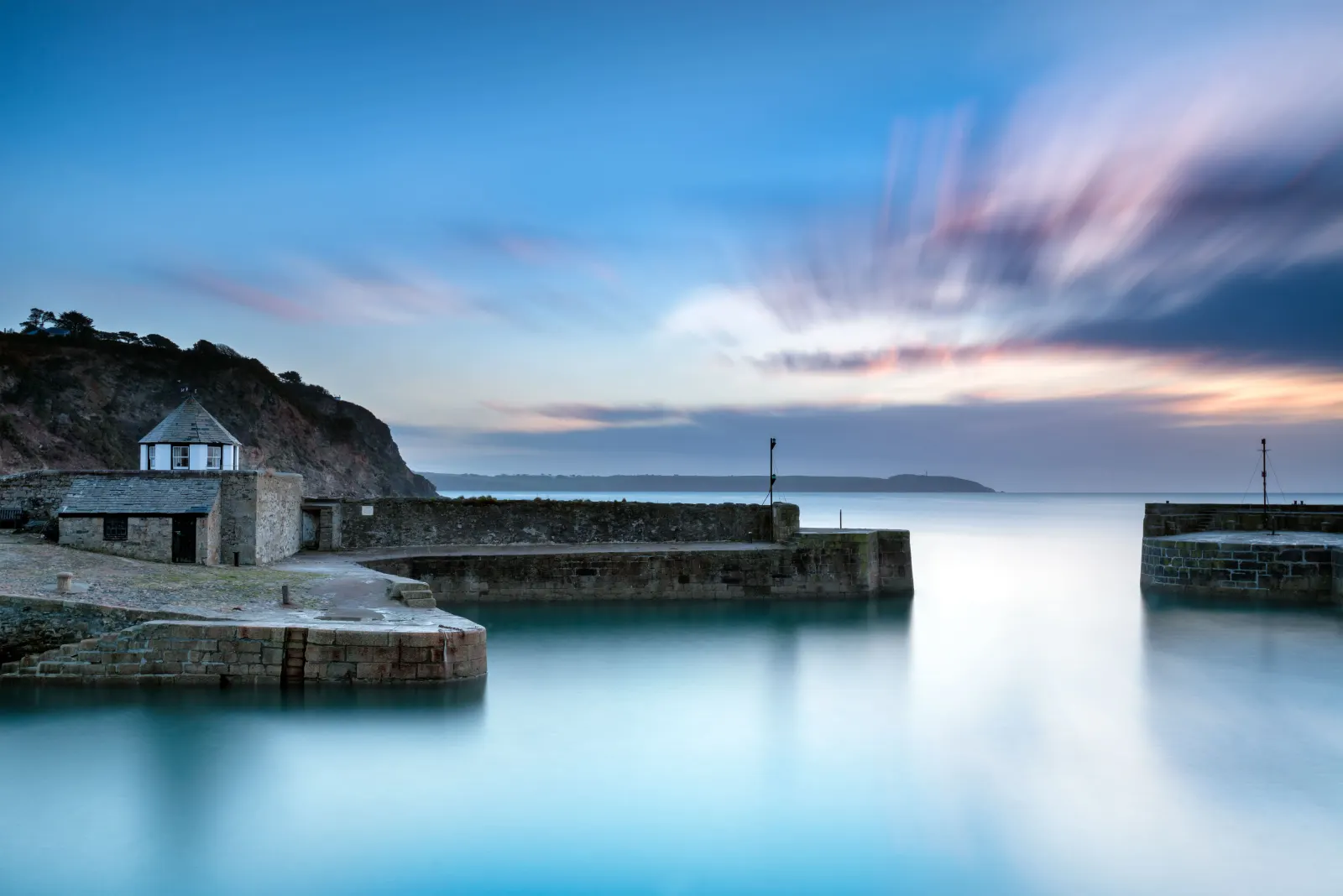
Comments
No comments yet — be the first to share your thoughts.
Leave a comment
Your email won’t be published. Comments are checked before they appear.