

35 articles
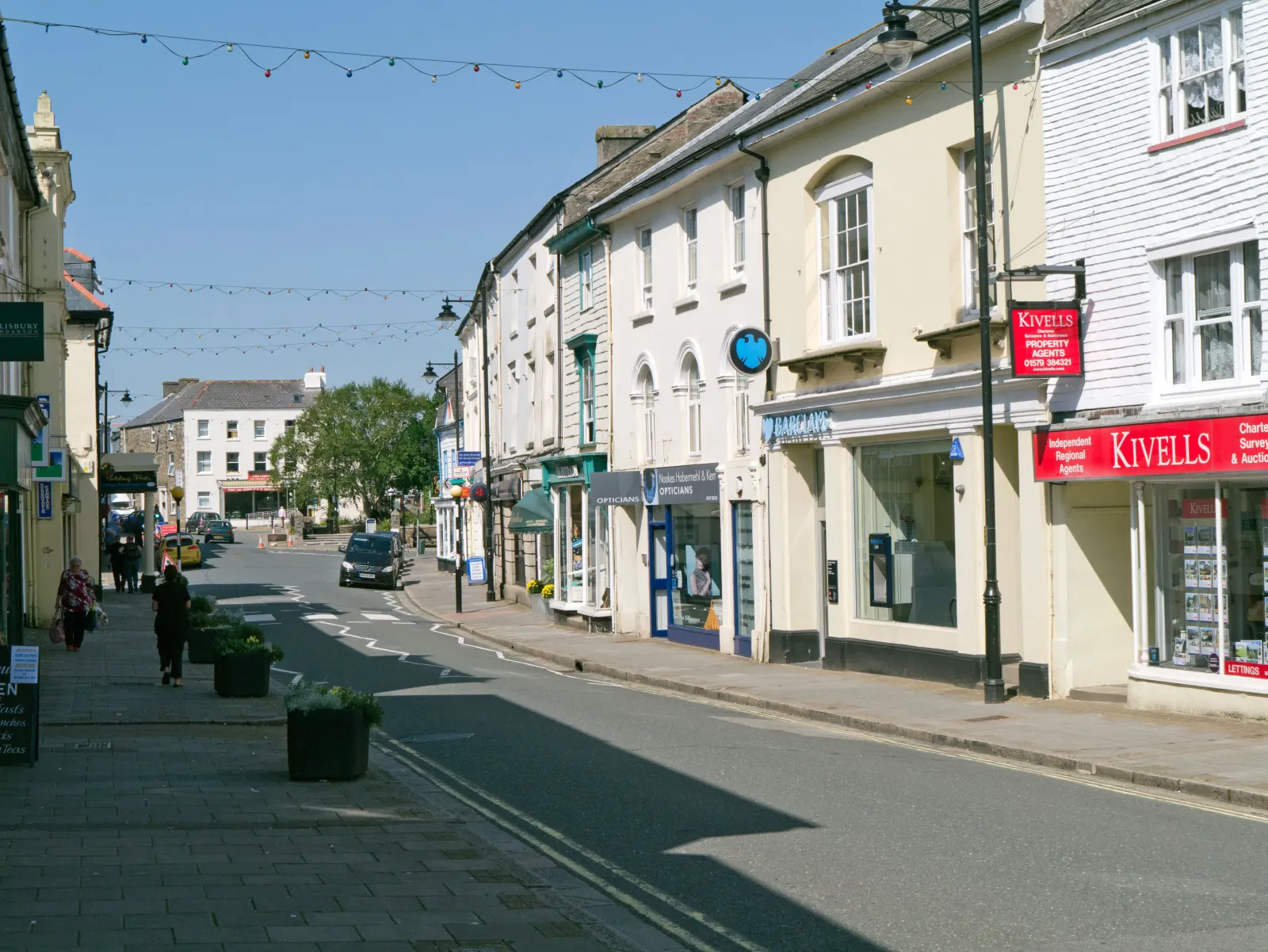
You don’t stumble across Callington by accident. It’s not on the way to the beach or part of the usual holiday loop, and that’s probably why it still feels like a proper working town. People live here, raise families here, know where to get the best pasty and who painted which bit of the mural trail.
It’s got its oddities – a hill with a chimney on top, a factory famous for Cornish snacks, and some serious views if you know where to stand… But mostly, it’s just a good place to slow down and look around in a very Cornish way.
Callington images
Things to See and Do in Callington
Spend a bit of time in Callington, and you’ll start to notice things; a mural you didn’t spot the first time, a path that leads to a view you weren’t expecting, history hidden in the hills and old buildings with stories built in… It’s a town that rewards wandering, not rushing, and whether you’re here for an hour or a weekend, there’s always something worth poking your head into.
Historical Attractions
Callington might sit quietly on the Devon-Cornwall border today, but this market town has witnessed centuries of history unfold within its streets and there’s plenty here to satisfy anyone with a curiosity about the past.
Cadson Bury: Let’s start with Cadson Bury, a huge Iron Age hillfort just outside town. There’s not much in the way of signs or fences – just a climb through trees and open fields until you reach the earthworks – but when you get up there, you can see why people settled here over 2,000 years ago; the views stretch for miles across the Tamar Valley, and you can still make out the shape of the ramparts. It’s managed by the National Trust now, and feels more like a place to think than a place to learn, which somehow suits it.1
St Mary’s Church: Back in town, St Mary’s Church is another stunning building to visit. The tower dates from the 15th century, though much of the rest was rebuilt later, and inside it’s peaceful and worn-in in a good way. Local families have been laid to rest here for centuries, and you’ll find carved pews, old memorials, and a real sense of history in the air. Plus, the churchyard is one of the quietest spots in the whole town.2
Kit Hill: A short drive from the centre takes you up to Kit Hill, the highest point in the area and once the heart of Cornwall’s mining industry. There are engine houses, ruined stacks, and a maze of old paths, and you’ll get a full sweep of east Cornwall laid out below you. It’s part of the wider Cornish Mining World Heritage Site, and Prince Charles gifted it to the people of Cornwall back in 1985.3 If you’ve ever wondered what a landscape shaped by tin mining really looks like, this is it.
The Lantern Cross: One thing many people miss is the Lantern Cross, tucked away on the road out towards Liskeard. It’s just a simple medieval stone cross, weathered and standing alone in a patch of grass, but it’s thought to be over 500 years old and once marked the route to St Mary’s.4 There are dozens like it across Cornwall, but they still stop you in your tracks when you spot one in the wild.
Hingston Down: Hingston Down is a rugged ridge with links to both King Arthur and Saxon battles, depending on who you ask; it’s part of the local folklore, mentioned in old records as the site of a 9th-century clash between Cornish and West Saxon forces. The views are great, and it’s easy to see why legends stuck.5
Family Activities
Nestled between Bodmin Moor and the Tamar Valley, Callington offers families a lovely base for exploring some of Cornwall’s quieter corners, and whether your children are keen on outdoor adventures, fascinated by animals, or simply need space to burn off energy, this friendly market town and its surrounding countryside provide plenty of opportunities for family fun away from the crowds.
Firste Park Garden: Just outside Callington in Kelly Bray, this hidden gem opens during summer months and is perfect for families. There’s plenty of grassy space for kids to run around safely, cottage-style flower beds, and benches for grown-ups to crash on with a cuppa.6
Springfields Fun Park: Visitors rave about the mix of indoor and outdoor fun here – there’s a soft-play space, trampolines, pony rides, and even rowing boats in spring–summer give younger ones plenty to do, even if Cornwall’s weather turns slow.7
Kelly Bray Circular Walk: Short, easy, and very charming, this gentle route hugs lanes, passing old stone walls and hedgerows. It’s pushchair-friendly, educational, and an easy escape into the countryside with no planning needed; just lace up the shoes and set off.8
Callington Recreational Field: Locals call it the Rec and it gets busy after school and weekends. There’s play equipment, open space for sports, and a strong community feel – you’ll often find local families chatting while kids swing, football games kick off, or someone reads on a bench.
Outdoor Activities
Callington’s position on the edge of Bodmin Moor and close to the Tamar Valley makes it a brilliant launching point for outdoor adventures. From ancient moorland tracks to riverside walks and everything in between, the landscape around this market town offers endless possibilities for anyone wanting to get out and explore Cornwall’s wilder side.
Kit Hill Country Park Loop: That grassy hill on the horizon is Kit Hill, the highest point in the Tamar Valley, part of a 152-hectare country park. There’s an easy 2 km loop that takes you past engine house ruins and granite stacks. It’s firm underfoot, doable with kids or adventurous grandparents, and the summit view stretches across Bodmin Moor, Dartmoor, and on to Plymouth.9
Tamar Trails from Tamar Trails Centre: Just a short drive from Callington, this network of 25 km paths runs through woods, old mining tracks, and wildlife habitats. You can walk, bike, or even take your horse.10
Canoeing & Paddleboarding on the River Tamar: Launch at Cotehele Quay for a paddle down the Tamar, the natural border between Cornwall and Devon, and you’ll pass under Calstock Viaduct, spot local wildlife, and feel that lazy river flow. Canoe Tamar runs trips; and if you’ve got your own kit, boat launching is easy and low-cost.11
Callington to Gunnislake via the Tamar Valley Railway Line: Fancy a different kind of country ramble? Follow the old railway from Callington toward Gunnislake, climbing through woods and fields to where the steam trains that once carried tin still run, just a few miles away. It’s peaceful, undulating, and full of opening lines of countryside.12
Stargazing from Kit Hill Summit: Slow down and stay late; once the sun sets, Kit Hill becomes a pretty magical place to gaze up. With little light pollution and wide views, it’s a popular local spot for sunsets – or stargazing – especially when the skies are clear.
Food And Drink
Callington keeps things simple when it comes to food and drink; you’ll find proper Cornish pasties, friendly cafés, and a few pubs where the locals are always happy to see you (and each other).
Cafés and Coffee Houses
After a morning exploring the moor or wandering through Callington’s market streets, you’ll find some welcoming spots to pause for a proper cup of tea or coffee. This friendly market town has embraced the café culture with establishments that blend traditional hospitality with modern tastes, perfect for watching the world go by or planning your next adventure.
Louis’ Tea Rooms: Up by Kit Hill, this one’s a bit of a local classic. It’s been around for years, and it’s the sort of place people go to after a walk, for a fry-up with a view or just to sit outside and share a scone with the dog. The cakes are homemade, the mugs are big, and you can see all the way across the valley on a clear day.13
The Engine House at Compton Park: Just outside town but worth the short drive, especially if you’re hungry because there’s a full breakfast menu, a good cup of coffee, and plenty of space to spread out, whether you’ve got muddy boots or a pram in tow. They do Sunday roasts too, but it still works just fine if all you want is a quick stop and something hot.14
Lost Surfers Cocktail Café: A bit of a wildcard and not what you’d expect in Callington, which is probably why people like it. It’s bright, relaxed, and open all day, with good brunch in the morning and cocktails later on.15
Brewtique: Just off the main drag, this little place does solid coffee and has a calm, atmosphere, making it a good place to pause, especially if you’re waiting for someone or killing time before a walk. It gets bonus points for being one of the few spots that really focuses on the coffee.16
Calli Pizza Café: Technically a café, casually a pizzeria, but it works. You can grab a pasty, order a pizza, or just sit with a drink and watch the world go by. It’s the kind of setup that doesn’t need to explain itself – you’ll figure it out once you’re there.17
Pubs
As a traditional Cornish market town, Callington has always had its fair share of welcoming pubs where locals and visitors can gather for a drink and a chat – there are historic inns that have been serving travellers for centuries, and more modern establishments, and you’ll find the kind of genuine hospitality that makes this corner of Cornwall so appealing in every one of them.
The Bulls Head: This heritage pub has been part of Callington’s story since at least the 15th century. Inside, beams, flagstone floors, and a friendly local crowd give it that feel-you-belong. Sundays here mean roast dinners, and it’s not uncommon to find dogs curled up by the fire, toes warming and tails wagging.18
The Swingletree Inn: Family-run and laid-back, the Swingletree serves honest pub grub from Tuesday through Sunday, and there’s a play area just off the main bar, which means parents can relax while little ones roam. They’re well-known for dodging the tourist rush and staying true to what makes Callington, well, Callington.19
Rifle Volunteer: Sitting on the edge of town, this corner pub turns into a snug retreat once you walk in. Expect classic pub meals, real ales, even a Sunday roast, but what sets it apart is the view: its beer garden overlooks fields rolling toward the Tamar Valley, making it a favourite spot for late afternoon pints.20
Breweries and Distilleries
The craft brewing and distilling movement has found fertile ground in the countryside around Callington, with local producers taking advantage of the area’s pure water sources and agricultural heritage. These artisan operations are creating distinctive drinks that capture the essence of this border region between Cornwall and Devon, offering visitors a taste of something truly local.
Firebrand Brewing Co.: Firebrand Brewing Co. in Launceston is the closest brewery to Callington, and it’s about 10 miles away; they specialise in bold, American-style beers made with Cornish spring water and British-grown hops. The taproom is warm, relaxed, and ideal for trying something new on tap, like their West Coast Pale or the easygoing Patchwork Rocket Session IPA.21
Colwith Farm Distillery: For something stronger, head about 25 miles west to Colwith Farm Distillery, near Lostwithiel. It’s Cornwall’s first plough-to-bottle distillery, run by the same family that’s farmed the land for five generations; they grow their own King Edward potatoes to make their Aval Dor Vodka, which has picked up a few international awards. The guided tours here are proper hands-on – you’ll see the stills, smell the botanicals, and leave with a good understanding of what goes into a quality Cornish spirit.22
Trevethan Distillery: If you’re up for a scenic drive, Trevethan Distillery near Launceston is also worth a visit. Their gin is made to a 1929 family recipe, and the copper stills and botanicals give the whole place a lovely old-school feel, plus the tours are small and personal, and you get to taste their full range, including their classic Cornish Dry Gin and a few seasonal experiments.23
Farm Shops
The fertile countryside around Callington has always been prime farming territory, and the local farm shops reflect this agricultural abundance – they showcase the best of what this corner of Cornwall can produce, offering everything from seasonal vegetables to artisan specialities that celebrate the region’s farming heritage.
Crocadon Farm (St Mellion): Not far from Callington, this soil-first organic farm has a shop and bakery. They grow their own vegetables, bake their bread, and brew onsite, even aiming for zero waste. It’s a bit of a foodie treat, and it’s all wrapped up in those farm-on-a-mission details.24
Trevithick & Trays Farm Shop: About 30-40 min drive, but it’s worth the trip, Trevithick & Trays Farm Shop stocks fresh, local veg, meats, artisan cheese, and even Cornish pasties to take home. It’s consciously slow-food focussed, offering good quality, low food miles, that’s a great taste of Cornwall.25
Places to Stay in Callington
Callington offers accommodation that reflects its character as a genuine market town rather than a tourist destination, so visitors will find places to stay that provide an authentic taste of life in this corner of Cornwall.
Expedia.com:
Expedia is a good starting point if you just want to see what’s around because you can filter by what matters to you and get a quick feel for what’s available, plus the reviews come from people who’ve actually stayed, so it’s easier to tell what’s worth considering and what’s best avoided. Check availability and best prices.
Best Value Hotels:
For a comfortable and affordable stay, Callington offers a selection of well-rated mid-range hotels—ideal for exploring the Tamar Valley and surrounding countryside. Check latest deals & availability.
Boutique & Character Stays:
If you’re looking for something with more character, Callington has a mix of traditional inns, cosy guesthouses, and rural retreats with plenty of Cornish charm. Check latest deals & availability.
Dog-Friendly Places to Stay:
Bringing your dog along? Many stays in and around Callington are pet-friendly, with easy access to countryside walks, woodland trails, and open green spaces. Check latest deals & availability.
Self-Catering & Cottages:
For more space and flexibility, Callington’s self-catering options include quaint cottages, modern apartments, and peaceful lodges in the surrounding countryside. Check latest deals & availability.
Featured Callington Hotels & Accommodation
The Chantry Guest House:
If you’re looking to stay right in town, The Chantry is an easy pick. It’s clean, quiet, and run by people who actually care about the place, and you can walk to the shops and cafés in a few minutes, so it’s a decent base if you’re heading out for day trips.26
Butterbee House:
Butterbee House in St Dominic is peaceful, green, and a bit of a hidden gem. It’s got a soft, relaxed atmosphere, and the breakfasts are made fresh, the garden’s full of birdsong, and you’re left to get on with your day without fuss. It suits walkers, writers, or anyone looking for a bit of calm, and if you’re heading to Kit Hill or Calstock, it’s well-placed too.27
Cadson Manor:
Just outside Callington, Cadson Manor is an 18th-century farmhouse with thick stone walls, proper countryside views, and usually a homemade cake not long after you walk in. The bedrooms are traditional and quiet, and the breakfasts are local with eggs from the hens, fruit from the garden, and all the usual cooked bits done well.28
Higher Chapel Farm B&B:
Set above the river near Calstock, Higher Chapel Farm is welcoming and popular with return visitors. It’s been in the same family for years, and it shows – there’s care in the details. Rooms are simple but spotless, and breakfast comes with homemade jam and a view if you’re lucky with the weather, plus there’s also a self-catering cottage if you’d rather do your own thing. Check availability and best prices.
History of Callington
Neolithic – 1200s: Ancient Landscapes and Small Beginnings
Long before Callington was a town, people were living and moving through the land around it. Kit Hill, which rises just beyond the modern town, has seen human activity for thousands of years; there are Neolithic and Bronze Age burial mounds scattered across its ridge, and the hilltop itself may once have held real ceremonial importance, not just a good view, but a place to mark seasons, honour the dead, or gather under open skies.3
The name Callington likely comes from the Cornish Kelliwik, meaning ‘grove settlement’, and while the exact origins are hard to pin down, it would have begun as a small farming community tucked into the wooded valleys between the Tamar and the moors. By the 13th century, it was on the map in a more official way – part of the manor of Callilond, owned by the powerful Earls of Cornwall – and the foundations of the medieval town were beginning to take shape.29
1200s – 1500s: Church, Markets and the Medieval Town
The medieval period saw Callington grow from a scattered settlement into something with more form; a weekly market was granted by charter, and like many Cornish towns, it took shape around its church, in this case, the granite-built St Mary’s, which was rebuilt in the 15th century and still stands at the heart of the town today. Its thick tower and carved window tracery hint at the town’s late-medieval confidence, when trade and local farming were enough to sustain a small but stable population.29
Just outside the town is one of its most atmospheric historic sites – Dupath Well, a 15th-century holy well and chapel thought to have been used for healing and pilgrimage. It’s one of the best preserved in Cornwall and still has the enclosed feel of a place people once came to with hope or gratitude, centuries ago.30
1584 – 1832: A Borough in Name, If Not in Size
In 1584, Callington was made a parliamentary borough – a title that brought prestige and power, but didn’t exactly reflect its size. For a long time, it was what’s now known as a ‘rotten borough’: a place with the right to elect two MPs to Parliament, despite having a tiny population and barely enough buildings to justify it – the vote belonged only to a few local officials, usually under the influence of whichever wealthy landowner held sway at the time. It wasn’t until the Reform Act of 1832 that Callington lost this status, along with many other towns whose political power far outweighed their actual size.31
1700s – 1850s: Mining, Movement and a Growing Town
By the 18th century, the real shift in Callington’s story came with what was happening underground. The slopes around Kit Hill were rich in copper, tin, and later arsenic – minerals that were suddenly in high demand during the Industrial Revolution.32 Mines opened up across the landscape, bringing in workers, families, and investment, and, crucially, growth. Between 1801 and 1851, the population of Callington nearly tripled, and the town’s narrow streets and market spaces began to feel more alive, and more full.33
In 1908, the railway arrived – part of the South Devon & Tavistock line – linking Callington with Plymouth and the wider Tamar Valley, and it gave the town a better way to move goods, people, and produce, and opened up new possibilities for trade and travel. The line eventually closed to passengers in 1966, part of the nationwide cuts, but it had already done its work. By then, Callington had grown from a farming village into a proper Cornish market town.34
1960s – Present: Pasties, Factories and a Different Kind of Industry
One of the most recognisable names in modern Callington is Ginsters, the pasty brand known across the UK. It started in the town in the 1960s and has grown into one of the country’s biggest savoury snack producers, and while opinions vary on whether it’s a ‘proper’ Cornish pasty, there’s no denying that Ginsters has kept Callington on the map, and has provided work for generations of local people.35
Modern Developments
Callington isn’t changing overnight, and most people here wouldn’t want it to – the town has grown over the years, but it hasn’t had huge regeneration schemes or loads of new builds; instead, it’s changed bit by bit, shaped by the people who live here and the things they need. It’s a town that still knows its pace, and sticks to it.
Homes and Housing
Over the past couple of decades, a few new housing developments have popped up on the edges of town, mostly over towards Kelly Bray and Southern Road. Nothing huge – just small estates filling in the gaps – but enough to notice. A lot of it’s been built with local families in mind, although rising prices and limited rentals have made things tricky, especially for younger people trying to stay close to home. Like many parts of Cornwall, Callington’s trying to find the balance between welcoming new residents and keeping things affordable for the people already here.36
So far, it’s avoided the kind of mass expansion that’s changed the feel of other towns, and most of what’s been built still sits comfortably alongside what was here before – no towering blocks, no out-of-place shopping parks. It’s grown, but it hasn’t sprawled.
Work and Local Business
Callington doesn’t rely on one single industry, but Ginsters is still a major employer, and probably the most well-known name to come out of the town in recent years. Alongside it, there are a handful of small manufacturers, food producers, and independent traders keeping the local economy ticking over. The high street has had its ups and downs, but it’s still got a good mix of everyday shops, and there’s been a real push to support local businesses through town markets and community events.
More people are working from home now too, especially since broadband access improved across this part of Cornwall. Some commute to Plymouth or Launceston, but plenty are finding ways to stay local, running businesses from home, freelancing, or just swapping the daily drive for a slower routine closer to family.37
Community and Services
Callington’s not short on community spirit; the Town Council and Town Forum work closely with local groups to keep things running, whether it’s organising Christmas lights, tidying green spaces, or keeping the market alive. The Town Hall and Civic Centre is still the go-to spot for everything from public meetings to craft fairs, and it’s a useful one that really gets used, and that always positive.
Space to Breathe
One of the things that keeps Callington feeling open is its connection to Kit Hill. You can be out of town and up on the ridge in just a few minutes, and the views from the top – across the Tamar Valley, Bodmin Moor, and even out to Dartmoor on a clear day – remind you why people settle here in the first place. The park’s protected, managed by Cornwall Council, and cared for by people who use it, whether they’re dog walkers, runners, or just there for the air.38
Locally, there’s also more talk about sustainability. Community growing projects, better recycling, and schemes to reduce car use are slowly gaining ground. Public transport could still be better, and everyone knows it, but there’s a sense that people are starting to think more about how the town works, long-term.
Key Buildings in Callington
- St Mary’s Church: You can’t really miss St Mary’s – it sits right at the centre of town, and its granite tower has been part of the skyline for over 500 years, and most of the current church was built in the 15th century, though there’s been something on this spot since at least the 1200s. The inside feels solid and peaceful with old timber, tall windows, peaceful corners.
- Dupath Well: Just outside the town in it’s own little hollow is Dupath Well. It’s a small stone building over a natural spring, built by Augustinian monks around 1510, add people used to visit it for healing – whooping cough, mainly – and while that’s long gone, it still has a certain draw. There’s moss on the roof, birds in the trees, and usually no one else around, and it’s one of the best-preserved holy wells in Cornwall39
- Callington Town Hall and Civic Centre: The Civic Centre doesn’t have centuries of history behind it – it was built in the late 20th century – but it’s still one of the town’s most used spaces, and it replaced an older Victorian hall that had become too expensive to keep up. These days, it’s home to everything from council meetings to craft fairs and theatre performances.
- The Pannier Market and Fore Street: Just off the high street is the old Pannier Market, which isn’t huge, but it’s full of character, with covered walkways, stone shopfronts, and a mix of old and new. It dates back to the 1800s, when traders came in to sell everything from cloth to fish, and although it’s quieter these days, there are still a few independent shops holding on, and the space is used for occasional events and stalls.40
- Kit Hill Mine Buildings: Up on Kit Hill, there’s still plenty of evidence of the area’s mining past; engine houses, ruined chimneys, bits of wall and shaft… they’re all scattered across the slopes. The most visible is the chimney near the top, built in the 1850s and now a landmark in its own right.41
- Methodist Church: Over on Tavistock Road, the Methodist Church was built in 1845, during a time when Methodism was strong across East Cornwall, especially among mining families, and it’s still an active church today, with regular services and community projects.42 It’s constructed from pale local stone – granite, mostly – and has a simple, rectangular chapel form: tall sash windows, a plain gabled roof, and no fuss; it looks solid, traditional, and very much like the modest, hardworking chapel built by and for cobblers, miners, and their families.
- Other Bits You Might Miss: There are a few other buildings around town that you might not notice straight away, like old school buildings, chapels that have been turned into houses, even a couple of places that were once part of the old railway system. That’s Callington all over – not everything’s labelled or explained, but it’s still there, if you’re looking.
Famous People from Callington
- Selina Jane Cooper: Born in Callington, Cooper became a key figure in the women’s suffrage movement. She moved north as a teenager, worked in textile mills, and became active in trade unions, and in 1901, she broke ground as the first female Poor Law Guardian and later campaigned directly for the vote, meeting Prime Minister Asquith in 1910 to press the case for women’s rights.43
- William Henry Paynter: A Cornish antiquary and folklorist, Paynter was born in Callington and became known as the ‘Cornish Witch-finder’ because throughout the 1920s and 30s, he collected local witchcraft stories and folklore, preserving tales that would otherwise have vanished. He was a founder of the Callington Old Cornwall Society and later opened the Cornish Museum in Looe.44
Education in Callington
Primary Schools
The main primary school is just off Saltash Road, and most local children start there around age three or four – it’s called Callington Primary School, and it’s part of the An Daras Multi Academy Trust, along with several other schools across East Cornwall. Ofsted gave it a solid ‘Good’ in its 2022 inspection46, pointing out that staff know the children well and that support for individual needs is strong. And there’s a forest school programme too, which gives the younger ones a chance to learn outdoors – something that really fits the town’s connection to its landscape.47
Secondary Schools & Further Education
When children move on to secondary school, they usually head to Callington Community College, which has been around in one form or another for over a century. It started as a small grammar-style school, became a comprehensive in the 1970s, and then moved to academy status in 2011. These days, it serves around 900 pupils from across Callington and the surrounding villages. The college offers GCSEs, A-levels, and vocational options, and also has a sixth form, so students don’t need to leave town after Year 11 unless they want to. The sixth form in particular is often praised for its flexibility and support, with small class sizes and teaching that’s more personal than pressurised.48
What really stands out at the college is its focus on balance. There’s a strong academic side, and many students do go on to university, but there’s also space for practical routes. Health and social care training, performing arts, sport, and hands-on support for apprenticeships all have a place. Ofsted’s most recent report highlighted the school’s inclusive approach and the way staff help pupils grow in confidence, not just exam results.49
Demographics of Callington
Callington hasn’t changed overnight, but it has grown… just enough to notice. The population has risen gently over the past decade, thanks mostly to new homes going up around the edges of town and a steady trickle of people looking for something quieter than the city, but still connected.
At the last census in 2021, the parish population stood at around 5982,50 which was up from 5665 in 2011.51 It’s not a dramatic jump, but it’s enough to bring in a few new families, fill out the local schools, and keep things moving.
Most people in Callington were born in the UK – roughly 94% – with a small number from the EU and further afield.52 It’s still a largely White British town, though like much of Cornwall, the picture is slowly broadening, one household at a time.
Housing here is mostly owner-occupied, with a mix of newer homes and older bungalows, plus a few private rentals and some social housing. You’ll find single people living in former family homes, multigenerational setups, and everything in between, but most properties have enough space, and the town hasn’t gone down the route of cramming too many houses into too little land.53
Work-wise, plenty of people still head out of town each morning – to Plymouth, Liskeard, Launceston, or beyond – but there’s also a solid group working locally. That includes Ginsters staff, school and college employees, trades, shopkeepers, and those working from home. Plus, remote working has quietly grown in recent years, and Callington’s improved broadband54 has helped that along.
Crime in Callington
Crime in Callington tends to be low, and serious trouble isn’t something locals spend much time worrying about. Of course, you still hear the odd story, and the police do stay busy, but on the whole, it’s a town where things stay pretty calm.
Back in April 2025, there were 42 recorded offences in the area, which is about average for Callington – most months you’ll see somewhere between 35 and 45 cases logged, usually for things like minor arguments, small bits of damage, or the odd public disturbance. The wider policing patch, which includes nearby villages too, sits at around 56 crimes per 1,000 people,55 which is noticeably lower than the Cornwall average, which is closer to 73.56
Most of the reported cases in Callington fall under what’s officially called ‘violence and sexual offences’ (though in reality, that label often covers things like heated arguments or low-level domestic disputes, not just what the name might suggest), and these tend to make up around 40 to 45% of the monthly figures. Beyond that, there’s the occasional case of anti-social behaviour, a bit of criminal damage, or a minor public disturbance. Theft and burglary do happen now and then, but usually in small numbers and not as a regular pattern.
That said, most people living in Callington will tell you they feel safe because when something does go wrong, word gets around quickly, and so does help – the local policing team is small but easy to spot, and they’ve built a reputation for being approachable, quick to respond, and genuinely involved in what’s going on locally.57
Transport in Callington
Tucked away near the Devon border, Callington might seem remote, but it’s actually surprisingly well connected for a small market town and getting here and getting around is more straightforward than you might expect.
Buses: Callington may feel hidden away, but it’s actually fairly well connected, especially if you’re happy to hop on a bus and go. The key bus route here is the 74, which links Callington with Liskeard, running hourly from the New Road stop; the journey takes about fifty minutes and costs around £2,58 and from Liskeard, you can connect to the national rail network, including services to Plymouth and beyond. There’s also the 12 bus, which travels direct from Plymouth Railway Station to Callington in just over 40 minutes, which is great if you’re arriving by train from elsewhere.
Trains: Callington did actually once have its own railway station, but it closed back in 1966.59 These days, the nearest train line runs from Gunnislake, about five miles away60 – it’s part of the Tamar Valley Line, a small but scenic route that winds through some beautiful countryside and crosses the viaduct over the River Tamar on its way to Plymouth. It’s a lovely option if you’re commuting into the city or just fancy a slow day trip by train.
Driving: If you’re driving, Callington’s fairly well placed – it sits where the A388 and A390 meet, so you’ve got direct routes toward Saltash, Launceston, Tavistock, and Liskeard, and the roads are generally in good shape, though they can clog up a bit during the school run or on summer weekends. The A388 provides a particularly scenic drive north towards Launceston, winding through typical Cornish countryside, while the A390 offers a more direct route east towards Liskeard and the A38.
For longer journeys, the A30 is easily accessible via either route, connecting to the rest of Cornwall and beyond. Parking’s usually straightforward – there’s on-street space in places, and a few public car parks close to the town centre if you’re heading in for the day. For electric vehicle drivers, there are charging points available at the town’s main car parks, and rapid chargers can be found at nearby service stations along the A30 corridor.
Cycling: Cycling around town is doable, but the hills can be steep, especially if you’re heading toward Kit Hill. There’s a dedicated cycle route alongside part of the Tamar Valley Line from Gunnislake to Calstock and Bere Alston, which is lovely to ride, but a bit sparse closer to Callington itself.
However, keen cyclists will find some excellent quiet country lanes radiating out from the town – the route towards St Dominick offers gentle gradients and beautiful valley views, while the lanes around Stoke Climsland provide more challenging terrain for those after a workout. The National Cycle Network Route 27 passes through nearby areas, connecting to the wider cycling network across Devon and Cornwall.
All told, the civil parish of Callington isn’t cut off from south east Cornwall, and although it might not offer a tube or tram, between hourly buses, a nearby rural railway, and clear road links, getting in and out of town is easy, whether you’re commuting, visiting, or just want to take the scenic route.
Is Callington Worth Visiting?
If you’re after a slice of real Cornwall – the kind without crowds or queues – then yes, Callington is absolutely worth a visit; it’s a proper working town with a strong sense of community, surrounded by peaceful countryside and full of local character where you’ll find good food, independent shops, walking routes with views, and stories that go deeper than first impressions. This is what everyday Cornwall looks like.
Article Sources
- National Trust. (2025). Cadsonbury | Cornwall. [online] Available at: https://www.nationaltrust.org.uk/visit/cornwall/cadsonbury National Trust[↩]
- St Mary’s Callington (2025) Callingtoncluster.org.uk. Available at: https://www.callingtoncluster.org.uk/Groups/362191/St_Mary_s.aspx The Callington Cluster[↩]
- Kit Hill Country Park – Cornwall Council (2025) Cornwall.gov.uk. Available at: https://www.cornwall.gov.uk/parks-leisure-and-culture/parks-and-open-spaces/country-parks/kit-hill-country-park/ Cornwall Council[↩]
- Callington Cross (2024) The Megalithic Portal. Available at: https://www.megalithic.co.uk/article.php?sid=61280 The Megalithic Portal[↩]
- The Tamar Valley & Hingston Down – Tamar Valley National Landscape (2024) Tamar Valley National Landscape. Available at: https://www.tamarvalley-nl.org.uk/walk/the-tamar-valley-hingston-down/ Tamar Valley Landscape[↩]
- totallyadmin (2025) Firste Park, NGS Gardens. Available at: https://ngs.org.uk/gardens/firste-park-pl17/ National Garden Scheme[↩]
- Springfield Fun Park. (2025). WELCOME – Springfield Fun Park. [online] Available at: https://www.springfieldfunpark.co.uk Springfield Fun Park[↩]
- Kelly Bray Circular Walk (no date) All Trails. Available at: https://www.alltrails.com/trail/england/cornwall/kelly-bray-circular All Trails[↩]
- Hiiker. (2017). Hiiker. [online] Available at: https://hiiker.app/trails/england/cornwall/kit-hill-loop-kit-hill-country-park Hiiker[↩]
- Family Days Out & Outdoor Activities | Devon, Cornwall (no date) Tamar Trails Centre. Available at: https://www.tamartrails.co.uk/ Tamar Trails[↩]
- Accessing the river at Cotehele | Cornwall (2019) National Trust. Available at: https://www.nationaltrust.org.uk/visit/cornwall/cotehele/getting-onto-the-river-tamar-from-cotehele-quay National Trust[↩]
- Sarah (2020) All Aboard the Tamar Valley Line – Visit the Tamar Valley, Visit the Tamar Valley. Available at: https://visittamarvalley.co.uk/all-aboard-the-tamar-valley-line Visit Tamar Valley[↩]
- Louis Tea Rooms . (2024). Louis Tea Rooms. [online] Available at: https://www.louistearooms.co.uk/ Louis Tea Rooms[↩]
- Engine House Restaurant – Compton Park, Callington, Cornwall (2025) Compton Park Engine House. Available at: https://comptonpark.co.uk/restaurant/ Engine House Restaurant[↩]
- Lost surfers. (2025). – Lost surfers. [online] Available at: https://lostsurfers.co.uk/ Lost Surfers[↩]
- Brewtique | Callington (2022) Facebook.com. Available at: https://www.facebook.com/people/Brewtique/61575371373014/?_rdr Facebook – Brewtique[↩]
- Calli Pizza (2025) Callipizza.com. Available at: https://callipizza.com/ Calli Pizza[↩]
- Tripadvisor (2025) Tripadvisor. Available at: https://www.tripadvisor.co.uk/Restaurant_Review-g528828-d10207109-Reviews-The_Bulls_Head-Callington_Cornwall_England.html Tripadvisor[↩]
- Tripadvisor (2025) Tripadvisor. Available at: https://www.tripadvisor.co.uk/Restaurant_Review-g528828-d7175674-Reviews-Swingletree_Inn-Callington_Cornwall_England.html Tripadvisor[↩]
- Rifle Volunteer (no date) Rifle Volunteer | Pub & Restaurant. Available at: https://riflevolunteer.com/ Rifle Volunteer[↩]
- Firebrand Brewing (2024) Firebrand Brewing. Available at: https://firebrandbrewing.co.uk Firebrand Brewing[↩]
- Colwith Farm Distillery (no date) Colwith Farm Distillery. Available at: https://www.colwithfarmdistillery.co.uk Colwith Farm Distillery[↩]
- Trevethan (2025) Trevethan Gin Distillery, Trevethan Gin Distillery. Available at: https://www.trevethandistillery.com/ Trevethan Gin Distillery[↩]
- Crocadon (no date) Crocadon. Available at: https://www.crocadon.farm Crocadon Farm[↩]
- Trevithickandtrays (2025) Trevithickandtrays. Available at: https://www.trevithickandtrays.co.uk/ Trevithickandtrays[↩]
- Tripadvisor (2025) Tripadvisor. Available at: https://www.tripadvisor.co.uk/Hotel_Review-g528828-d2345368-Reviews-The_Chantry_Guest_House_Bed_and_Breakfast-Callington_Cornwall_England.html Tripadvisor[↩]
- Butterbee House, The Beehive & Chrysalis Holiday Lets (2025) Butterbee House. Available at: https://www.butterbeehouse.co.uk/ Butter Bee House[↩]
- Cadson Manor Bed & Breakfast Callington (2025) Hotelsincornwall.net. Available at: https://cadson-manor-bb.hotelsincornwall.net/en/ Hotels in Cornwall[↩]
- A historic market town, Callington and its beginnings (2024) Kowethas Ertach Kernow – Sharing Cornwall’s historic, cultural & environmental heritage. Available at: https://www.cornwallheritage.com/ertach-kernow-blogs/a-historic-market-town-callingtons-beginnings/ Cornwall Heritage[↩]
- St Mary, Callington, Cornwall (2016) CRSBI. Available at: https://www.crsbi.ac.uk/view-item?i=8071 CRSBI[↩]
- Dupath Well (2025) English Heritage. Available at: https://www.english-heritage.org.uk/visit/places/dupath-well/ English Heritage[↩]
- Callington (no date) History of Parliament. Available at: https://www.historyofparliamentonline.org/volume/1604-1629/constituencies/callington History of Parliament[↩]
- Kit Hill United Mine, Cornwall (2025) Cornwall-calling.co.uk. Available at: https://www.cornwall-calling.co.uk/mines/callington/kit-hill-consols.htm Cornwall Calling[↩]
- BW Deacon (2021) Callington calling, Cornish studies resources. Available at: https://bernarddeacon.com/2021/11/13/callington-calling/ BW Deacon[↩]
- Callington Railway Station – Trainstation (2025) RouteYou. Available at: https://www.routeyou.com/en-gb/location/view/48024319 Route You[↩]
- Home – Ginsters (no date) Ginsters. Available at: https://www.ginsters.co.uk/ Ginsters[↩]
- Cornwall Council (no date) Housing Strategy – Cornwall Council, www.cornwall.gov.uk. Available at: https://www.cornwall.gov.uk/housing/housing-strategy/ Cornwall Council[↩]
- Connecting Devon and Somerset – rural broadband programme (2021) Connecting Devon and Somerset. Available at: https://www.connectingdevonandsomerset.co.uk Connecting Devon & Somerset[↩]
- Kit Hill Country Park – Cornwall Council (2025) Cornwall.gov.uk. Available at: https://www.cornwall.gov.uk/parks-leisure-and-culture/parks-and-open-spaces/country-parks/kit-hill-country-park Cornwall Council[↩]
- SeaDogIT (2023) Dupath Well | Cornwall Heritage Trust, Cornwall Heritage Trust. Available at: https://www.cornwallheritagetrust.org/our_sites/dupath-well/ Cornwall Heritage Trust[↩]
- Pannier Market | Callington Town Council (2025) Callington-tc.gov.uk. Available at: https://callington-tc.gov.uk/services/pannier-market/ Callington Town Council[↩]
- Kit Hill Summit Stack (2025) iwalkwww.cornwall.co.uk. Available at: https://www.iwalkwww.cornwall.co.uk/pi/kit_hill_summit_stack iWalk Cornwall[↩]
- Home (2025) Callingtonmethodist.org. Available at: https://www.callingtonmethodist.org Callington Methodist Church[↩]
- Selina Jane Cooper | (no date) Cornwall For Ever! Available at: https://www.cornwallforever.co.uk/people/selina-jane-cooper Cornwall Forever[↩]
- Kresen Kernow (2025) Kresen Kernow, Kresen Kernow. Available at: https://kresenkernow.org/SOAP/detail/662703 Kresen Kernow/[↩]
- Michael Snowdon – Wikiwand (2017) Wikiwand.com. Available at: https://www.wikiwand.com/en/articles/Michael_Snowdon Wikiwand[↩]
- Team., C. (2024) Callington Primary School – Open – Find an Inspection Report – Ofsted, Ofsted.gov.uk. Available at: https://reports.ofsted.gov.uk/provider/21/140577 Ofsted[↩]
- Home (2023) Cornwall.sch.uk. Available at: https://www.callington-ji.cornwall.sch.uk/ Callington Primary School[↩]
- Home (2025) Callington Community College. Available at: https://www.callingtoncc.net/ Callington Community College[↩]
- Team., C. (2020) Callington Community College – Open – Find an Inspection Report – Ofsted, Ofsted.gov.uk. Available at: https://reports.ofsted.gov.uk/provider/23/143649 Ofsted[↩]
- Callington Census Data (no date) Censusdata UK. Available at: https://www.censusdata.uk/e04011411-callington Censusdata UK[↩]
- GENUKI (2025) GENUKI: Callington, Cornwall, Genuki.org.uk. Available at: https://www.genuki.org.uk/big/eng/CON/Callington GENUKI[↩]
- Callington Census Data (no date) Censusdata UK. Available at: https://www.censusdata.uk/e04011411-callington/ts004-country-of-birth Censusdata UK[↩]
- Callington Housing (no date) Censusdata UK. Available at: https://www.censusdata.uk/e04011411-callington/ts044-accommodation-type Censusdata UK[↩]
- Vergnault, O. (2021) Hyperfast broadband to be rolled out in Callington, InYourArea.co.uk. InYourArea. Available at: https://www.inyourarea.co.uk/news/hyperfast-broadband-to-be-rolled-out-in-callington InYourArea.co.uk[↩]
- Local Crime Information for Callington (no date) Streetcheck. Available at: https://www.streetcheck.co.uk/crime/pl177xz Street Check[↩]
- CrystalRoof Ltd (2024) Crime Rates in Cornwall, Crystal Roof. Available at: https://crystalroof.co.uk/report/lad/cornwall/crime Crystal Roof[↩]
- Neighbourhood Team – Devon and Cornwall Alert (2025) Police.uk. Available at: https://community-messaging.dc.police.uk/Content/LocalArea/45839/Callington%20-%20BN2D Devon & Cornwall Police[↩]
- Rome2Rio Pty Ltd (2025) Rome2Rio, Rome2Rio. Available at: https://www.rome2rio.com/map/Callington/Liskeard Rome2Rio[↩]
- Callington branch (2025) Cornwall Railway Society. Available at: https://www.cornwallrailwaysociety.org.uk/callington-branch.html Cornwall Railway Society[↩]
- Honey Fair | Callington Town Council (2025) Callington-tc.gov.uk. Available at: https://callington-tc.gov.uk/community/honey-fair/ Callington Town Council
Frequently Asked Questions
Callington, Cornwall, is roughly 12 miles (19 km) from the nearest beaches, including Whitsand Bay and Torpoint. It takes about 25–30 minutes by car to reach the coast.
Callington’s best known for its links to Ginsters pasties, which are still made here today and shipped all over the country, but there’s more to it than that – the town has a strong mining past, with ties to the Tamar Valley’s copper and tin industry, and it’s home to Kit Hill, a local landmark with sweeping views and an intriguing mix of industrial ruins and nature, and in more recent years, Callington has also become known for its public mural trail.
Callington, Cornwall, is considered a charming and friendly town to live in. It offers a strong sense of community, good local schools, easy access to countryside walks, and is close to the beaches and larger towns, making it popular with families and retirees.
Living in Callington, Cornwall, offers a quiet, village-like lifestyle with a strong sense of community. Residents enjoy good local schools, nearby countryside for walks, and easy access to beaches and larger towns, making it ideal for families and those seeking a peaceful, rural setting.
Yes, you can enjoy a solo trip in Cornwall without a car. The county is well-connected by trains, buses, and ferries, making it easy to reach popular destinations like St Ives, Falmouth, Newquay, and Penzance. Many towns are walkable, and local transport links allow access to beaches, hiking trails, and attractions, making car-free travel practical for solo travelers.
The top attractions in Callington, Cornwall, include St Mary’s Church, Callington Town Hall, and the historic Callington Heritage Centre. Nearby, you can explore scenic walking trails, Cotehele House & Gardens, and Kit Hill Country Park for stunning views and outdoor activities. These sites showcase Callington’s history, culture, and natural beauty.
Yes, Callington hosts several annual events and festivals, including the Callington Carnival, the town’s Christmas Lights Festival, and seasonal community fairs. These events celebrate local culture, music, and heritage, drawing visitors from across Cornwall.
Yes, Callington is dog-friendly, with several parks, walking trails, and nearby countryside paths where dogs are welcome. Many local cafes and pubs also allow well-behaved dogs, making it easy to explore the town with your pet.
Callington is generally considered more affordable than many parts of Cornwall, with lower property prices and living costs compared to coastal towns. It offers good value for those seeking a quieter, rural lifestyle.
Yes — Callington, Cornwall is considered a good place to retire thanks to its quiet, rural setting, friendly community, and easy access to countryside and coast. The town has local shops, healthcare facilities, and regular buses, making it a practical and pleasant choice for retirees.
Callington has no direct train service. The nearest station is Saltash, about 6 miles away, with connections to Plymouth, Truro, and Cornwall towns. From Saltash, take a local bus or taxi to reach Callington. Regular bus services also run from Liskeard and nearby towns, making public transport a convenient option.
Yes — near Callington, Cornwall, you’ll find scenic hiking routes like Kit Hill Country Park, with trails offering panoramic views, woodland paths, and historic mining remains. Nearby Golitha Falls and the Looe Valley Line walk also provide pleasant riverside and countryside hikes within short drives.
Written by
Lisamarie is a writer and researcher with a long-standing love for Cornwall – its towns, coastlines, folklore, and everything in between. Most of her work involves blogging and articles, often focused on places and people, which pairs neatly with her fiction writing since both sides of her work let her balance research with imagination (and indulge a fondness for obscure facts). She lives with her husband, daughter, and a cat called Cheryl in a cottage in the Kent countryside, where she writes, paints, and watches horror films.
35 articles published on Cornwall.co.uk
Read more from Lisamarie Lamb →

Comments
No comments yet — be the first to share your thoughts.
Leave a comment
Your email won’t be published. Comments are checked before they appear.