

13 articles
We’ve all heard of King Arthur, one of the most famous kings in British history. However, his exact origins are unclear and for the past millennia many historians have denied his existence. Despite this, King Arthur has significant ties to Cornwall with tales of his legend echoing and swirling throughout the Cornish caves and cliffs. So, who was this legendary king? What are his links to Cornwall? And how much do we really know about him?
Who Was King Arthur?
We’ve all heard of King Arthur, but what exactly is his story?
The story of King Arthur
The first born son of King Uther Pendragon, King Arthur’s story tells of a brave and just king who ruled peacefully over the Kingdom of Camelot. However, his route to the throne was far from simple and his reign ended in a bloody conflict.
Born at a time of great instability, Arthur was raised secretly by his father under the advice of the wizard Merlin. When the King died, Arthur claimed his right to the throne after pulling a sword from a stone – a feat impossible to all others who attempted it.
Guided by Merlin and backed by the knights of the Round Table, Arthur protected his Kingdom from Saxon invaders with the aid of his magical sword Excalibur. He ruled from Camelot, where he built a huge castle and married Queen Guinevere, a woman of noble descent.
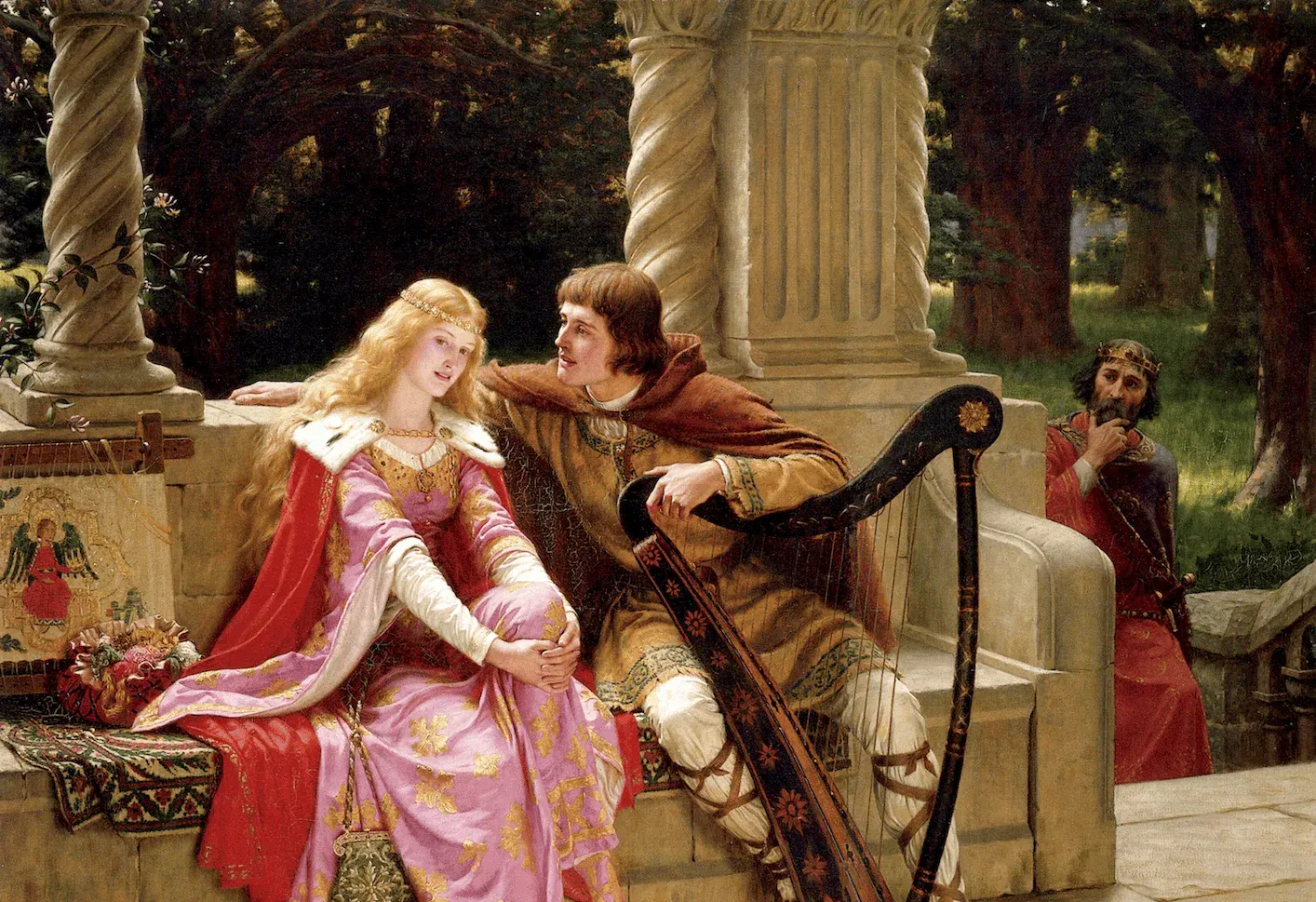
Eventually, Guinevere fell in love with Sir Lancelot, one of King Arthur’s knights, which led to the fracturing of the kingdom. During the ensuing Civil War, King Arthur was mortally wounded in battle, by his illegitimate son, the druid Mordred.1
King Arthur: The Cornish Connection
For almost a thousand years, King Arthur has been associated with Cornwall and links to this great king can be found throughout the crashing coastline and unruly moors of the county.
Geoffrey of Monmouth and the Cornish Setting
Up until the 12th century, there were no concrete links between King Arthur and Cornwall. However, tales of this magnificent king were a popular part of early Welsh literature. This all changed when Geoffrey of Monmouth, a Welsh medieval chronicler and bishop, published his History of the Kings of Britain in the early 12th century.2
Inspired by the wild and wondrous Cornish landscape and his admiration for the Cornish people’s distinct Celtic identity separate from Anglo-Saxon Britain, Geoffrey of Monmouth supplanted the legend of King Arthur into Cornish heritage.3 Cornwall’s rugged landscapes, sea-battered cliffs and untouched wilderness also made it a fitting setting for what was to become one of the world’s most famous legends.
Arthur’s Mythical Birthplace at Tintagel Castle
The History of the Kings of Britain is embellished with tales of the magical wizard Merlin, who helped Uther Pendragon disguise himself as the King of Cornwall in order to bed the Cornish Queen Igerna.4 From then on, King Arthur’s conception at Tintagel was adopted as part of popular culture.5
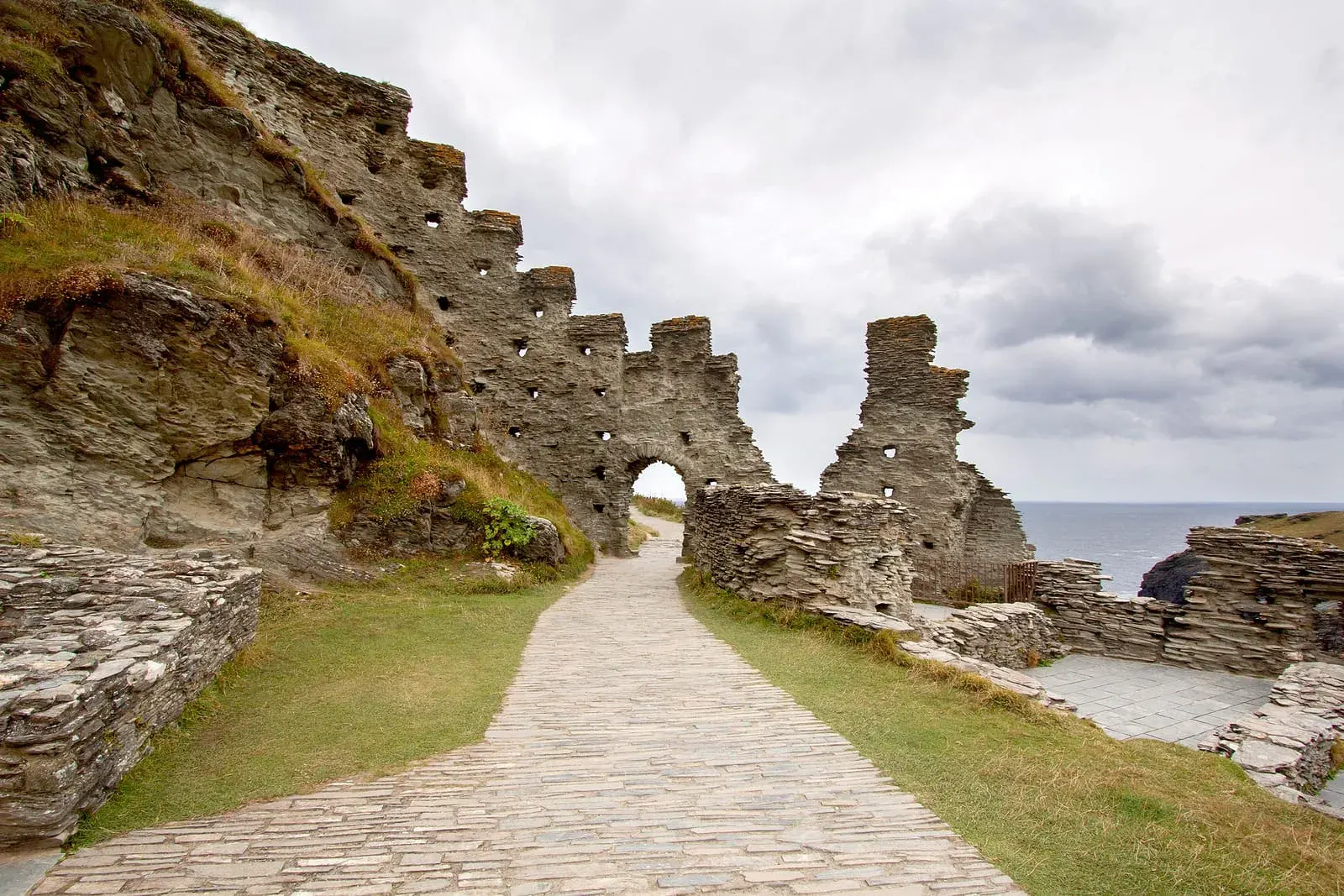
“The castle is built high above the sea, which surrounds it on all sides, and there is no other way in except that offered by a narrow isthmus of rock,” he wrote.4 Today, this description of Tintagel is still fitting and it’s easy for visitors to imagine a once spectacular stronghold overlooking the churning Cornish waters at this breathtaking coastal location.
The Role of Cornwall in Arthurian Lore
Beyond Tintagel, Cornwall plays a prominent role in Arthurian Lore. The stories whisper of an infant future king educated and raised in secret by the wizard Merlin on the beach below Tintagel’s towering headland. The county’s heather-clad moorlands are said to be the birthplace of Excalibur, where the mysterious Lady of the Lake rose from the water and placed it in the king’s hand. Upon those same moorlands, which swirl with mist and myth, Arthur fought his final battle succumbing to his son’s treacherous blade, and the real Round Table is buried below the ancient circular earthwork of Bossiney Mount waiting in silence for the return of the king.6
Arthurian Sites in Cornwall
Cornwall’s elemental coastline and ancient moorlands make it easy to believe in magic. Throughout the region there are many sites which claim to have played a central role in the lives of King Arthur and Merlin.
Tintagel Castle – Arthur’s Birthplace or Later Myth?
Tales of King Arthur still whisper and whistle along the Tintagel cliffs and a bronze figure stands brooding with his sword, watching guard over the realm. Below the headland, the face of a wizard can be found carved into the rock and secrets about a young future king being raised in a cave echo and intermingle with the roar of the ocean.6
The Tintagel Castle we see today didn’t exist at the time of Geoffrey of Monmouth’s writing.7 The present ruins are those of a 12th century castle, built by Richard Earl of Cornwall, brother of King Henry III.8 However, it’s easy to imagine this remote crumbling stronghold as the birthplace of Arthurian legend.
Dozmary Pool – The Home of Excalibur?
In the heart of Cornwall lie its craggy moorlands, strewn with ancient burial cairns and weathered stone circles. Amongst them lies Dozmary Pool, the county’s largest lake and final resting place of King Arthur’s enchanted sword, Excalibur.9 According to legend it was here that the Lady of the Lake, a powerful sorceress, placed the sword into the hand of the king. Following Arthur’s death, the sword was returned to its rightful place by the loyal knight Sir Bedivere. He tossed Excalibur into the middle of the lake and it was caught by a hand rising from the water, skin as pale as moonlight.10
Slaughterbridge – Site of Arthur’s Last Battle?
Discover where Arthur fell in battle with a visit to Slaughterbridge, a settlement on the River Camel’s winding banks. According to legend it was here that the great king met his bloody end, following hand to hand combat with his son Mordred.4 Today, the spot is marked by an enscripted stone and you can walk amongst the fields where the Battle of Camlann took place.11 Slaughterbridge is next to Camelford, which many suggest was Camelot, home to Arthur’s court and the round table.
Merlin’s Cave and Local Lore
Below Tintagel, with the ebb of the tide, Merlin’s cave is revealed. It is here that the fantastical sorcerer prepared a young King Arthur for his kingly duties.7 A cascading waterfall adds to the atmosphere, along with a wizards face carved into the cliff.13 Made famous by Alfred, Lord Tennyson’s Arthurian poem the Idylls of the King, the cave is 100 metres deep and carves a complete hole from one side of the Tintagel headland to the other.12 You can imagine the roaring waves of the ocean providing sufficient camouflage for the workings of the sorcerer.
The King Arthur Legend: Myth, or History?
King Arthur may be one of Britain’s most famous kings, yet he is one of the most controversial figures in British history. Many historians are still in doubt as to whether he ever existed.15
Was King Arthur Real? The Historical Debate
Whilst there may have once been a King Arthur, according to historians it’s highly unlikely he resembled anything of the Arthurian legends we know today. Many of the stories we know and love can be traced back to accounts of literary fiction, known collectively as the Matter of Britain.2
- Geoffrey of Monmouth’s Historia Regum Britanniae (1136-1139) – once considered an accurate historical source, this epic tale is now assumed to be mostly fictitious. It introduces characters like Merlin, Ganhumara (later Guinevere) and stories about King Arthur’s birth and death.13
Who was the ‘real’ King Arthur?
There has been great speculation amongst historians over who could have been the ‘real’ King Arthur. Many place him as a ruler of the Dark Ages (cerca 6th century), after the fall of the Roman Empire (410 AD) rather than a Medieval king. At this time, Britain was being regularly raided by Celtic Picts from Scotland, Germanic tribes including the Saxons and other groups from France.19
Amidst this context, there are several theories on who the real Arthur could have been:
- A Roman-style military leader – One of the earliest stories of Arthur emerges from Nennius in The History of the Britons. The Welsh monk’s literature suggests that he was a “dux bellorum” or war leader. Nennius recites 12 battles in which Arthur was victorious, including the Battle of Badon.16
- A Romano-British Chieftain – Archaeology suggests that post-Roman Britain was defended by a number of Romano-British chieftains – most likely living in Celtic regions like Cornwall, Wales and Somerset. Some historians believe that one of these warlords could have been the real Arthur.
- A symbolic amalgamation of several leaders – Others suggest that King Arthur was a figure inspired by several leaders who resisted Anglo-Saxon invasion of Briton. These include Ambrosius Aurelianus, a descendant of Roman nobility, who Gildas credits with winning the Battle of Badon.17 Other medieval sources mention historical Arthurs including a Scottish prince and a Welsh nobleman.19
Arthurian Tourism in Cornwall
Regardless of King Arthur’s origins, his story is greatly intertwined within Cornish culture and landscape. Immerse yourself in his magic and mystery with these Cornish visitor experiences.
Must-Visit Arthurian Attractions
Don’t miss out on these Arthurian attractions during your visit to Cornwall.
- Tintagel Castle – Legendary birthplace of King Arthur, Tintagel Castle is a must-visit for fans of Arthurian legend.18
- Dozmary Pool – Discover the final resting place of King Arthur’s sword Excalibur at this remote lake in the middle of the mysterious Bodmin Moor.7
- St Nectan’s Glen – Uncover the story of King Arthur’s knights of the round table at the waterfall of St Nectan’s Glen. Legend states that it was here that they received blessings before undertaking their daring quest to locate the Holy Grail.
King Arthur Walks, Tours, and Experiences
Delve a little deeper into the life and legends of King Arthur with these curated experiences.
- King Arthur’s trail – Embark on a mythical quest with this walking trail which connects Cornwall’s must-visit Arthurian attractions.23
- Experience Cornwall guided tour – Join a small guided group tour with Experience Cornwall and discover the tales and tragedies of King Arthur in Cornwall.19
Local Museums and Visitor Centres
Don’t miss out on these local museums and visitor centres for greater insight into Arthurian legend.
- Vale of Avalon – Dedicated to the tales of King Arthur, the Vale of Avalon includes an exhibition room where visitors can access 20 years of Arthurian research. It is also home to Arthur’s stone and is next to the site of the Battle of Camlann.20
- King Arthur’s Great Halls – A one-of-a-kind museum, King Arthur’s Halls are dedicated to the myth of King Arthur, with stories from the legend featuring in an impressive display of stained-glass windows and paintings on the walls. A round table and granite thrones further bring the story to life.21
Arthur in Cornish Culture and Identity
A thousand years after King Arthur was linked with Cornwall through Geoffrey of Monmouth’s writings, the legendary figure still plays a prominent role in Cornish culture and identity.
Arthurian Influence on Cornish Art, Literature, and Folklore
References to King Arthur can be discovered across a range of Cornish art, literature, and folklore.
- Arthurian art in Cornwall – On the windswept cliffs of Tintagel, a larger-than-life bronze statue gazes over the rugged coastline, evoking the mythic presence of King Arthur. Inside King Arthur’s Great Hall, visitors can admire a series of six internationally acclaimed stained-glass windows depicting key moments from Arthurian tales. Contemporary exhibitions continue to reinterpret the legend, such as the works of Barrie Morris, who blends Arthurian sites with unique Cornish elements, including its national bird, the chough.27
- Arthurian literature in Cornwall – Contemporary literature continues to explore Arthur’s connection to Cornwall. Notable among these is W. Howship Dickinson’s King Arthur in Cornwall, which weaves myth and historical context into an imaginative retelling that situates Arthur firmly within the county of Cornwall.22
- Arthurian folklore – Over the years, Arthurian folklore has been integrated into the history of Cornwall, including that of its aristocratic families. The Vyvyan family claim to be direct descendants from the ‘Lost Land of Lyonesse’, once part of King Arthur’s realm.29 Thought to have existed as a stretch of land between the Isles of Scilly and West Penwith, legend tells that Lyonesse suddenly sank and vanished upon the death of the King.23 The Vyvyan family crest depicts a horse which represents how their ancestor escaped before drowning.24
The Commercialisation of the Arthurian Brand in Cornwall
In Cornwall, the story of King Arthur has long since moved beyond legend to become both a symbol of enchantment and a cornerstone of the tourism economy. Stories first popularised by Geoffrey of Monmouth and later reimagined by Alfred, Lord Tennyson drew an increasing number of visitors from the 19th century. The once quiet village of Trevena was renamed Tintagel, to further encourage visitor footfall in the area and the creation of King Arthur’s Great Halls helped to forever bind Cornwall to the King Arthur myth.25
Since then, the Cornish tourism industry has capitalised significantly on its links to this historic king. English Heritage focuses its Tintagel Castle tourism messaging on its links to King Arthur, and other King Arthur-related walking trails and visitor attractions have sprung up across the county.26
The Bottom Line
Overall, it’s unlikely that King Arthur existed – at least in the way most of us imagine. However, that doesn’t take away from its importance in shaping Cornish – and even British – culture and heritage. Sometimes it’s worth believing in magic and legend, even if only for the pure entertainment of it – especially when it takes you to some of the world’s most unique and magical landscapes. So what are you waiting for? When will you plan your trip to Cornwall and immerse yourself in the Arthurian legend?
Article Sources
- Discover Britain (2025). The legend of King Arthur and Camelot [online]. Available at: https://www.discoverbritain.com/heritage/mythology/king-arthur-camelot-legend/ Discover Britain[↩]
- Britannica (2025). Arthurian Legend [online]. Available at: https://www.britannica.com/topic/Arthurian-legend Britannica[↩]
- Lees, D. (2023). Identities in Twelfth Century Cornwall [online]. Available at: https://research.aber.ac.uk/en/studentTheses/identities-in-twelfth-century-cornwall#:~:text=Abstract,far%20broader%20Anglo%2DNorman%20world Aberystwyth University[↩]
- Geoffrey, 1100-1154 & Thorpe, L. (1984). The history of the Kings of Britain. Penguin Books[↩]
- Historic UK (2025). Historia Regum Britanniae [online]. Available at: https://www.historic-uk.com/HistoryUK/HistoryofEngland/Historia-Regum-Britanniae Historic UK[↩]
- Discover Britain (2025). Was King Arthur from Cornwall? Searching for Camelot [online]. Available at: https://www.discoverbritain.com/destinations/england/king-arthurs-cornwall-camelot/ Discover Britain[↩]
- English Heritage (2025). Things to see and do at Tintagel [online]. Available at: https://www.english-heritage.org.uk/visit/places/tintagel-castle/things-to-do/#section4 English Heritage[↩]
- Discover Britain (2025). Was King Arthur from Cornwall? Searching for Camelot [online]. Available at: https://www.discoverbritain.com/destinations/england/king-arthurs-cornwall-camelot Discover Britain[↩]
- English Heritage (2025). History of Tintagel Castle [online]. Available at: https://www.english-heritage.org.uk/visit/places/tintagel-castle/history-and-legend/history/ English Heritage[↩]
- Visit Cornwall (2025). Explore the beauty of Bodmin Moor [online]. Available at: https://www.visitcornwall.com/regions/bodmin-moor Visit Cornwall[↩]
- Discover Britain (2025). Was King Arthur from Cornwall? Searching for Camelot [online]. Available at: https://www.discoverbritain.com/destinations/england/king-arthurs-cornwall-camelot Dicvorer Britain[↩]
- The Vale of Avalon (2025). Home page [online]. Available at: https://thevaleofavalon.co.uk The Vale of Avalon[↩]
- English Heritage (2025). Things to see and do at Tintagel [online]. Available at: https://www.english-heritage.org.uk/visit/places/tintagel-castle/things-to-do/#section4 English Heritag[↩]
- Tennyson, A. T. (1989). Idylls of the King. London: Penguin Classics[↩]
- Historic UK (2025). Did King Arthur exist? [online]. Available at: https://www.historic-uk.com/HistoryUK/HistoryofEngland/Did-King-Arthur-Exist – Historic UK[↩]
- Geoffrey, 1100-1154 & Thorpe, L. (1984). The history of the Kings of Britain. Penguin Books.[↩]
- Chrétien de Troyes. (1991). Arthurian Romances. Translated by W.W. Kibler. London: Penguin Classics[↩]
- Malory, T. (2004). Le Morte d’Arthur. Edited by J. Cowen. London: Penguin Classics[↩]
- Rose, C. B. and Darbyshire, G., 1987. The Life and Times of King Arthur. Expedition Magazine, 29(2) (July), [online] Available at: https://www.penn.museum/sites/expedition/the-life-and-times-of-king-arthur/ Penn Museum[↩]
- Nennius, 2024. History of the Britons (Historia Brittonum), trans. J. A. Giles. London: HardPress Publishing[↩]
- Gildas, 2024. The Ruin of Britain. Translated by J. A. Giles. London: New Heliconian Books[↩]
- English Heritage (2025). Tintagel Castle [online]. Available at: https://www.english-heritage.org.uk/visit/places/tintagel-castle English Heritage[↩]
- Visit Cornwall (2025). The King Arthur Trail [online]. Available at: https://www.visitcornwall.com/itineraries/the-king-arthur-trail Visit Cornwall[↩]
- Experience Cornwall Tours (2025). Arthurian tour [online]. Available at: https://experiencecornwalltours.co.uk/tour/arthurian-tour/ Experience Cornwall Tours[↩]
- The Vale of Avalon (2025). Home page [online]. Available at: https://thevaleofavalon.co.uk/ The Vale of Avalon[↩]
- King Arthur’s Great Halls (2025). Home page [online]. Available at: https://www.kingarthursgreathalls.co.uk/ King Arthur’s Great Halls[↩]
- The Red Dot Gallery (2025). King Arthur & the Cornish chough [online]. Available at: The Red Dot Gallery
- Dickinson, W. Howship, 2024. King Arthur in Cornwall. Lettel
- Jennifer Vyvyan. The Vyvyans [online]. Available at: Jennifer Vyvyan
- Nunn, P. D., & Compatangelo-Soussignan, R. (2024). The drowning of ‘Lyonesse’: early legends of land submergence in southwest Britain and geoscience. Folk Life, 62(1), 1–17. DOI Foundation
- Jennifer Vyvyan. The Vyvyans [online]. Available at: Jennifer Vyvyan
- English Heritage (2025). Significance of Tintagel Castle [online]. Available at: English Heritage
- Guardian (2016). King Arthur forged our Britain – English Heritage is right to celebrate him [online]. Available at: The Guardian
Frequently Asked Questions
Whilst its possible there was a King Arthur, it’s far more likely that this legendary royal was born from the imagination of Medieval literary figures and poets – specifically those from once-Celtic Britannic regions.
According to Geoffrey of Monmouth’s History of the Kings of Britain, King Arthur was succeeded to the throne by his cousin Constantine following his death at the Battle of Camlann.
The earliest Arthurian legends originate in Wales and may have been inspired by a real Welsh warrior leader. These legends were later embellished by Geoffrey of Monmouth in his History of the Kings of Britain, Sir Thomas Malory’s Le Morte d’Arthur and Alfred Lord Tennyson’s Idylls of the King and other Middle Age texts.
The story of King Arthur tells of 12 knights of the Round Table, who were known for their chivalry and bravery. There is no specific list of knights, but the most famous are Sir Lancelot, Sir Galahad, Sir Gawain, Sir Percival and Sir Kay.
In the legend of King Arthur, Excalibur is a magical sword which the king used to protect his realm. It is a powerful symbol of King Arthur’s sovereignty and his duty to protect the kingdom of Britain and its people.
There are two main theories on how King Arthur obtained the sword Excalibur. The first is that it is the sword in the stone which saw Arthur claim his rightful place as King of Briton. The second is that he was handed Excalibur by the lady in the lake.
Camelot was King Arthur’s legendary capital, representing justice, unity, and an ideal medieval kingdom.
Merlin was a powerful wizard and advisor who helped guide King Arthur’s rise to kingship through magic and prophecy.
Queen Guinevere was King Arthur’s wife. Her affair with Sir Lancelot played a major role in the fall of Camelot.
King Arthur was mortally wounded at the Battle of Camlann and taken to Avalon, where legend says he will one day return.
Avalon is a mythical island linked to healing and magic, where King Arthur was taken after his final battle.
King Arthur is famous for symbolising heroic leadership, chivalry, and mythic British identity in literature and popular culture.
Written by
Lydia Paleschi is a Falmouth local and freelance writer whose family have been based in Cornwall for many generations. However, it wasn’t until she spent several years living in Cardiff and London that Lydia realised that living next to the ocean is where she belongs. After moving back to Falmouth and launching her freelance career in order to make the most of a Cornish lifestyle determined by weather and tides, Lydia now spends most of her free time wild swimming and sailing in Cornish waters. And despite being lucky to travel far and wide – sailing as far away as Central America – it is the Cornish coastline that Lydia finds provides the greatest nourishment to her soul. More recently, Lydia has been exploring Cornwall in her van, which has only made her fall in love with her home county more. Lydia’s book A Guide to Wild Swimming in Cornwall aims to help others share in her love of the Cornish coastline and the wellbeing benefits that can be enjoyed by spending time there.
13 articles published on Cornwall.co.uk
Read more from Lydia Paleschi →

Comments
No comments yet — be the first to share your thoughts.
Leave a comment
Your email won’t be published. Comments are checked before they appear.