

6 articles
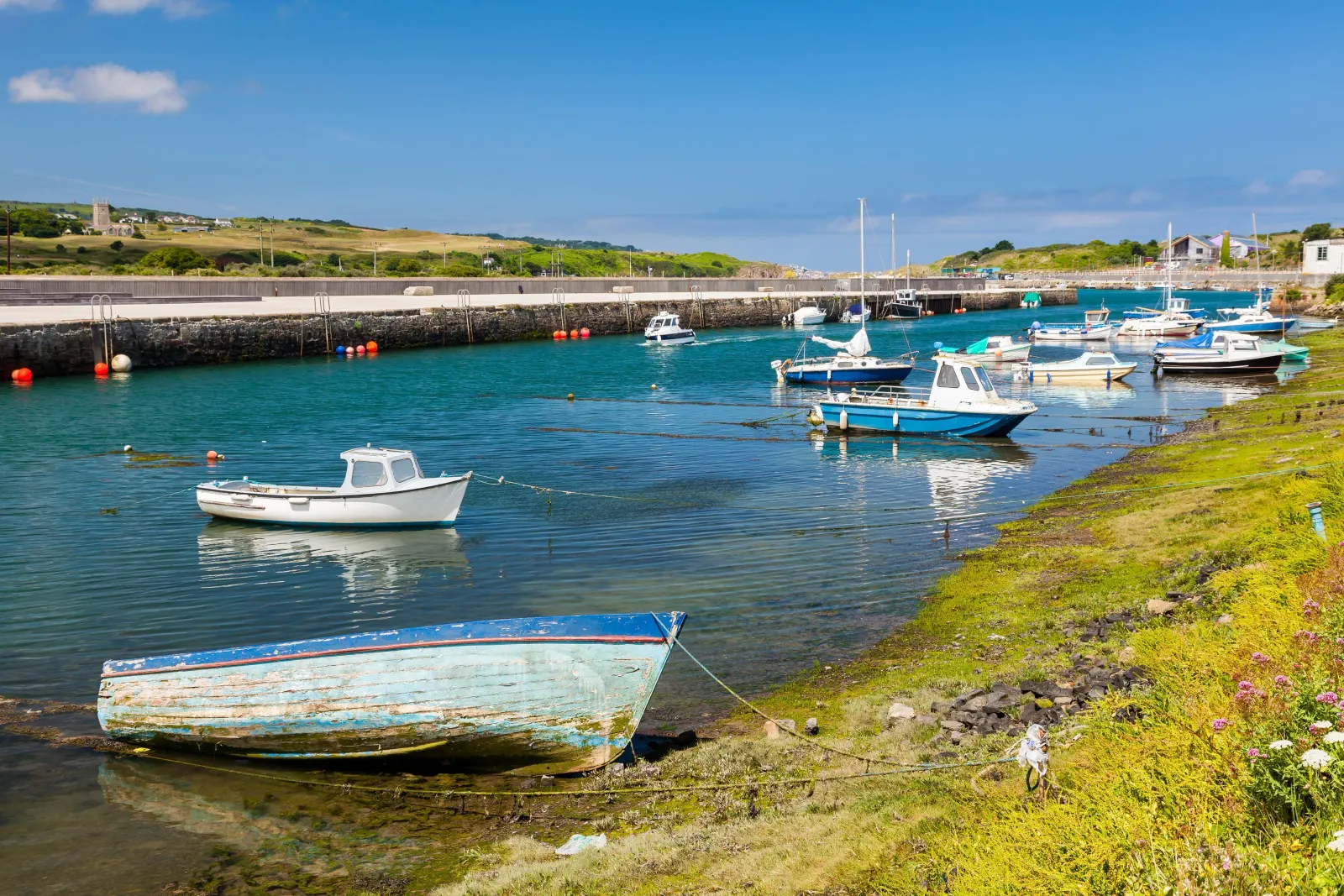
Keep travelling down the 238-mile A30 and you’ll eventually reach the oceanside town of Hayle. On the fringes of West Cornwall, this beach-lined idyll is one of the most beautiful towns in the South West – easy to reach, yet undeniably hard to leave. Why? You simply won’t want to.
To really get to know Hayle, steal yourself away and arrive at its salt-kissed doorstep to uncover all there is on offer. With a wealth of attractions and a flourishing community, there’s all sorts to fall in love with. Anticipate sandy beaches, great food, fascinating history, and activities galore. Here’s wasson…
Hayle images
Things to See and Do in Hayle
From stepping back in time through Cornwall’s industrial past to enjoying some of the most beautiful coastline in the UK, there is ample to see and do in Hayle. Pull on your exploring attire, grab yourself a pasty, and head out on to uncover all that makes this town so special.
Historical Attractions
Foundry Square: In the heart of Hayle town, Foundry Square marks one of the area’s original engineering centres. Encompassed by historic buildings and home to Hayle Heritage Centre, it’s one of the best places to go to learn about the town’s past (and eat delicious food). Found ‘ere is the original site of Harvey’s Foundry, “one of the three largest foundries in Cornwall… regarded as the foremost engine foundry in the world during the 19th century”.1 Both Harvey’s and the former Copperhouse Foundry (owned by the Cornish Copper Company) nearby produced equipment for projects all over the world and were instrumental in shaping the region’s trading, engineering and social legacy – making this area a must-visit for history buffs!
St Elwyn’s Church: One of the fascinating aspects of Hayle is the way it physically developed over the years. This in large part was to do with its mining port and industrial outlets, and more specifically, the competition between the area’s two leading iron foundries, Harvey’s and Copperhouse. For a long time, the geographical and trade division between the rival businesses served to create two distinct areas within what is known as Hayle today. Built in 1870,2 the Grade II* listed St Elwyn’s Church was constructed right in the middle of the two, exuding “not only great architectural and landscape significance, but also great symbolic significance”.3 Visit the church today for a moment of peaceful reflection.
The National Explosives Company: The Hayle Towans offer an unrivalled opportunity to travel through Hayle’s past and present. Where to, you ask? Nestled amongst the sand dunes, captivating relics of the National Explosives Company can still be seen, slowly reclaimed by nature. Established by the Kennall Gunpowder Company, the site became “one of the most successful independent manufacturers of chemical explosives in the late 19th century”. Primarily used to support the local mining industry as well as wartime efforts, it remained in operation until 1920.4 Today, designated trails through the dunes reveal an unrivalled insight into the factory’s past and haunting remains.
Heritage and Railways
Hayle Train Station: Ideally placed within the town, Hayle’s train station is located on Station Hill and managed by Great Western Railway. Part of the Cornish mainline service, it provides a useful connection for north and southbound destinations, including the county’s only city, Truro, and the country’s most southerly station, Penzance. Parking for cars and bicycles is available at the station, as well as a selection of facilities (including public Wi-Fi).
Hayle Viaduct: Hayle is widely known for its feats of engineering genius. That said, it wasn’t just mines and munitions that generated innovative thinking within the town, attracting renowned engineers such as Isambard Kingdom Brunel. One of the most ‘ansom features of the town is Hayle’s viaduct, built by the GWR in 1886 to replace an original bridge designed by Brunel himself in 1852.5 Carrying the Penzance to Paddington mainline, its view can be enjoyed from the top of the viaduct during leisurely rail journeys, or from the ground gazing up.
Family Activities
Paradise Park: The award-winning Paradise Park is a superb family-friendly attraction in Hayle. Home to both a wildlife sanctuary and a junglebarn for children, it makes for a popular destination for all the family. Particularly enchanting are the park’s red pandas, as well as more than 130 species of birds,6 from colourful parrots and striking macaws to regal golden eagles.
King George V Memorial Walk: A short walk from Hayle’s park and play area, the King George V Memorial Walk features an idyllic stretch of waterside footpaths. It follows the banks of Copperhouse Pool, a natural tidal creek that was expanded in the 1780s by the Cornish Copper Company for the passage of ships.7 Today, the setting’s peaceful ambience, estuary-view benches, and flower-lined borders are a lovely backdrop for walks.
Surf Schools: There are all sorts of watersports that you can try during a trip to Hayle. However, there’s nothing that evokes Kernowfornia dreaming quite like surfing. A great one for all the family, surfing can be enjoyed up and down Hayle’s coast – either solo, or under the expert guidance of a local surf school. Try Sandy Acres Surf School, Hayle Surf School, Global Boarders, and Shore Surf.
Coast2Coast Karting: Based just outside of Hayle town in St Erth, Coast2Coast Karting is a thrilling activity for little kids and big kids at heart. Welcoming everyone over the age of eight to take on its 12 corners, hairpin turns, and irresistibly smooth tarmac, this family-friendly attraction will capture the attention of all adrenaline seekers. Just remember to book in advance to avoid missing out.
Outdoor Activities
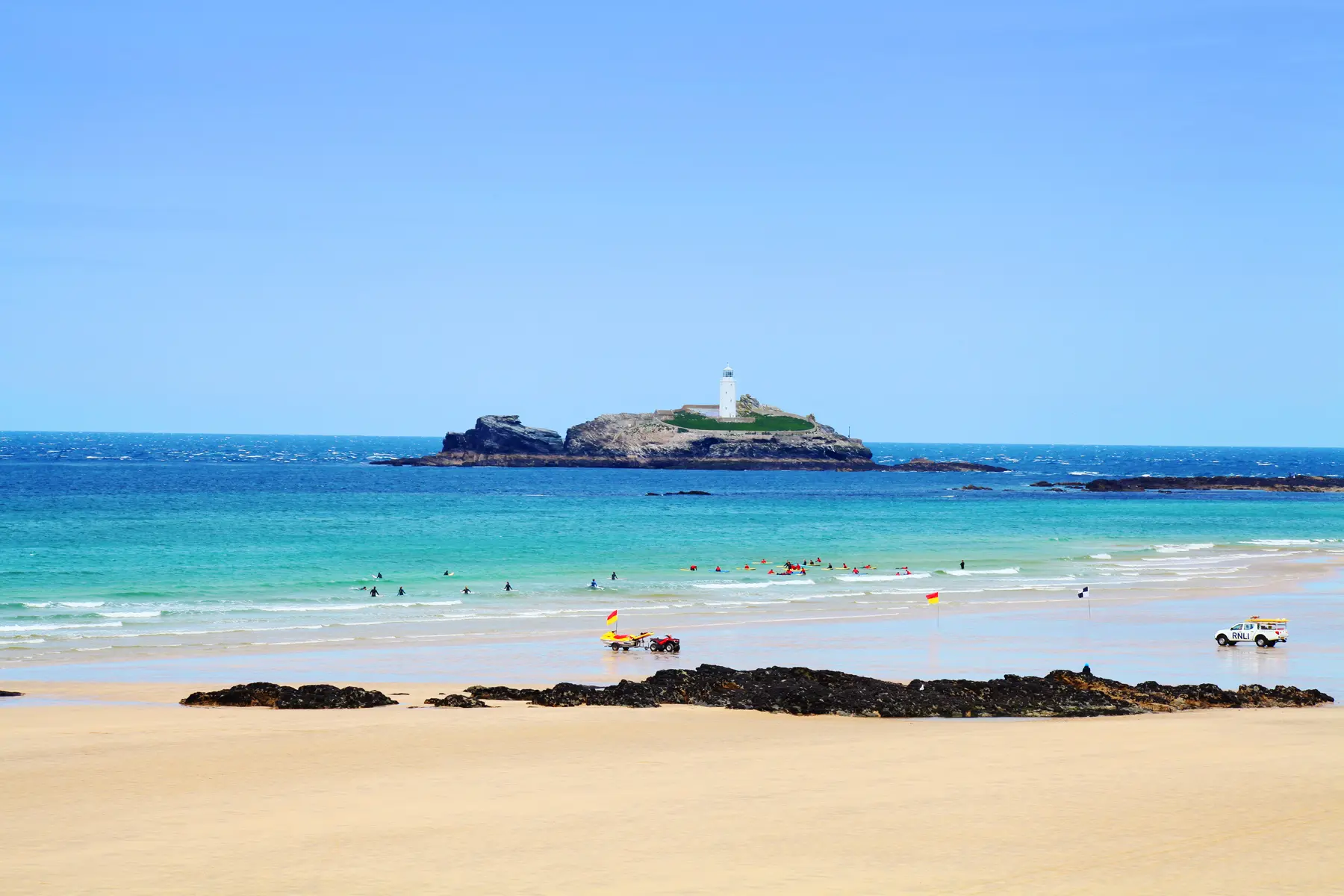
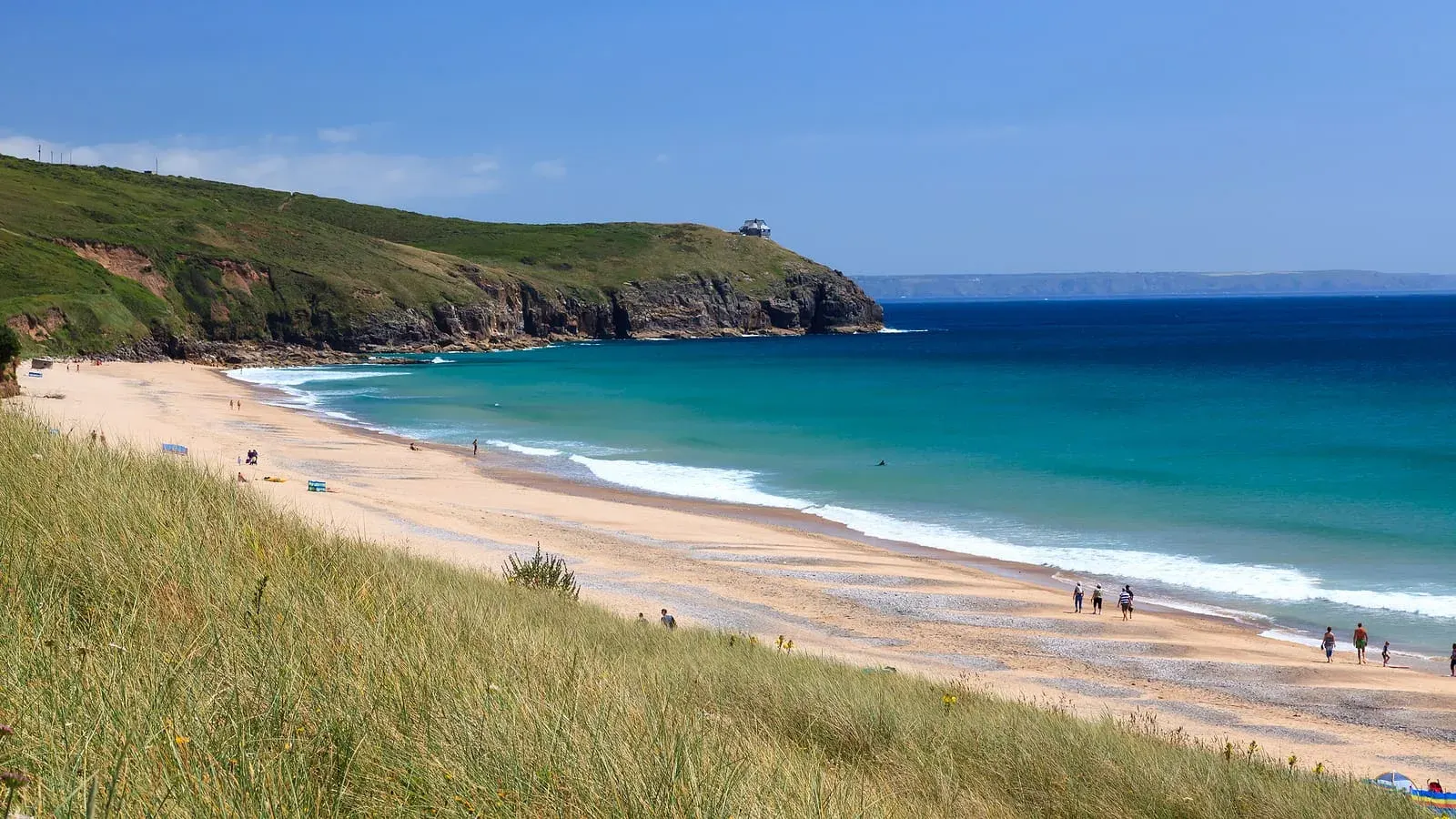
Gwithian: Tucked within St Ives Bay, Gwithian is an absolutely magical destination for surfers and beach-lovers alike. Adjoining Godrevy Beach and its neighbouring towans, this vast beach forms one 3-mile-long sweep of golden sand.8 Backed by an extensive dune system and met by rolling Atlantic swells, it’s equally as inviting for blustery stanks and barrelling surfs in winter as sunbathing and swimming in summer. Lifeguards are on duty in season, and parts of the beach are dog-friendly year-round too.
Hayle Golf: Should you wish to practice your putt, then turn your attention to Hayle Golf. A popular club amongst visitors and locals alike, it stars a driving range, practice area, and a 12-hole short course.9 A perfect practice centre for beginners and pros, it welcomes golfers of all abilities to head over and have fun. For further inspiration, you can also visit Penwith Pitch & Putt in St Erth.
Hayle Estuary RSPB: A beautiful nature reserve excellent for birdwatching, Hayle Estuary is a delightful destination throughout the year. Not far from the town centre, it emerges from the Hayle River and encompasses Carnsew Pool, creating an extensive area of wetland in which different species can thrive. For the best time of year to visit, winter is especially magical, when up to 18,000 migratory waders and waterfowl arrive at the estuary.10
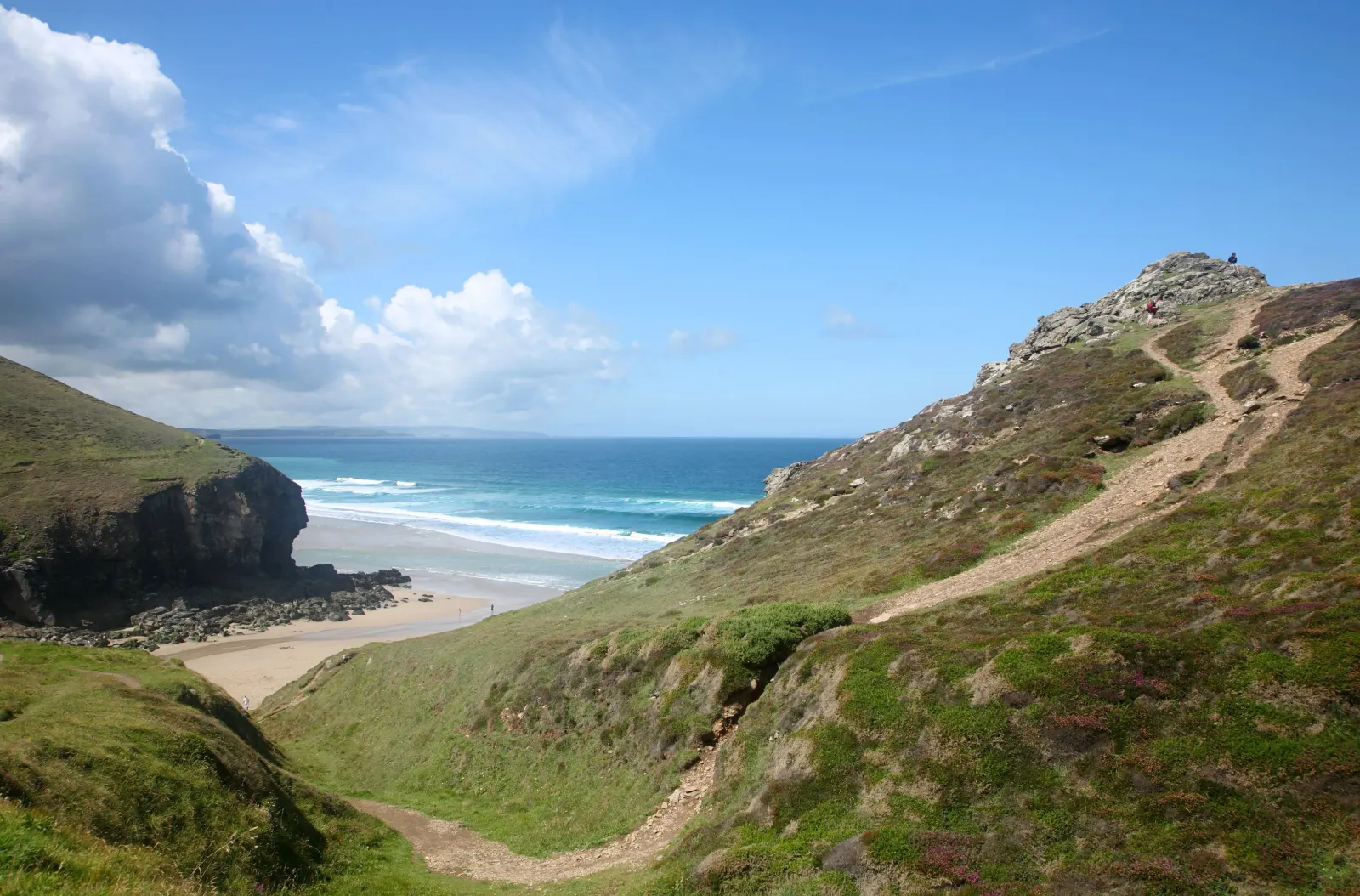
South West Coast Path:The South West Coast is the longest-established National Trail in England and runs for 630 miles from Minehead in Somerset to Poole in Dorset.11 Breathtaking at every turn, it can be picked up around Hayle to showcase some of the UK’s most jaw-dropping coastline. Follow this dog-friendly footpath as it wends south to St Ives or north past Gwithian Beach, Godrevy Point, Mutton Cove, and on towards Portreath, enjoying the contrast between flat golden sands and dramatic, towering cliffs.
Food and Drink
Both within its town centre and surrounding beaches and beauty spots, Hayle is loved for its diverse menu of places to eat and drink. Choose your favourite and take a comfortable seat as dishes of fresh local boos (that’s the Cornish word for food, not to be confused with “booze”!) are rustled up in the kitchen.
Cafés and Coffee Houses
Godrevy Café: Situated in one of the most picturesque spots on the coast, Godrevy Café is a welcoming gem throughout the year. With a two-tiered café that offers both indoor and outdoor seating, its easy location right next to the beach car park and expansive golden sands of Godrevy make it a firm favourite. Sit atop the first-floor balcony on balmy days for the best views.
Birdies Bistro: Birdies Bistro is a beloved local café overlooking the Hayle Estuary. With its riverside location, glass-fronted façade, and mix of indoor and outdoor seating, this is a year-round favourite that’s as inviting for refuelling breakfasts as leisurely lunches. Take a windowside seat for the best vantage point and watch the activity of wildlife on the estuary.
Pubs and Restaurants
Bucket of Blood: One of the most characterful pubs in the county, the Bucket of Blood is a true Cornish institution with flagstone floors and exposed beams. While Historic England suggests the pub you see today dates from at least the 1700s,12 some believe its true origins are centuries older. Either way, this pub is full of charm and a winsome spot to spin a yarn or two over a pint or hot meal.
The Old Forge: The Old Forge is a welcoming bistro in Lelant that’s widely recognised for its top cuisine. Composed of a small, hardworking team who dedicate themselves to a tasty, seasonal menu and friendly service, it’s a great destination for evening meals and romantic date nights. Parking is available outside and you’re only a short drive from either Hayle town centre or St Ives to continue your evening.
Breweries and Distilleries
St Ives Brewery: St Ives Brewery has rocketed in reputation over the years, becoming a firm staple of the Cornish craft ale community and reaching beyond to a national audience. As well as its two hubs in St Ives, the brewery’s main production centre and taproom is based in Hayle’s industrial estate. Don’t let the location put you off, their doors are very much open to everyone, so pop over to sample their range of independently brewed ales and beers and enjoy the cool, industrial-chic interiors.
Farm Shops
Trevaskis Farm Shop: Surrounded by a rich natural larder of rolling fields and glistening coast, Hayle is lucky enough to enjoy lots of fresh local produce. One of the best farm shops in the area, Trevaskis Farm can be found just outside of Hayle in Connor Downs. Set within 28 acres of farmland, it awaits with a dedicated restaurant (famous for its huge desserts!), a farm shop (complete with a butcher counter selling home-reared meats), and pick-your-own fruit and vegetable experiences. Beauty!
Richards of Cornwall: With a farm located in Penwith and a farm shop in Hayle, Richards of Cornwall is a sought-after choice for fresh, seasonal produce and local treats. As well as goods from their own land, the farm shop also works with a network of local suppliers to offer a wide range of things to try and buy. Think: free range poultry, award-winning cheeses (Cornish Yarg is a must-try), homemade chutneys, hand-pressed apple juices and more.
Places to Stay in Hayle
Whether you’re camping, glamping, self-catering, or would like all the fineries spread on, there’s somewhere in Hayle to suit all styles and occasions. Fall asleep on marshmallow-soft pillows and wake up recharged, ready for the day’s adventures.
Expedia.com:
Expedia.com lists a wide selection of accommodation in Hayle, Cornwall, including hotels, guesthouses, and self-catering holiday properties. Many options are located near Hayle’s beaches, harbour area, and local amenities, providing convenient bases for enjoying coastal scenery, water sports, and exploring West Cornwall’s attractions. Check availability and best prices.
Best Value Hotels:
For a comfortable stay that won’t break the bank, Hayle offers a range of well-rated mid-range hotels—perfect for enjoying its long sandy beaches and easy access to St Ives Bay. Check latest deals & availability.
Boutique & Character Stays:
If you’re after something with more personality, Hayle has a selection of charming guesthouses, cosy inns, and stylish stays with a relaxed coastal feel. Check latest deals & availability.
Dog-Friendly Places to Stay:
Bringing your dog along? Many Hayle properties are pet-friendly, with miles of beach, dunes, and coastal paths nearby for long walks. Check latest deals & availability.
Self-Catering & Cottages:
For extra space and flexibility, Hayle’s self-catering options include beachside cottages, modern apartments, and peaceful retreats close to the coast. Check latest deals & availability.
History of Hayle
Hayle’s history stretches all the way back to the Bronze Age and contains book after book of captivating stories. Especially significant, its thriving industrial heartbeat of the 18th and 19th centuries really laid the foundations for Hayle as it is today – a legacy ingrained throughout the town.
Early Settlements
Hayle as we know it today was largely developed during the Industrial Revolution. That said, the area and its surrounds are believed to have been inhabited since at least the Bronze Age.14 At Carnsew Pool, evidence of an Iron Age fort has been unearthed,14 and it’s believed that the town played a significant role in the Neolithic tin industry.14
What’s more, it seems that as soon as people realised that they could get to Hayle by boat, they did. In fact, it’s believed to have “provided a safe harbour from prehistoric times and a focus for settlement, trade, and shipping, since it is one of the large natural ports on the north Cornish coast”.15
Supporting this theory are the large array of Romano and Grecian pottery remnants14 and rare Roman coins (many from mints in Heraclea and Alexandria)16 that have been found in the area. Pretty cool, right? Later, once the Romans left the area, Christian missionaries began arriving in and around Hayle, many coming from Ireland.14 These include, of course, the county’s patron saint of tin-miners, St Piran, who landed just up the coast at Perranporth.
Medieval Foundations
During the Medieval times, the area continued to flourish as a trading port over many centuries. It was during this period that “dispersed settlements of hamlets, churchtowns and farmsteads”15 began to really take root.
Cultures and frameworks started to overlap, with many older structures and footprints being repurposed and cultivated. These include St Uny’s Church at Lelant, the earliest references for which date back to the 1100s,18 which is believed to have been built atop a much older Roman fort.
The Medieval era was also the first time in which Hayle as an area – not yet as a town – was first referenced. This came in 1265, with Hayle (or Heyl as it was often referred to) making its first documented appearance on paper.15
Tudor and Stuart Era
As time went on, the region continued growing. Lelant’s St Uny Church was rebuilt in the late 15th century18 and more structures appeared. By the 16th century, the tin industry was heaving, but this also meant the estuary was being clogged with large amounts of waste sand and silt.3 To counteract this, a sister port was created at St Ives to alleviate some of the strain and support the region’s ongoing trading success.
The churchtowns of Phillack and Lelant continued to expand, as did nearby Angarrack. Shaft tin mines, mills and stamps were in operation throughout the area to assist local industry. At the same time, the import of coal (largely from South Wales) and other materials and the export of tin continued from Hayle Port.15
Elsewhere, civil unrest in the form of the Cornish rebellion of 149716 and the threat of foreign invasion from the continent served to spur the construction of defensive outposts around the county. However, Hayle was largely untouched by these developments and continued to focus on its industrial growth.
Georgian and Industrial Expansion
For hundreds of years, the area of Hayle was renowned for its local resources and the import and export of goods. It’s widely regarded that a prosperous tin industry “already existed there long before Hayle emerged as an important industrial centre for copper and iron production in Cornwall”.20
However, it wasn’t until the Industrial Revolution that things really took off and Hayle cemented itself as a certified town and a global industrial leader. So much so that by the early part of the 1800s, Cornwall had become the greatest producer of copper in the world17 – an achievement in which Hayle was very much at heart.
Needless to say, Hayle’s industrial evolution goes hand in hand with the establishment of both the Copperhouse Foundry in 1758 and Harvey’s Foundry in 1779.18 These iron smelting foundries were of immense significance, both supporting Cornish mining and global projects with innovative engineering (as well as creating serious rivalry within the area).
Most notably, their successes included the manufacturing of internationally sought-after steam engines and equipment. Impressively, it was Harvey’s Foundry (once found in Hayle’s Foundry Square) that created the largest steam pumping engine to have ever been built, the Cruquius.23
All the while, Hayle’s extensive maritime infrastructure continued to provide an invaluable backbone for transport and trade and space to build and repair ships. Roads and tramways were built, and countless men were employed by the area’s multi-faceted industries.
Victorian and Edwardian Changes
Having developed from a multitude of industries and propelled by the Industrial Revolution, Hayle was vastly different to many of the county’s other ports. A port, trading centre, and manufacturing hub, it was a true microcosm of industrial and commercial enterprise that continued well into the Victorian era and into Edwardian times.
“As a manufacturing centre for the mining industry, a smelting centre for both tin and copper, the main port of entry for coal, timber, leather, grain, iron and all the other goods needed for the mines, the major home port for the fleet that carried the goods, and the major shipbuilding centre in Cornwall, Hayle was in a very real sense the power house of Cornish industry.”14
Marking a significant chapter in the area’s history, things eventually took a rocky turn in the mid-19th century, as other viable mining sites were beginning to be located elsewhere in the world. Though this didn’t immediately halt industry in Hayle, the price of copper and tin – Hayle Port’s main exports – fell significantly.
Founded in 1887,15 the creation of the National Explosives Company perhaps served to prolong the county’s ultimately fated mining industry with pioneering technologies in dynamite production. Meanwhile, the area’s infrastructure was bolstered by the construction of local railway routes, as well as a lifeboat station in 1886.14
Despite this, by the end of the 19th century, most of the local mines had closed down. Between 1841 and 1901, 250,000 people had left Cornwall in order to find work abroad,17 most in the pursuit of gold and silver. Cornish expertise was highly prized, meaning there were lots of options for men wanting to find new opportunities elsewhere.
This of course gave rise to the popular saying that no matter where you go in the world, “where there’s a hole, there’s a Cornishman”.
World Wars and 20th Century
By the early part of the 20th century, Hayle’s iron foundries had permanently shut their doors. The Cornish Copper Company had already been taken over by Harvey’s Foundry in 186724 due to bankruptcy. But even with its monopoly, Harvey’s Foundry couldn’t prevail over the mining industry’s general decline and folded in 1903.25 Hayle’s lifeboat station closed around the same time, while a separate lifeboat service continued to operate on and off from St Ives.
Interestingly, though heavy engineering largely came to a stop in Hayle, new industries began arriving in its place and the port remained active. “For most of the 20th century, Hayle continued to be an important industrial centre, and the harbour remained one of the busiest in Cornwall”.3
Embracing a new era, The National Explosives Company entered into a brief revival following the closure of the local mines. By 1906, the company had employed 700 people, which rose to 1,500 during World War I, making it the largest single employer in Hayle’s history.3 Eventually, by 1920, this company too had closed. Rather riskily, it still stored many of its explosives onsite until the 1960s,14 leading to the site being affectionately dubbed “Dynamite Towans” by the locals.
Ever open to change, Hayle’s industrial heartbeat was about to adopt yet a new rhythm. Hayle Power Station was established in 1910 on North Quay. Producing coal-fired power, it was the only one of its kind to be connected to the National Grid in Cornwall and played a major role in supplying local electricity. It also played a vital role in supporting Britain’s efforts during World War II.26
Various other businesses popped up around the town, making the most of its port and transport links. During World War II, Hayle was particularly recognised for its logistical benefits and advantageous infrastructure, with its harbour, power station, engineering facilities and new Octel Bromine works all assisting war efforts. Today, you can still see the remains of some of the defensive pillboxes that were strategically stationed along the coastline to protect it from potential invasion.
Modern Developments
Renowned for its history of innovation, Hayle’s many chapters continue to evolve with modern-day developments. From brand-new industries to a growing population, here’s what happening in Hayle today.
Industrial
Hayle’s industrial legacy is something that very much lives on in the town today. “In 2006 the former port of Hayle, including South Quay, gained World Heritage Site status as part of the Cornwall and West Devon Mining Landscape (UNESCO Ref 1215). The reasons for Hayle’s inclusion included its historic role as a significant specialist industrial harbour”.19
In a typically forward-thinking and innovative move, the town’s industrial and engineering expertise is slowly being used to harness a new wave of sustainable projects. This includes the creation of Hayle Marine Renewables Business Park in the North Quay.
The town is also home to Hayle Industrial Park, where dozens of businesses are based. With a number of career opportunities, this park, alongside the many businesses and organisations in the heart of the town, have made Hayle attractive for new developments and prospective employees looking to gain experience in a thriving business hub.
Housing
Eventide: Currently in development, Eventide is a brand-new development project on Viaduct Hill in Hayle. Building 85 homes20, the development plans to include a contemporary collection of two, three and four-bedroom homes perfect for first-time buyers and those looking to upgrade their current set-up.
Copper Hills: Copper Hills housing development in Hayle was completed as recently as 2024 and includes 125 new homes.21 This allocation includes a mix of two, three and four-bedroom houses, some of which were available to buy under shared ownership schemes.
Key Buildings in Hayle
Hayle is a picture of living history, and many of its buildings—both prominent and more inconspicuous—contain fascinating stories within their walls. Discover some of the town’s most notable structures and step back in time.
- Old Foundry Chapel: Dating from the mid-19th century, the Old Foundry Chapel has taken pride of place in Hayle for nearly 200 years. A striking, classical-style building with vanilla hues, curving archways, and a pediment roof, it easily catches the eye. Inside, many of the building’s period features have been lovingly preserved, while the space has been transformed to house a collection of small shops and boutiques ideal for leisurely browsing.
- John Harvey House: Once the HQ of Harvey’s Foundry, John Harvey House at 24 Foundry Square is one of the area’s most well-known buildings. Easily recognisable by its dominating façade and clocktower, this Grade II* listed building is intrinsically linked to Hayle’s history. Today, it is home to Harvey’s Foundry Trust and the Hayle Heritage Centre.
- Hayle Emporium: If you spend any time in Hayle, you’ll likely come across Hayle Emporium. Situated on Penpol Terrace, this quirky antiques store is full of intriguing curios and vintage finds. Visitors can explore eclectic collectibles, unique furniture, and one-of-a-kind decorations, either to purchase or simply enjoy browsing.
- Godrevy Lighthouse: Undoubtedly one of the most iconic structures on Cornwall’s north coast is Godrevy Lighthouse. Built by Trinity House in 1859,22 it was created to guide ships safely past submerged reefs along the coast. Some believe it also inspired Virginia Woolf’s To The Lighthouse, after she visited Godrevy during her childhood.23
Famous People from Hayle
Hayle has played host to countless big thinkers, creative leaders and masterful engineers over the years. Here are two of its most esteemed citizens, both born in this salt-kissed town.
- John Harvey (1730-1803) is renowned as the founder of Harvey’s Foundry. A local man, Harvey started his career working as a blacksmith at a forge in Carnhell Green.7 Both highly skilled at his craft and indubitably ambitious, he recognised the opportunities to be found in the ever-evolving mining industry. Backed by the financial support of John St. Aubyn32 (an MP and the Sheriff of Cornwall), Harvey set about creating his own foundry that would rival, and eventually acquire, the highly successful Cornish Copper Company.
- Cyril Richard (Rick) Rescorla was a Hayle-born war hero who saved the lives of thousands of people during the September 11 attacks on the Twin Towers. Having served with the British Army, he moved to America where he became a citizen and a decorated soldier, fighting in the Vietnam War.33 In later life, he became the Vice President for Security at Morgan Stanley Sean Witter. On the day of September 11, 2001, Rescorla was at his desk on the 44th floor of the South Tower when an aircraft hit the neighbouring tower.34 Despite orders to stay put, Rescorla sprang into action and began evacuating his colleagues,34 before re-entering the building to search for more people. Rescorla was never seen again. Overall, he is credited with saving 2,700 people.35
Education in Hayle
With a mix of both mainstream and independent approaches, Hayle’s schools are the heartbeat of the community’s next generation of young pards and maids. From village primary schools with a handful of kids per year group to a large high school just a short drive from the sea, its education system weaves national curriculum and local values in true Cornish style.
Primary Education
Gwinear Primary School: Located on Gwinear Lane near Hayle, Gwinear Primary School is an Ofsted-rate ‘Good’ foundation school. It welcomes children between the ages of 4 and 11 and currently has a capacity of 120 children.24
Bodriggy Academy: Bodriggy Academy can be found on Humphry Davy Lane in Hayle and is an academy converter school sponsored by Truro and Penwith College. It accepts children aged 3 to 11, and has a capacity of 340 pupils.25 It’s rated ‘Good’ by Ofsted.
Secondary Education
Hayle Academy: An academy converter school located on High Lanes in Hayle, Hayle Academy is sponsored by Truro and Penwith College. One of the area’s largest high schools, it has capacity for 769 students between the ages of 11 and 16. It’s an Ofsted ‘Good’-rated school.38
The Cornwall Independent School: Opened in 1991, The Cornwall Independent School is situated on Trelissick Road. Not rated by Ofsted due to its independent status, it welcomes children from the ages of 4 to 16 and has a capacity for 90 children in total.39
Demographics of Hayle
According to the Office of National Statistics, Hayle’s population was 9,900 people in 2022,40 rising from 8,902 people in 2011. In 2001, 8,317 people were recorded as part of the Census, meaning that Hayle has enjoyed a slow but steady population growth over the last 20 years or so.
The 2021 Census provided insight into the town’s ethnic composition, which is currently 97.2% White, 0.5% Asian, 0.1% Black, 1.4% Mixed, and 0.8% Other.40
In terms of age profile, the town has a fairly even spread of ages, with those aged 80 or over in the smallest demographic. Those aged 50 to 59 make up marginally the highest proportion of residents. However, the median age is 46, and in total, 57.7% of people are between the ages of 16 and 64 years old.40
When it comes to religion, Hayle is predominantly a secular region, with a majority of 47.5% of residents on the 2021 Census claiming they had no religion. This was followed by 43.4% Christians, 0.4% Buddhists, 0.3% Muslims and 0.1% Hindus.40
Crime in Hayle
Devon and Cornwall Police reports provide an overview of the crime rates in Hayle.
In the Copperhouse-Gwinear areas of Hayle, 708 crimes were reported between July 2024 and June 2025. In the Hayle Foundry area, 559 were reported in the same period. Within these figures, violence and sexual assault received the highest numbers of reports26 – this is 1.43 times the national average of 34 reports per 1,000 people.27
Overall, the crime rate in Hayle from January to August 2025 was 72 crimes per 1,000 people. This is 17% higher than the average regional crime rate, but 0.53% lower than the average national crime rate for the same period.
Transport in Hayle
Located at the foot of the A30 and with great transport links, Hayle is one of the most easily accessible towns in Cornwall and offers great access to nearby towns and hotspots. Proper job.
- Roads: The A30 provides great access to Hayle, while numerous splinter roads offer lots of possibility for further travel to regional hotspots. Hayle is served by a small number of car parks and extensive roadside parking throughout the centre of the town.
- Buses: Dozens of bus stops can be found throughout Hayle, each served by a regular bus timetable. These include both local bus routes and national coach services.
- Rail Links: Hayle benefits from its own train station right in the heart of the town. This is an especially popular option for getting to nearby favourites such as Penzance in Mount’s Bay or St Ives (where parking can be tricky – especially in summer) and proposes a relaxed way to get around.
Is Hayle Worth Visiting?
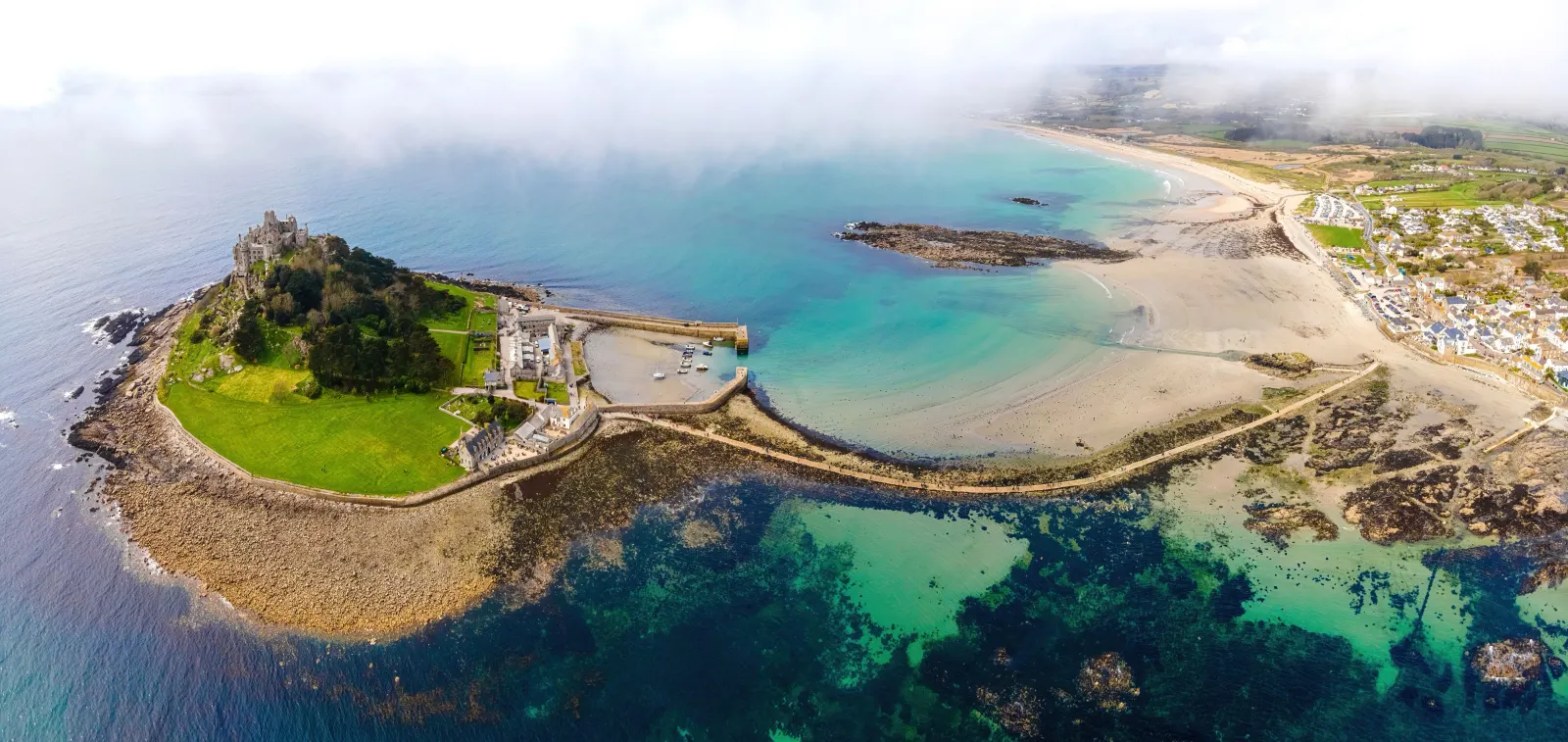
Yes! There is so much to see and do in Hayle that you could spend countless hours discovering its beloved attractions and hidden gems. It’s also perfectly located for getting to nearby beauty spots and landmarks, such as St Ives, Land’s End, Marazion’s St Michael’s Mount, and even the bright lights of Truro. Whether you’re a history-lover, outdoors enthusiast, or are simply looking for somewhere new to explore, you’ll find plenty to inspire you. Like most places in Cornwall, it does get busy here in summer, but thankfully the town offers a good number of restaurants and extensive coastline which helps to absorb (most of) the crowds.
Article Sources
- Wolframm-Murray, Yvonne. (2023). Archaeological Investigations at South Quay, Hayle. Oxford: Archaeopress Publishing Ltd.[↩]
- Godrevy Team Ministry (n.d.). St Elwyn’s Church Hayle. [online] Available at:https://www.godrevytm.org.uk/hayle-church.php St Elwyn’s Church, Hayle[↩]
- Cornwall Archaeological Unit. (2000). Hayle Historical Assessment Cornwall. Truro: English Heritage and Cornwall County Council[↩]
- Heritage Gateway. (n.d.). Historic England Research Records: The National Explosives Company. [online] Available at: https://www.heritagegateway.org.uk/Gateway Heritage Gateway[↩]
- Green, Peter J. (2025). Railways in Devon and Cornwall in the Late 20th Century. Yorkshire: Pen & Sword Books Ltd[↩]
- Paradise Park. (n.d.). Species at Paradise Park. [online] Available at:https://paradisepark.org.uk/all-species/ Paradise Park[↩]
- Burton, Anthony. (2020). Mines and Miners of Cornwall and Devon: The Tin and Copper Industries. Yorkshire: Pen & Sword Books Ltd[↩]
- Neale, Stephen. (2022). The South West Coast Path. Conway: Bloomsbury Publishing[↩]
- Hayle Golf. (n.d.) Hayle Golf. [online] Available at:https://haylegolf.co.uk/ Hayle Golf Club[↩]
- RSPB. (n.d.). Reserves: Hayle Estuary. [online] Available at:https://www.rspb.org.uk/days-out/reserves/hayle-estuary Hayle Estuary Nature Reserve- RSPB[↩]
- South West Coast Path. (n.d.). South West Coast: About. [online] Available at:https://www.southwestcoastpath.org.uk/about-coast-path/ South West Coast Path[↩]
- Historic England (n.d.). The Bucket of Blood. [online] Available at:https://historicengland.org.uk/listing/the-list/list-entry/1143713?section=official-list-entry Historic England[↩]
- Pascoe, Harry. (2005). The Book of Hayle: Portrait of a Cornish Coastal Town. Bath: CPI[↩]
- Tait, Derek. (2018). Cornwall: Romans to Victorians. Yorkshire: Pen & Sword Books Ltd[↩]
- ARees, Elizabeth. (2020). Early Christianity in South-West Britain: Wessex, Somerset, Devon, Cornwall and the Channel Islands. Oxford: Oxbow Books[↩]
- Rees, Elizabeth. (2020). Early Christianity in South-West Britain: Wessex, Somerset, Devon, Cornwall and the Channel Islands. Oxford: Oxbow Books.[↩]
- Wolframm-Murray, Yvonne. (2023). Archaeological Investigations at South Quay, Hayle. Oxford: Archaeopress Publishing Ltd[↩]
- Cornwall Historic Churches Trust. (n.d.). Lelant: St Uny. [online] Available at:https://www.chct.info/histories/st-uny-lelant/ Cornwall Historic Churches Trust[↩]
- Historic UK. (n.d.). Cornish Rebellion of 1497. [online] Available at:https://www.historic-uk.com/HistoryUK/HistoryofEngland/Cornish-Rebellion-1497/ Historic UK[↩]
- Moss, John. (2022). Celtic Places & Placenames: Heritage Sites & the Historical Roots of Six Nations. Yorkshire: Pen & Sword Books Ltd[↩]
- Cornwall Heritage Trust. (n.d.). Industry in Cornwall. [online] Available at:https://www.cornwallheritagetrust.org/timeline/industry-in-cornwall/ Cornwall Heritage Trust[↩]
- Hayle Heritage Centre. (n.d.). Engineering. [online] Available at: https://www.hayleheritagecentre.org.uk/industrial-heritage/engineering/ Centre Hayle Heritage Centre[↩]
- Harvey’s Foundry Trust. (n.d.). History of Hayle. [online] Available at:https://www.harveysfoundrytrust.org.uk/history-heritage/history-of-hayle/ Harvey’s Foundry Trust[↩]
- Hayle Heritage Centre. (n.d.) Copper Wash Boiler. [online]. Available at:https://www.hayleheritagecentre.org.uk/hayle-in-20/copper-wash-boiler/ Hayle Heritage Centre[↩]
- ait, Derek. (2018). Cornwall: Romans to Victorians. Yorkshire: Pen & Sword Books Ltd[↩]
- Hayle Heritage Centre. (n.d.). Hayle Power Station. [online] Available at: https://www.hayleheritagecentre.org.uk/hayle-in-20/hayle-power-station-inscribed-brick/ Hayle Heritage Centre[↩]
- Wolframm-Murray, Yvonne. (2023). Archaeological Investigations at South Quay, Hayle. Oxford: Archaeopress Publishing Ltd[↩]
- Gilbert & Goode. (n.d.). Eventide. [online] Available at: https://www.gilbertandgoode.co.uk/developments/eventide/ Gilbert & Goode
- Voice Newspapers. (2024). Families receive the keys to new affordable homes in Hayle. [online] Available at:https://www.voicenewspapers.co.uk/news/families-receive-the-keys-to-new-affordable-homes-in-hayle-721090 Voice Newspapers
- Trinity House. (n.d.). Godrevy Lighthouse. [online] Available at: https://www.trinityhouse.co.uk/lighthouses-and-lightvessels/godrevy-lighthouse Godrevy Lighthouse
- Boshier, Rosa. (2013). How to Analyze the Works of Virginia Woolf. North Mankato: ABDO Publishing
- ABurton, Anthony. (2020). Mines and Miners of Cornwall and Devon: The Tin and Copper Industries. Yorkshire: Pen & Sword Books Ltd
- 911 Memorial. (n.d.). Recognizing War Hero Who Led WTC Survivors to Safety on 9/11. [online] Available at:https://www.911memorial.org/connect/blog/recognizing-war-hero-who-led-wtc-survivors-safety-911 911 Memorial
- Gert, Bill. Breakdown. (2012). How America’s Intelligence Failures Led to September 11. Washington: Regnery Publishing
- Congress Medal of Honor Society. (2009). Rick Rescorla. [online] Available at:https://www.cmohs.org/citizen-honors/rick-rescorla Congress Medal of Honor Society
- Gov.uk. (n.d.). Gwinear Community Primary School. [online] Available at:https://get-information-schools.service.gov.uk/Establishments/Establishment/Details/111846 Gwinear Community Primary School
- Gov.uk. (n.d.). Bodriggy Academy. [online] Available at:https://get-information-schools.service.gov.uk/Establishments/Establishment/Details/136523 Bodriggy Academy
- Gov.uk. (n.d.). Hayle Academy. [online] Available at:https://get-information-schools.service.gov.uk/Establishments/Establishment/Details/145211? Hayle Academy
- Gov.uk. (n.d.). The Cornwall Independent School. [online] Available at:https://get-information-schools.service.gov.uk/Establishments/Establishment/Details/112082? The Cornwall Independent School
- ONS. (n.d.). Hayle. [online]. Available at:https://www.ons.gov.uk/explore-local-statistics/areas/E04013062-hayle ONS
- Devon and Cornwall Police. (n.d.). West Cornwall. [online] Available at:https://www.devon-cornwall.police.uk/area/your-area/devon-cornwall/west-cornwall/ Devon and Cornwall Police
- Crime Rate. (n.d.). Hayle. [online] Available at:https://crimerate.co.uk/cornwall/hayle Crime Rate
Frequently Asked Questions
Hayle comes from the Cornish word “heyl”, meaning estuary or tidal river. The name reflects Hayle’s coastal location at the River Hayle estuary in west Cornwall.
Yes — you can walk from Hayle to St Ives, and it’s one of Cornwall’s best coastal walks.
The route follows the South West Coast Path, covering about 6 miles (10 km) one way and taking 2.5–3.5 hours. Expect sandy beaches, dunes at Hayle Towans, and stunning views across St Ives Bay. It’s well signposted but includes some uneven coastal paths.
Hayle’s long sandy beaches, including Hayle Towans and Gwithian Towans, are popular for sea swimming. Water quality is generally good, with seasonal lifeguard patrols in summer. Swimmers should watch for strong tides and rip currents, especially near river mouths.
Yes — Hayle, Cornwall has cafés near the seafront and harbour, including places serving coffee, snacks, and meals with beach and estuary views. Public toilet facilities are also available close to the beach and town centre, at Hayle Recreation Ground and at Gwithian Towans
Yes, you can walk from Hayle Beach to Carbis Bay Beach. The route (4.5 miles) follows the scenic South West Coast Path and takes around 1–1.5 hours on foot, offering coastal views, sand dunes, and estuary landscapes along the way. It’s a popular walk for both locals and visitors exploring Cornwall’s north coast.
Depending on what you feel like, there’s an almost unlimited supply of “best things” to do in Hayle. Some of the best include spending time on the area’s spectacular beaches, walking, surfing, playing and picnicking on the sand. Then, of course, you have family-friendly attractions such as Paradise Park Wildlife Sanctuary, Hayle Heritage Centre, and Coast2Coast Karting. Sampling the local food at one of the many restaurants and cafés is always a treat, or looking out for an event night at St Ives Brewery. You can also simply spend tranquil moments by the water along the King George V Memorial Walk or by the Hayle Estuary, taking time to absorb the surrounds and simply being in the moment.
Hayle is a great place to live for all those who favour laidback community life over city thrills. With a stunning coastline, welcoming eateries, and lots of local businesses, it offers a lowkey taste of urban life coupled with an abundance of space to enjoy Mother Nature.
Yes, Hayle in Cornwall is dog-friendly. Dogs are welcome on Hayle Beach, the Towans, and along the South West Coast Path, though seasonal restrictions may apply on some beaches during summer. Many local cafes, pubs, and accommodations also welcome dogs, making Hayle a great spot for pet owne
Hayle is moderately affordable compared with other Cornish coastal towns, but housing costs can be higher than inland areas because of its beaches and estuary location. Day‑to‑day living expenses tend to be comparable to other parts of Cornwall, making it a practical choice
You can get to Hayle, Cornwall by train via the Hayle Railway Station on the Cornwall Line, with direct services from Penzance, Truro, and St Ives. For bus travel, several local services connect Hayle to Penzance, St Ives, and surrounding towns, with stops near the town centre and beaches. Trains and buses make Hayle easily accessible for day trips or longer stays in Cornwall.
Yes, you can surf in Hayle, Cornwall. Hayle Beach and Hayle Towans offer popular surf spots for all levels, with consistent waves and nearby surf schools for lessons and board hire. It’s a top
You can park in Hayle near the beach at several car parks, including Hayle Towans Car Park, Copperhouse Car Park, and Carnsew Car Park, all within walking distance of Hayle Beach. Street parking is limited, so using official car parks is recommended.
Written by
A Kernowphile through and through, Lizzie first moved to Cornwall "for the summer". Over a decade later, she finds herself fully entrenched and in love with Cornish life. A specialist copywriter by trade, in her personal life Lizzie can mostly be found on the beach with her rescue dog.
6 articles published on Cornwall.co.uk
Read more from Lizzie Heather →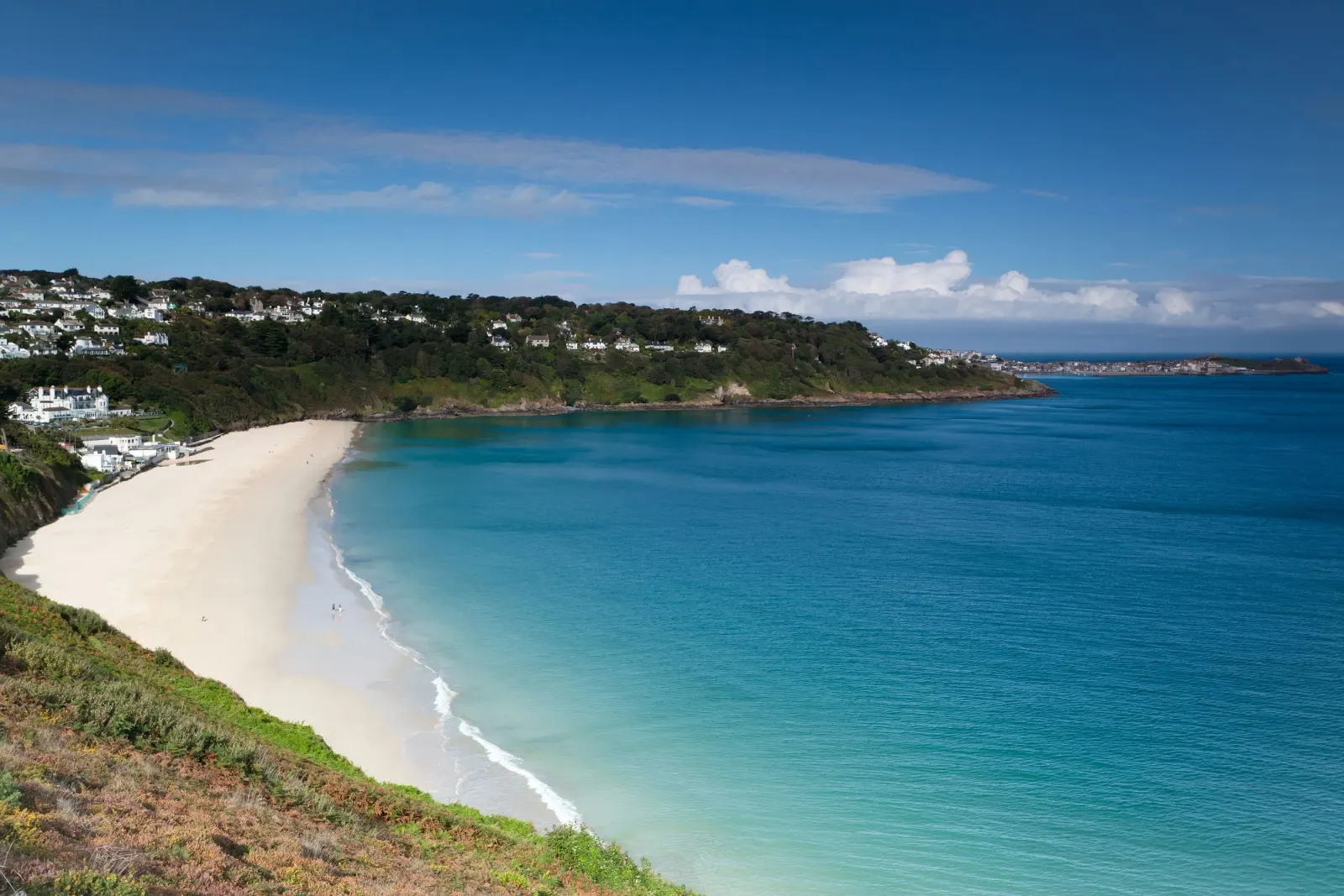

Comments
No comments yet — be the first to share your thoughts.
Leave a comment
Your email won’t be published. Comments are checked before they appear.