

35 articles
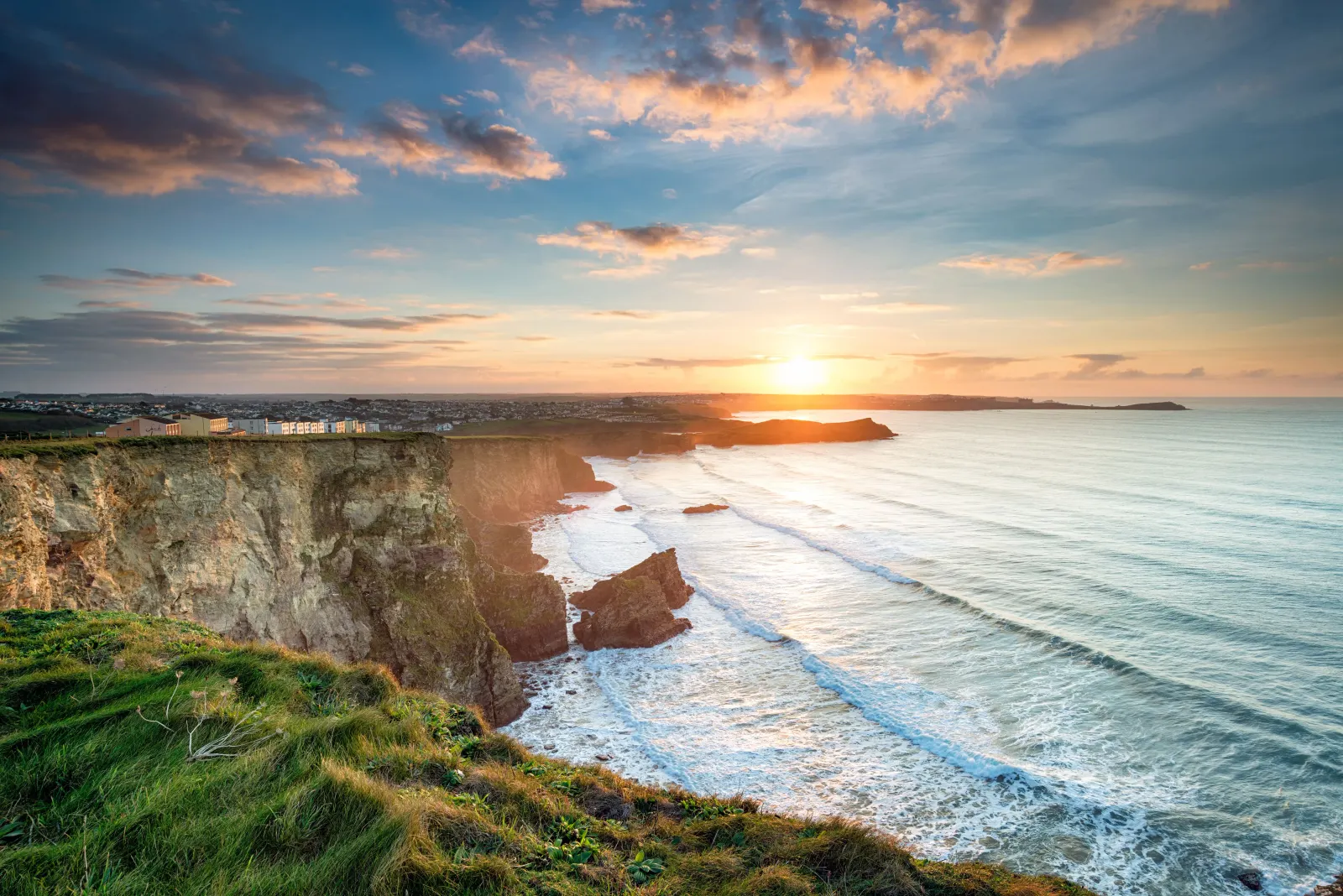
Perranporth is the kind of place where you’ll end up finding sand in your shoes for a week afterwards, and you won’t even mind. It’s a small Cornish town on the north coast, but with a beach that seems to go on forever, and a centre that hums with holiday chatter even in winter, mainly thanks to its mix of cafés, pubs, and sandy footprints trailing through the main street, with the Atlantic Ocean always somewhere in the corner of your eye.
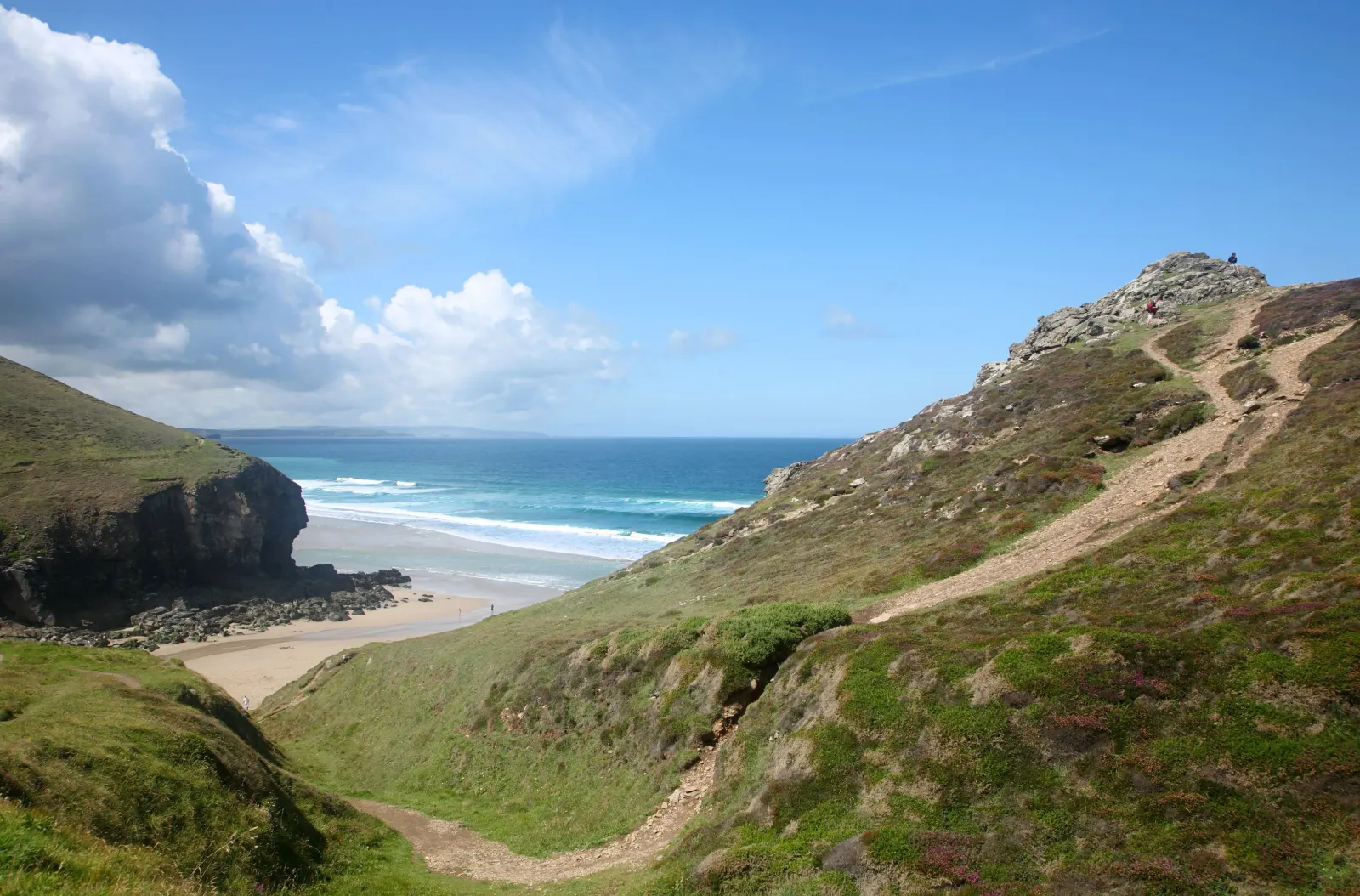
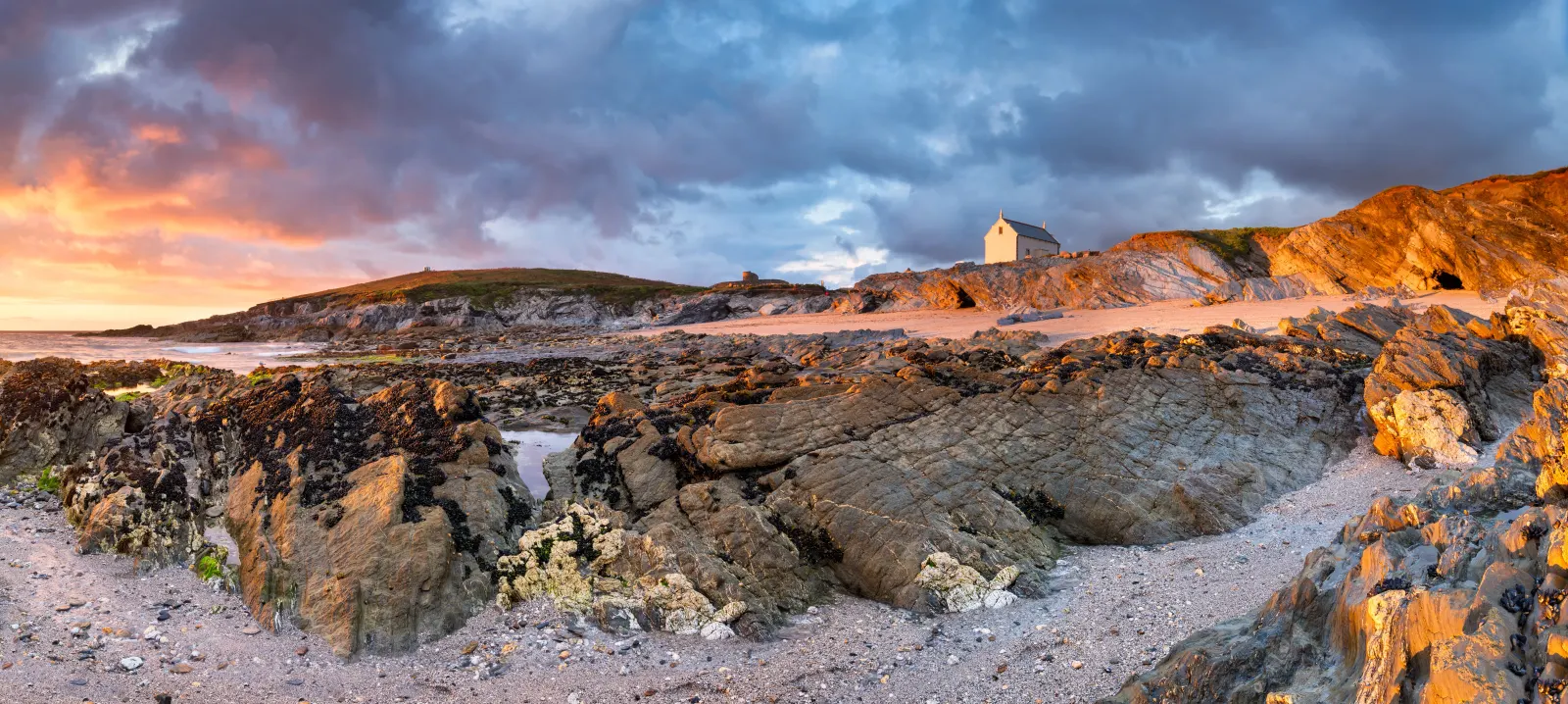
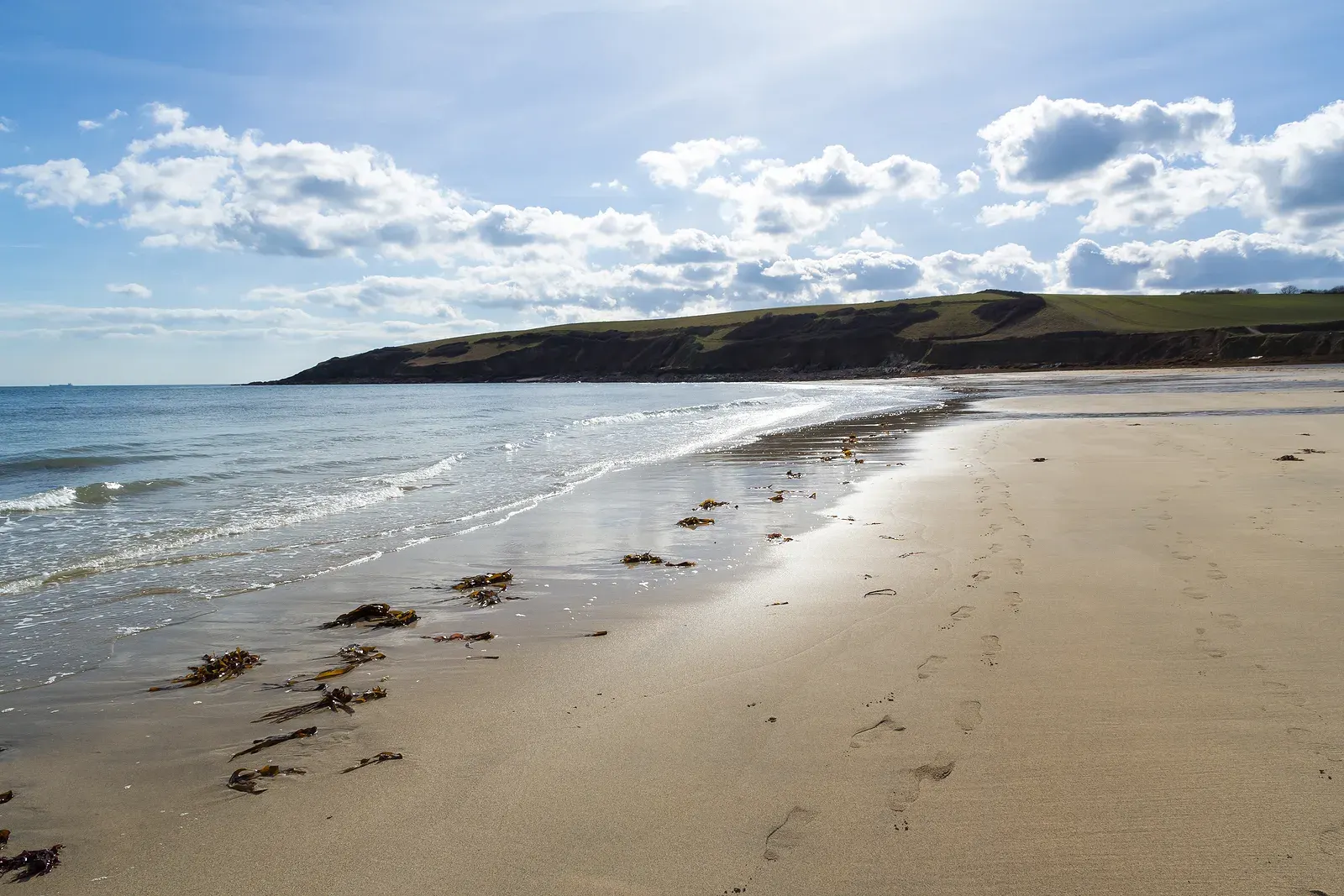
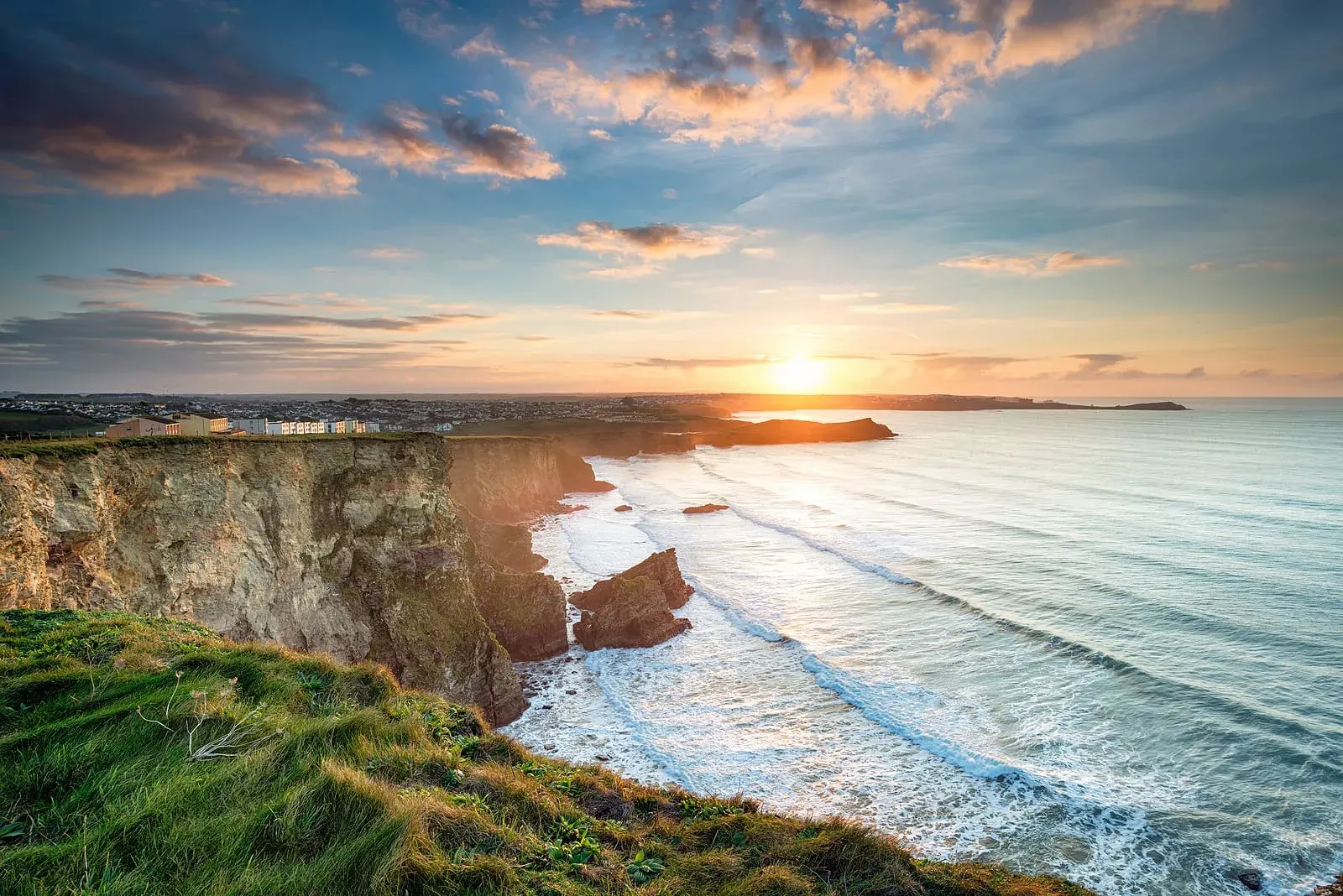
Perranporth images
Things to See and Do in Perranporth
In Perranporth you don’t really need a plan – things just sort of pull you along. The beach takes the first bite out of your day, then the sand dunes or the coastal path catch you out, and before you know it, you’re staring at the sea from a different angle. The town itself chips in with its own distractions, from little cafés to live music on warm nights.
Historical Attractions
Perranporth might be known now for surfboards and sandy afternoons, but its past shows up in stranger places, buried chapels in the dunes, mine ruins on the hills, and even an airfield where Spitfires once took off over the Atlantic.
St Piran’s Oratory and Perranzabuloe Church: This is where the town’s story really starts. St Piran,1 the patron saint of Cornwall, washed up here (some say on a millstone) and founded his oratory, which was later swallowed by the dunes. Close by, the ruined Perranzabuloe Church2 still stands, windswept and half-forgotten, yet every March the procession for St Piran’s Day fills the sands again with flags and singing.
Chapel Rock: Right in the middle of Perranporth Beach sits Chapel Rock,3 and at low tide you can clamber over to it, where a small chapel once gave the rock its name, and although today, it’s more likely to be topped by kids with buckets and spades than worshippers, the history is still there under the footprints.
Wheal Leisure Mine: The name Wheal Leisure pops up a lot around here, thanks to Winston Graham, who lived in Perranporth and borrowed it for his Poldark novels.4 There really was a mine of that name on the edge of town, part of the 18th- and 19th-century tin and copper trade, but don’t expect towering engine houses – most of it has slipped back into the ground. What you see today is more in the imagination than in stone, though the wider north Cornwall coast still carries the look that inspired Graham’s stories.
Perranporth Airfield: Out past the town, the grass strips of Perranporth Airfield5 look pretty harmless, but in the 1940s this was where Spitfires tore into the sky to keep watch over the Atlantic Ocean. Now it’s mostly gliders circling lazily overhead, but if you squint a little, you can still picture the noise and speed it once knew.
Family Activities
The nice thing about Perranporth is that families don’t need to hunt for entertainment. It’s all laid out for you – the beach, the dunes, the walks – and most of it is free if you’ve already packed a bucket and spade.
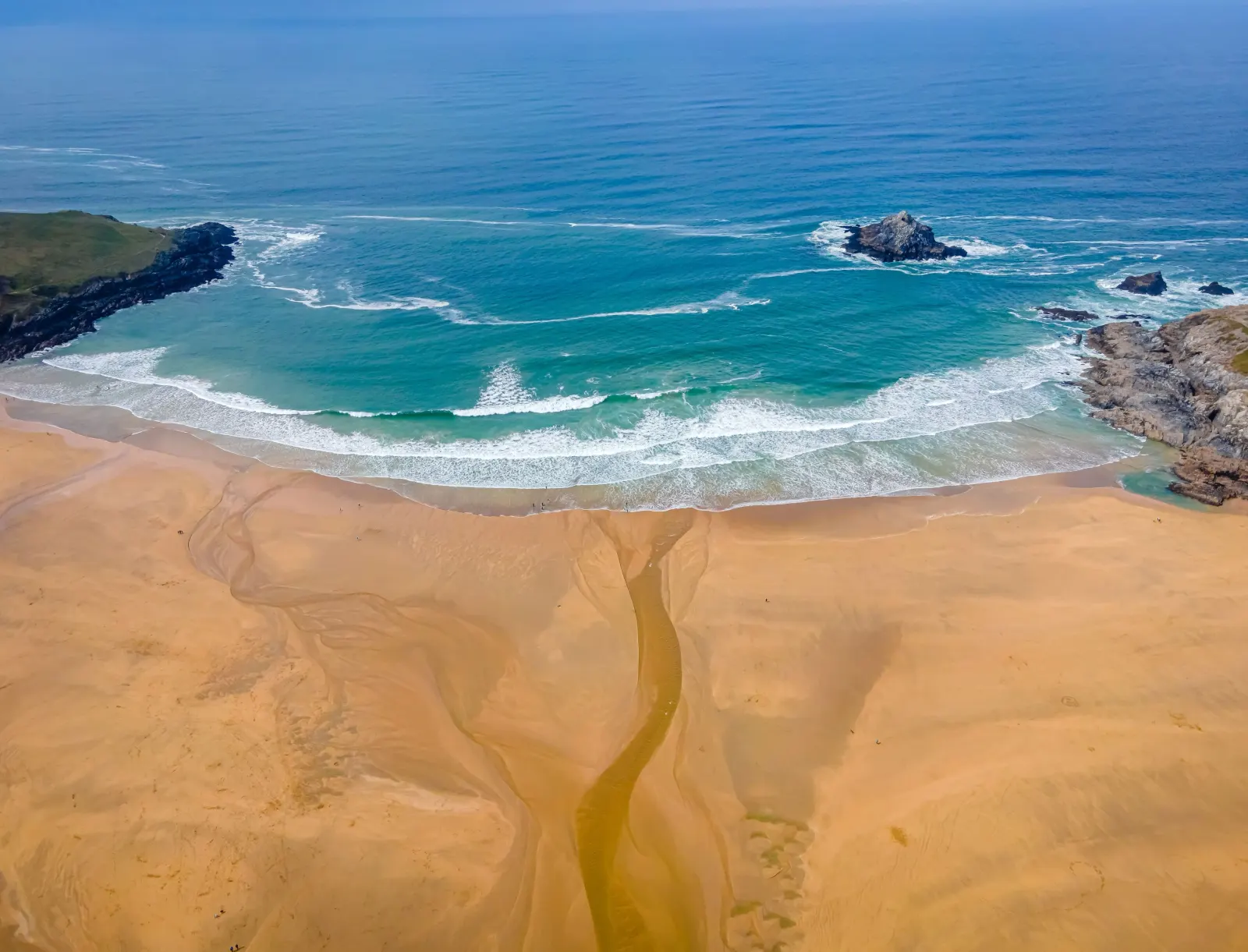
Perranporth Beach and Boating Lake: The beach6 is usually the first stop. It feels endless when you’re small, with little streams to dam, flat sand for football, and waves to jump until you’re tired out. Lifeguards are around in summer, which makes things easier for parents. Just across the road is the boating lake, where you can hire one of those slightly wobbly paddle boats or sit with a coffee while the ducks argue over chips.
Chapel Rock and Rock Pools: When the tide goes out, Chapel Rock suddenly becomes part of the playground. Kids scramble up the stones, peer into rock pools, and usually end up wetter than you planned. The tide comes back fast, though, so it’s one of those “keep an eye on the sea” moments that everyone around here grows up with.
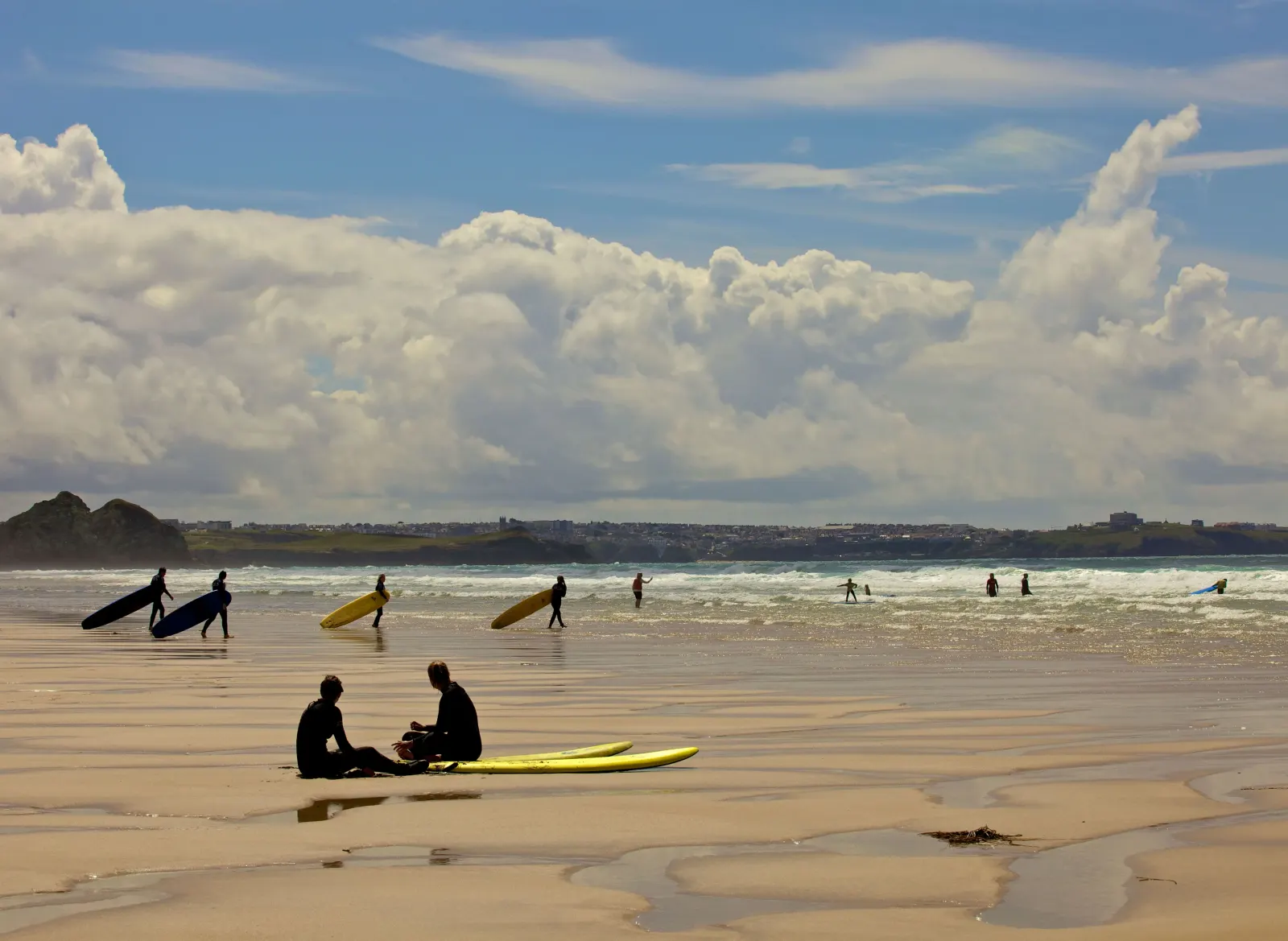
Surf Schools for Beginners: If you fancy trying surfing, there are schools right on the beach that run lessons for kids, beginners, or whole families at once. You’ll fall over a lot, but that’s half the fun, and standing up for the first time usually gets a cheer from strangers as well as your own lot.
Tunes in the Dunes (For All Ages): The festival on the sand might sound like it’s just for grown-ups, but during the day there’s music, food stalls, and plenty of room for families to hang out together, and you’ll see toddlers with ear defenders dancing about while their parents tuck into something from a local food truck.7
Outdoor Activities
The outdoors isn’t really something you “go and do” here – it’s just there, stretching out in front of you whether you like it or not. A beach that doesn’t seem to end, dunes that swallow up the horizon, and cliff paths that look like they might carry on all the way to Land’s End if you had the legs for it.
Perranporth Triathlon: Every September the Perranporth Triathlon takes over the beach and the dunes, sending competitors plunging into the surf before tackling miles of cycling and running over tough coastal terrain. It’s not an easy race – the sea is unpredictable and the hills unforgiving – but it’s one of Cornwall’s most iconic endurance events, and the atmosphere around town makes it feel like half the village is cheering you on.
South West Coast Path: The coast path slices right through Perranporth, and you can take it whichever way the mood grabs you; head towards St Agnes and it’s cliffs that drop away to little coves, or drift the other way and you’ll end up at Holywell Bay, where the beach just keeps on going.
Sand Dunes and Ligger Point: Behind the beach are dunes that feel more like a desert than Cornwall – kids roll down them, dogs vanish and reappear at the top, and if you keep walking you end up at Ligger Point.8 Out there the wind can take your hat clean off, but the views across the bay make up for it.
Perranporth Golf Club: If grass is more your thing than waves, the golf course sits up on the headland. Even when your shots go sideways, it hardly matters – you’re looking out over the Atlantic the whole time, and the view does more for your mood than the scorecard ever will.9
Storm Watching: When winter storms hit, people don’t hide indoors – they walk straight down to the seafront and watch the sea throw itself at Chapel Rock. It’s loud, messy, and more than a bit dramatic, and it always feels like the sort of thing you’re supposed to see at least once.
Food and Drink
Food and drink in Perranporth isn’t about starched tablecloths or waiting three weeks for a booking. It’s more about wandering off the beach still brushing sand from your feet and finding something good to eat. Cafés, pubs, pasty shops – they all lean into the same idea: keep it simple, keep it tasty, and keep it Cornish.
Cafés and Coffee Houses
Coffee in Perranporth never feels too serious. You’ve usually got a bit of sand clinging to your shoes, maybe a dog tugging at the lead, and someone trying to shake the salt out of their hair – and the cafés are fine with all of that.
The Watering Hole Café: Technically a bar, but in the daytime it does the job of a café, with strong coffee and beach-side breakfasts. The tables are literally on the sand, so you’ll be brushing it off your plate before long. It’s the sort of place where the soundtrack is gulls overhead and waves rolling in.10
Alcatraz Bar & Café: Perched out on Chapel Rock, Alcatraz looks tiny until you step inside, where you’ll find coffee, snacks, and a view that feels like it shouldn’t exist so close to town. When the tide comes in the sea laps all around it, which makes your flat white taste slightly more adventurous.11
The Filling Station: The Filling Station12 really did used to be a petrol stop, and it still has that pull-in, hang-around kind of feel. Now it’s all bright paint and a menu that goes big on fry-ups, milkshakes, and the sort of holiday food kids get excited about. It can feel a bit noisy, a bit messy even, but that’s half the fun – one table trading Cornish jokes, the next full of wetsuits and surf-school chat.
Pubs
Perranporth doesn’t exactly struggle for pubs – they’re part of the town’s backbone, the places where sandy flip-flops get the same welcome as muddy boots. Some are loud, some quieter, but all of them have the Atlantic close enough that you’ll probably taste the salt in your pint if the wind’s up.
The Watering Hole: Right on the sand, The Watering Hole calls itself the UK’s only bar actually on a beach, and you can’t really argue with that. On a summer evening it feels like half the town is out here, live music spilling out as the waves keep rolling in. In winter, it’s quieter, but there’s something brilliant about sitting with a pint as the tide creeps closer.
The Tywarnhayle Inn: Back in the centre, The Tywarnhayle13 has been pulling pints for locals and visitors for generations. It’s a proper Cornish pub, the kind where you still overhear farming talk at the bar alongside surfers comparing breaks. Big plates of food, a beer garden for sunny days, and enough corners inside to hunker down if the weather turns.
The Seiners Arms: Perched above the beach at the south end of town, the Seiners Arms14 mixes pub and hotel, but the bar is open to anyone who wanders in. The view alone sells it, especially at low tide when the sand seems to run forever. It’s less rowdy than the Watering Hole but still has that easy-going seaside buzz.
Breweries and Distilleries
You won’t stumble across a brewery hidden behind the surf shops in Perranporth, but head a few miles out and you’ll find plenty of Cornish producers doing their thing.
Healey’s Cornish Cyder Farm: Just outside Perranporth sits Healey’s, probably the most famous cider farm in Cornwall. They’re the people behind Rattler, the one that shows up on pub blackboards everywhere, and a visit is part history lesson, part tasting trip – you wander through old barns, spot the presses still in use, and end up with a glass of something strong. If cider’s not your thing, there’s usually apple juice, jams, and even a cream tea to soften the edges.15
Black Flag Brewery: Up near St Agnes you’ll find Black Flag,16 a tiny brewery that doesn’t bother with supermarket shelves and just brews what they fancy. The taproom’s simple – benches, barrels, a few dogs stretched out under tables – and the beers change every time you visit.
Skinners Brewery: Skinners17 in Truro is more of a household name, with Betty Stogs probably being the best-known. They’ve been through ups and downs, but it still feels like a proper Cornish pint when you find one on draught.
Polgoon Vineyard and Orchard: Polgoon18 sits on the edge of Penzance and didn’t even start out as a vineyard – it was just a fruit farm until the family decided to try their hand at wine and cider. These days you can wander between the rows of vines, hear how it all came about, and finish up with a glass that actually tastes of the place.
Farm Shops
Cornwall’s beaches get all the attention, but if you drive a few miles inland you find the real food coming straight off the land. The farm shops around Perranporth aren’t perfect visitor centres – they’re working places where you grab bread, veg, or a pasty and end up leaving with half your boot full.
Trevilley Farm Shop: Family-run for generations, Trevilley grows a lot of what it sells. The shelves are heavy with potatoes, cabbages, and whatever’s in season, and they’ve got their own butchery counter too. The staff will tell you exactly which field something came from, which is both useful and a bit humbling.19
Bailey’s Country Store: If you’re heading towards Truro, Bailey’s is worth a stop. It’s part farm supply, part food shop, so you’ll see bags of animal feed stacked next to bottles of Cornish wine and jars of honey. Not fancy, but you walk out with dinner and compost in the same bag.20
Places to Stay in Perranporth
Staying in Perranporth usually means you’ll wake up to the sound of gulls and fall asleep with the sea still in your ears. It’s not the sort of place packed with giant hotels – instead you’ll find small family-run spots, pubs with a few rooms upstairs, and plenty of self-catering cottages that keep you close to the beach.
Expedia.com:
If you want to see the full spread of what’s available, from hotels and B&Bs to quirky apartments, Expedia.com lists dozens of options in and around Perranporth. It’s a handy way to compare prices and locations at a glance. Check availability and best prices.
Best Value Hotels:
For a comfortable stay at a sensible price, Perranporth has a range of well-rated mid-range hotels—perfect for enjoying its expansive beach, coastal paths, and laid-back surf vibe. Check latest deals & availability.
Boutique & Character Stays:
If you’re after something with more personality, Perranporth offers a mix of stylish guesthouses, cosy inns, and boutique stays near the coast. Check latest deals & availability.
Dog-Friendly Places to Stay:
Travelling with your dog? Many Perranporth properties are pet-friendly, with miles of sandy beach and scenic coastal walks right on your doorstep. Check latest deals & availability.
Self-Catering & Cottages:
For extra space and flexibility, Perranporth’s self-catering options include beachside cottages, modern apartments, and peaceful retreats nearby. Check latest deals & availability.
Featured Perranporth Hotels & Accommodation
St George’s Hotel:
Set back a little from the seafront, St George’s is one of those places that feels homely the moment you walk in. It’s got a walled garden, views across the dunes, and they even welcome walkers doing the South West Coast Path for just a night if that’s all you need. Check availability and best prices.
Atlantic View Hotel:
You can guess the selling point from the name. A small, family-run hotel just steps from Perranporth Beach, with rooms that look straight out across the bay, this is just the kind of spot where you throw open the curtains in the morning and see the tide coming in.21
The Seiners Arms:
Half pub, half hotel, The Seiners sits right on the beach; stay here and you’ll end up eating dinner with the sound of waves just outside and, if you’re lucky, a room that looks onto Chapel Rock. Check availability and best prices.
The Dunes Apartments:
For something modern and self-catering, The Dunes22 are hard to beat – step outside and you’re basically on the sand. Families like them because there’s space to cook and spread out, and surfers like them because you can rinse off and be back on the balcony with a beer in about ten minutes.
History of Perranporth
History here is less a timeline and more a sand dune – bits buried, bits blowing free, never quite staying still. You can’t walk through Perranporth without tripping over a reminder of something older, whether it’s St Piran’s cross on the dunes or an engine house inland that looks like it’s about to crumble back into the earth.
c. 5th–13th Century: Saints and Shifting Sands
The story usually starts with St Piran, the Irish monk who, depending on who’s telling it, either sailed across on a millstone or was thrown off one and just… didn’t sink. However it happened, he landed on this coast and became Cornwall’s patron saint. People still argue the finer points – miracle or myth – but his presence here shaped the whole area. The original oratory, a small stone chapel built to honour him, stood on the edge of what’s now Perran Sands, only to be swallowed by drifting dunes.
It wasn’t just the oratory; even the parish church was claimed by the dunes. By the 10th century, settlements that had clung to the coast were already being forced back inland, and the church of St Piran itself became half-buried, roof collapsing, walls disappearing beneath drifts. Eventually the community shifted to Perranzabuloe, building a new church further inland in the 12th century where it was less likely to vanish under the sand.
The oratory, now known as St Piran’s Oratory, is considered one of the oldest places of Christian worship in Britain, possibly dating to the 6th or 7th century, and excavations in the 19th century and again in 2014 revealed its structure, including stone benches and an early altar.23
As the dunes moved inland, a second church – known locally as St Piran’s Old Church24 – was built nearby around the 10th–12th century, but it too became engulfed over time. The last recorded service there took place in 1795 before it was abandoned and dismantled, with stones reused in a new church at Perranzabuloe.
Today, both sites are protected. The oratory has been reburied under sand for preservation, while St Piran’s Cross, believed to date from the 9th century, still stands nearby and marks the area’s deep spiritual history.
Medieval Life: Farming, Fishing, and Struggling Along
For centuries Perranporth wasn’t a town, not even close, just scattered farms, a few cottages, boats dragged over the beach when the weather allowed. Pilchards mattered,25 as they did along the whole Cornish coast, but this wasn’t St Ives or Mousehole; life here was about making do with what the land and sea gave you, and often it wasn’t much.
The landscape itself made survival difficult – sandy soil, harsh Atlantic winds,26 and limited arable land meant most families relied on mixed farming, small livestock, and seasonal fishing. Faith remained central to life, and St Piran’s legend helped draw pilgrims from across Cornwall during the Middle Ages, turning the dune churches into local landmarks of devotion.
18th–19th Century: Mining Arrives
By the 18th century, the coast around Perranporth was no longer just about sand and fishing nets – the ground itself was the prize. Mining firms arrived, sinking shafts into the earth, looking for copper and tin that had been worked in Cornwall for centuries but was now in higher demand than ever.
One of the sites was called Wheal Leisure, which feels like someone’s idea of a joke, because nothing about the work resembled leisure. Underground, men hauled ore in cramped, dangerous conditions, and above ground, women and children spent hours “dressing” the ore, smashing and sorting rock to separate the valuable metal. It was hot, dirty, and relentless, but it put food on tables and for a while it tied this stretch of the north coast into the industrial boom happening across Cornwall.
At its height, the industry left a mark you can still see, with engine houses and chimney stacks stood against the horizon, steam pumps kept water out of the shafts, and whole families grew up with mining as a way of life. Then, just as quickly, it all began to slip away; cheaper copper and tin from overseas undercut Cornish mines in the late 19th century, and Wheal Leisure, like so many others, wound down. By the time tourists were walking across the dunes in their summer clothes, the miners’ voices had fallen silent, leaving only stone ruins and local memory behind.
Other smaller mines operated nearby, including Wheal Towan27 and Wheal Hope, though most were short-lived. In 1879, a new access road was built through the Nansmellyn Valley to provide jobs for unemployed miners after closures, marking one of the first community regeneration efforts in the parish.28
1903–1930s: A Railway and a Resort
The next reinvention was tourism. The branch line opened in 1903,29 connecting Perranporth to Newquay and further afield, so suddenly you had guesthouses springing up, summer visitors stepping off trains with buckets and spades, and the long stretch of golden sands becoming the main attraction.
The railway didn’t last – cut in the 1960s – but by then cars and buses had taken over, and the seaside image stuck.
1939–1945: War on the Coast
The war years were different, and it’s at this time that Perranporth Airfield was carved out in 1941 and filled with Spitfires, and pilots trained, patrolled, sometimes didn’t come back. You can still see the runways if you squint at the grass from the right angle.
The railway was part of the Truro to Newquay line, which transformed accessibility for coastal villages across mid-Cornwall and established Perranporth as a popular Edwardian resort. Holiday postcards and beach pavilions soon followed, shaping the town’s identity well into the 20th century.
The airfield hosted over twenty RAF squadrons during the war, many of which flew Spitfires and Hurricanes in coastal defence and convoy escort missions. After the war ended, the airfield briefly served civil purposes, including training flights and light aviation, before becoming home to gliding and motorsport clubs in the post-war years.30
1950s–1980s: Buckets, Boards and Caravans
Post-war, the town swung back to holidays, and Perranporth Beach was everything: kids with nets in the rock pools, families sunbathing, surfers just starting to make waves their own. By the 1970s and 80s, surfboards outnumbered fishing nets, and Perran Sands Holiday Park31 turned the dunes above town into a summer city of caravans.
Perranporth’s surf scene became one of the first in Cornwall, with clubs forming as early as the 1920s,32 long before surfing went mainstream in Newquay. Shops, cafés, and board hire businesses began to thrive around Beach Road and the seafront, signalling the shift from traditional seaside tourism to a lifestyle built around surf culture.
2000s–Present: Music, Festivals, and Today
In recent decades, the town has leaned harder into surf schools, live music, and year-round energy. Tunes in the Dunes began in 2015, dragging headline acts onto the sand beside Chapel Rock, and the festival runs a few days, but the ripple effect lasts longer with pubs busy, cafés heaving, lifeguards shaking their heads at festival-goers paddling too far out.
And yet, beyond the noise, you still get the same cycle: dunes shifting, St Piran’s flag flying every March, locals debating second homes and housing, just like in St Agnes or Truro. It’s a town that never stays one thing for long, but always comes back to its beach.
Modern Developments
By the middle of the last century, mining was gone but the beach was pulling people in, and families packed up cars or piled onto buses, coming for the sand and the sea air. What had once been a working coast became a seaside town, with guesthouses along the main street, chip shops opening late, and the dunes filling with kids instead of ore carts.
Surf and Music: From the 1960s onwards, the surfboards arrived, and locals and visitors both started chasing the Atlantic waves, and over time surf schools made it easy for beginners to join in. More recently the town has found another string to its bow with Tunes in the Dunes, a music festival set right on the sand; watching big-name acts while the tide creeps in at the edge of the crowd is the kind of odd, very Cornish mix Perranporth does well.
Growing Pains: The town hasn’t stood still – new houses have gone up on the edges, some snapped up as second homes, some by people who work in Truro or even further afield, and in summer, the car parks groan under the pressure, and everyone has an opinion on whether the balance is right. The old cafés and pubs are still here, but they sit alongside brunch spots, craft beer taps, and menus that nod to the growing foodie crowd.
Not Just Summer: What’s changed most is that Perranporth now tries to keep busy all year. Winter brings storm watching around Chapel Rock, surfers who never put their boards away, and locals meeting in pubs when the streets go quiet, the boating lake still gets used, even if it’s pedalos instead of rowboats, and the dunes are treated less as a nuisance and more as something fragile worth protecting. It’s a small town, but it doesn’t just switch off when the tourists leave.
Key Buildings in Perranporth
Perranporth doesn’t have castles or stately piles, but what it does have are markers of its own story – the church that kept pace with a growing town, the chapel that vanished into the sea air, the mine building that outlived the men who worked it. These are the places people still glance at, even if they’re not thinking about history at the time.
- Parish Church of St Michael: This one looks steady enough now, tucked just back from the sands, but the reason it matters is because churches here were never guaranteed to last. Built in the 19th century, St Michael’s gave the town a proper parish base after centuries of people moving inland when the dunes swallowed older sites. Step inside and it feels like a mix of lived-in and memorial with plaques to those lost at sea sitting alongside the usual parish business of weddings, christenings, and choir practice.34
- Wheal Leisure Engine House: Head inland a little and you’ll see it: a ruin of a mine building, roof gone, chimney still pointing up at the sky. This was part of Wheal Leisure, a name that always feels like a cruel joke given what the work was like. Men underground in the dark, women and children smashing ore on the surface. The mine closed long ago, but the engine house sits there still, a reminder that this was once an industrial place before it was a holiday one.
- Perranporth Airfield: The grass runways look harmless now, with gliders and hobby pilots taking off when the weather allows, but in the Second World War this was a fighter base, and Spitfires lifted from here to keep watch on the Atlantic coast. There’s not much left of that story apart from the runways themselves and a clubhouse, but the view from above is still the same sweep of sand and cliffs that pilots once circled back to.
Famous People from Perranporth
Perranporth isn’t a big place, but a few names here have made ripples far beyond the beach.
- Winston Graham: You can’t really talk about Perranporth without mentioning Winston Graham36 who lived here for more than three decades and wrote most of Poldark with the cliffs and dunes outside his window. If you’ve ever wondered why the novels feel so rooted in Cornwall, it’s because they pretty much are.
- Tom Tremewan: Ask about the very first surfboards in Perranporth and one name keeps cropping up – Tom Tremewan.37 He ran a building and undertaking business in town, and in the back workshop, where coffins were made, he also knocked together wooden boards. People joked they were “coffin lids,” but they worked, and locals began riding the waves long before surf schools and fibreglass boards ever arrived. It’s a strange but very Cornish twist: surfing in Perranporth owes as much to an undertaker’s tools as to the ocean itself.
- Donald Healey: Born in Perranporth in 1898, Donald Healey38 went from local lad to world-famous car designer – he worked as a pilot in the First World War, then built a career creating sports cars, most famously the Austin-Healey.
Education in Perranporth
Schools here don’t feel cut off from the rest of the town, they’re absolutely part of it; sports days spill onto playing fields where half the neighbours show up, and you can’t mark St Piran’s Day without hearing the kids sing.
Primary Schools
Most children start out at Perranporth Community Primary,39 a cheerful sprawl of classrooms and playing fields that serves the whole parish of Perranzabuloe. It has that small-town quality where staff know families as well as pupils, and summer fairs or bake sales draw in everyone from parents to grandparents.
Secondary Schools
Teenagers don’t stay put because there isn’t a secondary in Perranporth itself, so every morning buses pull out towards Truro and Newquay. Richard Lander School40 takes a big share, with Treviglas and Tretherras in Newquay also common choices. It’s a bit of a trek, but the upside is that young people get a link to larger towns while still coming home to the beach at the end of the day.
Further and Higher Education
When it comes to college, the go-to is Truro and Penwith College,41 offering everything from A-levels to apprenticeships. Beyond that, plenty of students stick close and study at Falmouth University42 or the University of Exeter’s Penryn Campus,43 both a short drive away. It means Perranporth kids don’t necessarily have to leave Cornwall to chase down degrees or specialist courses.
Demographics of Perranporth
Like a lot of Cornish seaside towns, Perranporth has two sides to its population – the people who’ve always lived here, sometimes for generations, and the people who arrive for a few years (or forever) because of the beach, the surf, or just the idea of a slower pace of life. The numbers don’t tell the whole story, but they do give a sense of how this small town looks on paper.
Population and Growth
According to the 2021 Census, the civil parish of Perranzabuloe, which includes Perranporth, had just under 6,500 residents,44 and that’s a slight rise from 2011, showing steady growth rather than a boom. The town itself is the largest settlement in the parish, and while it’s still small compared to places like Truro or Newquay, its role as a seaside hub means the numbers swell dramatically in summer.
Age Profile
The Census shows what locals already know, that Perranporth has an older population compared to the national average; around a quarter of residents are over 65, higher than the England and Wales figure. Families do live here, but many younger adults move away for work or study, leaving behind a mix of retirees, long-term locals, and families who stick it out because of the community and schools.
Ethnicity and Identity
Like much of Cornwall, Perranporth isn’t especially diverse, and the 2021 Census recorded over 96% of residents identifying within the white ethnic group, with very small numbers from mixed or other backgrounds. Alongside that sits a strong Cornish identity – the parish is one of many across Cornwall where people ticked “Cornish” under national identity, something that became available for the first time in the 2011 Census.
Housing and Households
Housing here reflects the push and pull of modern Cornwall, with the Census showing a high rate of home ownership compared to national figures, but also a visible chunk of second homes and holiday lets, which affects availability for locals. Household sizes are slightly smaller than the national average, with more one- or two-person households, especially among older residents.
Work and Employment
Employment data from 2021 highlights the mix of tourism and local services; many residents are in accommodation, food, and retail, while health and education are also big employers, and a smaller number still work in agriculture or construction. Commuting links to Truro and beyond also show up in the stats – Perranporth isn’t isolated, but it does rely heavily on seasonal jobs tied to tourism.
Crime in Perranporth
People don’t usually come to Perranporth worrying about crime – it’s not that kind of place. Most of the year it feels more about dogs chasing tennis balls on the beach than anything else, but when summer rolls in and the crowds arrive, the figures naturally climb. That’s less about sudden danger and more about the reality of putting thousands of holidaymakers, a busy high street, and a nightlife scene into a small seaside town.
The Numbers Behind It
Official data45 shows the town had seventy-six reports in June 2025, the busiest month in that year. The same dataset says thirty-two of those were logged under violence and sexual offences, which on paper sounds stark, but locally covers everything from a drunken row outside a pub to scuffles that don’t travel beyond the front page of the log. Anti-social behaviour and the odd bit of damage came next, with single-figure reports for burglary, which is rare here.
How It Feels Day to Day
Ask around and most people in Perranporth will say they don’t think twice about walking back from the beach after dark. When the tide’s gone out and Chapel Rock is lit up across the sand, it feels more calm than anything else. The bits of bother that do happen are usually seasonal – car parks getting rowdy in August, voices raised outside the pubs on a Saturday night, the odd scrap when the place is heaving. It’s the kind of stuff that flares up, fizzles out, and is soon forgotten. For the most part this is still a small seaside town where people nod to each other in the street, and real trouble doesn’t come around very often.
Transport in Perranporth
Perranporth might look tucked away on the map, but getting here is less complicated than it first seems. The town isn’t built for motorways or fast trains, but that’s actually a good thing – you arrive a little slower, and it makes the first glimpse of the beach feel like you’ve earned it.
By Road
Most visitors come in on the A3075 from Newquay or swing off the A30 near Truro. The lanes tighten as you get closer, the kind where you sometimes have to tuck into a hedge to let someone past, and summer queues into town are almost a tradition, but the car parks by the beach and along the south end usually swallow the numbers in the end.
By Bus
The buses aren’t exactly frequent, but you can rely on the ones that come, linking Perranporth to Truro, Newquay, and the smaller villages dotted along the north coast. They’re a lifeline for locals and a handy way for visitors to dodge the parking hunt, plus the stop sits right in the town centre, so you can step off and smell the sea in about ten seconds.
By Train
There isn’t a railway here anymore (the branch line that once carried day-trippers from Truro shut in the 1960s), so the closest you’ll get by train is Truro itself, and from there it’s a bus or a short drive, which adds a step but also means you see a bit more of Cornwall on the way.
On Foot and Bike
Once you’re in town you won’t need much more than your legs because all the shops, cafés, pubs, and Perranporth Beach are all within a few minutes’ wander. Cyclists share the same hills and coast roads as cars, but the views make the climbs worthwhile, and the South West Coast Path pulls walkers straight into some of the best scenery on the north coast without ever needing a timetable.
Is Perranporth Worth Visiting?
Yes, because Perranporth is the kind of place that doesn’t need to sell itself with over the top promises. The fact is that the beach really is as long as everyone says, the surf schools are lively, and the town has just enough cafés, pubs, and little shops to keep things ticking when the tide’s in.
Article Sources
- BBC – Cornwall Uncovered – Story The Legend of St Piran (no date) www.bbc.co.uk. Available at: https://www.bbc.co.uk/cornwall/uncovered/stories/st_piran_background.shtml BBC[↩]
- St Piran’s Church remains, St Piran’s Cross, and their surrounding enclosure, Perranzabuloe – 1012506 | Historic England (2025) Historicengland.org.uk. Available at: https://historicengland.org.uk/listing/the-list/list-entry/1012506 (Accessed: 25 September 2025) Historic England[↩]
- Smith, N. (2022) Chapel Rock Tidal Pool, Explore Cornwall. Available at: https://explorecornwall.uk/attractions/chapel-rock-tidal-pool Explore Cornwall[↩]
- Poldark filming locations | National Trust (2017) National Trust. Available at: https://www.nationaltrust.org.uk/discover/film-tv/poldarks-filming-locations National Trust[↩]
- Perranporth Airfield (no date) TripAdvisor. Available at: https://www.tripadvisor.co.uk/Attraction_Review-g528877-d12483833-Reviews-Perranporth_Airfield-St_Agnes_Truro_District_Cornwall_England.html Tripadvisor[↩]
- Visit Cornwall | Beaches: Perranporth Beach (no date) www.visitcornwall.com. Available at: https://www.visitcornwall.com/things-to-do/beaches/perranporth-beach Visit Cornwall[↩]
- Tunes in the Dunes – Beach Festival Cornwall (no date). Available at: https://tunesinthedunes.co.uk/ Tunes in the Dunes[↩]
- Ligger Point: South West Coast Path – a photo tour (2015) Southwestcoastphotos.com. Available at: https://southwestcoastphotos.com/photo_14073415.html (Accessed: 25 September 2025) The South West Coast Path Photos[↩]
- Perranporth Golf Club (2025) Perranporthgolfclub.co.uk. Available at: https://www.perranporthgolfclub.co.uk/ (Accessed: 25 September 2025) Perranporth Golf Club[↩]
- The Watering Hole – The UK’s only live music bar on the beach (2025) The Watering Hole | The UK’s only live music bar on the beach. Available at: https://thewateringhole.co.uk/ (Accessed: 25 September 2025) The Watering Hole[↩]
- Alcatraz Bar & Cafe – Cliff-side Bar & Cafe in Perranporth (2025) Alcatraz Bar & Cafe | Cliff-side Bar & Cafe in Perranporth. Available at: https://alcatrazwww.cornwall.co.uk/ (Accessed: 25 September 2025) Alcatraz Bar & Cafe[↩]
- The Filling Station (no date) TripAdvisor. Available at: https://www.tripadvisor.co.uk/Restaurant_Review-g528866-d4759414-Reviews-The_Filling_Station-Perranporth_Cornwall_England.html Tripadvisor[↩]
- Inapub (2025) Tywarnhayle Inn, Tywarnhayleinn.co.uk. Available at: https://www.tywarnhayleinn.co.uk/index (Accessed: 25 September 2025) The Tywarnhayle[↩]
- The Seiners Arms | Bed & Breakfast, Restaurant & Bar In Perranporth (2024) The Seiners Arms. Available at: https://www.seiners.co.uk/ (Accessed: 25 September 2025) The Seiners Arms[↩]
- Healeys Cornish Cyder Farm (no date) healeyscyder.co.uk. Available at: https://healeyscyder.co.uk Healeys Cornish Cyder Farm[↩]
- Black Flag Brewery (2015) Black Flag Brewery. Available at: https://www.blackflagbrewery.com/ (Accessed: 25 September 2025) Black Flag Brewery[↩]
- Skinners Brewery (2023) Skinners Brewery. Available at: https://skinnersbrewery.com Skinners Brewery[↩]
- Polgoon Vineyard and Orchard produces artisan Wines, Ciders & Juices in Cornw (2018) Polgoon. Available at: https://www.polgoon.com Polgoon[↩]
- Welcome to Trevilley Farm Shop & Cafe, Newquay | Trevilley Farm (2020) Trevilleyfarm.com. Available at: https://www.trevilleyfarm.com/content/welcome-trevilley-farm-shop-cafe-newquay (Accessed: 26 September 2025) Trevilley Farm Shop & Cafe[↩]
- Welcome to Bailey’s Country Store Penryn – Bailey’s Country Store (2025) Bailey’s Country Store. Available at: https://baileyscountrystore.co.uk/ (Accessed: 26 September 2025) Bailey’s Country Store[↩]
- Home (no date) Atlantic View Hotel. Available at: https://www.atlanticviewhotel.co.uk Atlantic View Hotel[↩]
- The Dunes (2024) Beach Retreats. Available at: https://www.beachretreats.co.uk/developments/the-dunes-perranporth (Accessed: 26 September 2025) The Dunes[↩]
- St Piran’s Oratory at Perranporth | (2025) Cornwall For Ever! Available at: https://www.cornwallforever.co.uk/places/st-pirans-oratory (Accessed: 6 October 2025) Cornwall Forever[↩]
- Britain Express (2025) St Piran’s Old Church, Perranporth, Cornwall | History, Beautiful Photos, & Visiting Information, Britain Express. Available at: https://www.britainexpress.com/counties/cornwall/churches/st-pirans-old-church.htm (Accessed: 6 October 2025) Britain Express[↩]
- A ‘fragrantly’ fishy business | National Maritime Museum Cornwall (2016) NMMC. Available at: https://nmmc.co.uk/object/cornish_maritime_collection/a-fragrantly-fishy-business/ (Accessed: 27 September 2025) National Maritime Museum Cornwall[↩]
- Atlantic Ocean – Climate (no date) Encyclopedia Britannica. Available at: https://www.britannica.com/place/Atlantic-Ocean/Climate Britannica[↩]
- Wheal Towan Mine Cornwall (2025) Cornwall-calling.co.uk. Available at: https://www.cornwall-calling.co.uk/mines/st-agnes/wheal-towan.htm (Accessed: 6 October 2025) Cornwall Calling[↩]
- Perranporth Gardens Charities (2025) Perranporth Gardens Charities, Perranporth Gardens Charities. Available at: https://www.perranporthgc.org/history.htm (Accessed: 6 October 2025) Perranporth Gardens Charities[↩]
- Railway – Perranzabuloe Museum (2019) Perranzabuloe Museum. Available at: https://perranzabuloemuseum.co.uk/railway/ (Accessed: 27 September 2025) Perranzabuloe Museum[↩]
- Heritage Gateway – Results (2025) Heritagegateway.org.uk. Available at: https://www.heritagegateway.org.uk/Gateway/Results_Single.aspx?uid=1358103&resourceID=19191 (Accessed: 6 October 2025) Heritage Gateway[↩]
- Perran Sands Caravan Holiday Park In Perranporth | Haven (no date) Haven ®. Available at: https://www.haven.com/parks/cornwall/perran-sands Haven[↩]
- Surfing – Perranzabuloe Museum (2019) Perranzabuloe Museum. Available at: https://perranzabuloemuseum.co.uk/surfing/ (Accessed: 6 October 2025) Perranzabuloe Museum[↩]
- Perranporth Gardens Charities (2024) Boating Lake, Perranporth Gardens Charities. Available at: https://www.perranporthgc.org/boating-lake.html (Accessed: 27 September 2025) Perranporth Gardens Charities[↩]
- Perranporth, St Michaels Mission Church – Cornwall Historic Churches Trust (2018) Chct.info. Available at: https://www.chct.info/histories/st-michaels-perranporth/ (Accessed: 27 September 2025) Cornwall Historic Churches Trust[↩]
- Perranporth Clock Tower (2025) (no date) TripAdvisor. Available at: https://www.tripadvisor.com/Attraction_Review-g528866-d27990130-Reviews-Perranporth_Clock_Tower-Perranporth_Cornwall_England.html Tripadvisor[↩]
- Poldark (2015) Poldark. Available at: https://www.winstongraham.org/ (Accessed: 27 September 2025) Winston Graham[↩]
- Perranporth (2015) Cornwall Guide. Available at: https://www.cornwalls.co.uk/perranporth Cornwalls.co.uk[↩]
- Personalities – Perranzabuloe Museum (2019) Perranzabuloe Museum. Available at: https://perranzabuloemuseum.co.uk/personalities/ (Accessed: 27 September 2025) Perranzabuloe Museum[↩]
- Perranporth School (2025) Cornwall.sch.uk. Available at: https://www.perranporth.cornwall.sch.uk/ (Accessed: 27 September 2025) Perranporth School[↩]
- Richard Lander School, Truro (2025) Richardlander.co.uk. Available at: https://www.richardlander.co.uk/ Richard Lander School[↩]
- College courses in Cornwall – Truro and Penwith College (2019) Truro & Penwith College. Available at: https://www.truro-penwith.ac.uk Truro and Penwith College[↩]
- Welcome to Falmouth University | Falmouth University (no date) www.falmouth.ac.uk. Available at: https://www.falmouth.ac.uk Falmouth University[↩]
- University of Exeter (2025) Penryn Campus | University of Exeter, University of Exeter. Available at: https://www.exeter.ac.uk/our-campuses/penryn-campus University of Exeter[↩]
- Perranzabuloe (no date) Census Data UK. Available at: https://censusdata.uk/e04011508-perranzabuloe/ts062-ns-sec? Census Data[↩]
- Perranporth (no date) Police.uk. Available at: https://www.police.uk/pu/your-area/devon-and-cornwall-police/perranporth/?yourlocalpolicingteam=about-us Devon & Cornwall Police[↩]
Frequently Asked Questions
Perranporth Beach sits directly below the town centre, with access just a 2–5 minute walk via paths and ramps. The beach is one of Cornwall’s largest sandy beaches, making Perranporth a true seaside town with immediate beach access.
Perranporth town centre has a good mix of independent shops, surf stores, cafés, bakeries, convenience shops and supermarkets, all within walking distance of the beach. It’s a well-served seaside town, especially popular with surfers and visitors year-round.
Locals say “yes”. Perranporth is a nice place to live – but with caveats; the beach on your doorstep and a friendly community make life appealing, but summer can feel crowded and housing prices have risen sharply. In winter, things quieten down, which suits some and feels isolating to others.
Perranporth has featured in BBC dramas, documentaries and travel shows, and Perranporth Beach was used in scenes for the TV series Poldark. Drone shots and horseback scenes were filmed around here, especially towards St Agnes Head. The area is also popular for surf films, commercials and nature programmes thanks to its rugged Atlantic coastline and open landscapes.
Perranporth Beach is dog friendly – one of its biggest draws. Dogs are welcome year-round, though from July to August they must be kept on leads in the busiest central section, and beyond that, it’s free roaming heaven – dunes, rock pools, and endless sand for energetic walks at low tide.
Yes – you can swim at Perranporth Beach. In summer the RNLI lifeguards keep watch and mark the safest areas of the sandy beach with flags, and it’s wise to remember that the Atlantic can be strong, so weaker swimmers are better off sticking close to shore.
Perranporth Beach offers surfing, swimming, coastal walks and family-friendly activities. You can surf the Atlantic waves, swim at low tide, explore rock pools, or walk the South West Coast Path. The beach is backed by sand dunes, has lifeguard patrols in summer, and features the famous Watering Hole beach bar, making Perranporth one of the most popular beaches in Cornwall.
The best time to visit Perranporth is late spring to early autumn (May–September). Summer offers the warmest weather, lifeguarded beach and events, while May–June and September are ideal for fewer crowds, good surf and coastal walks. Winter suits storm watching and surfing, but facilities are quieter.
You can get to Perranporth by train and bus via Truro. Take a train to Truro station, then catch a direct bus to Perranporth (around 30–40 minutes). Regular services run from Truro, Newquay and Redruth, making Perranporth easy to reach by public transport.
The beach, town centre and car parks can be crowded during school holidays, with peak times on sunny afternoons. Early mornings, evenings, or visits in June or September are noticeably quieter while still offering good weather.
The easiest way to Perranporth from London is by taking the train from London Paddington to Truro, then hop on a bus to Perranporth. Driving takes about five to six hours depending on traffic, following the M5 then the A30 into Cornwall. Flying into Newquay Airport and transferring by taxi or bus is another option.
Perranporth is approximately 8.5 miles (13.5 km) west of Newquay, Cornwall. By car, the journey takes around 15–20 minutes via the A3075, while local buses provide regular connections between the two towns.
Written by
Lisamarie is a writer and researcher with a long-standing love for Cornwall – its towns, coastlines, folklore, and everything in between. Most of her work involves blogging and articles, often focused on places and people, which pairs neatly with her fiction writing since both sides of her work let her balance research with imagination (and indulge a fondness for obscure facts). She lives with her husband, daughter, and a cat called Cheryl in a cottage in the Kent countryside, where she writes, paints, and watches horror films.
35 articles published on Cornwall.co.uk
Read more from Lisamarie Lamb →
Comments
No comments yet — be the first to share your thoughts.
Leave a comment
Your email won’t be published. Comments are checked before they appear.