

35 articles
St Agnes doesn’t ease you in gently – one minute you’re in the middle of a village with a bakery queue spilling onto the pavement, the next you’re staring at cliffs so high the gulls look like specks. The air smells faintly of the sea and sometimes of pasties, and you can’t walk far without seeing a chimney stack from the mining days tilting stubbornly against the wind. And locals will tell you the place gets under your skin, which is probably true, because even a quick visit has a way of making you start looking at estate agent windows you’ve no business peering into.
Things to See and Do in St Agnes
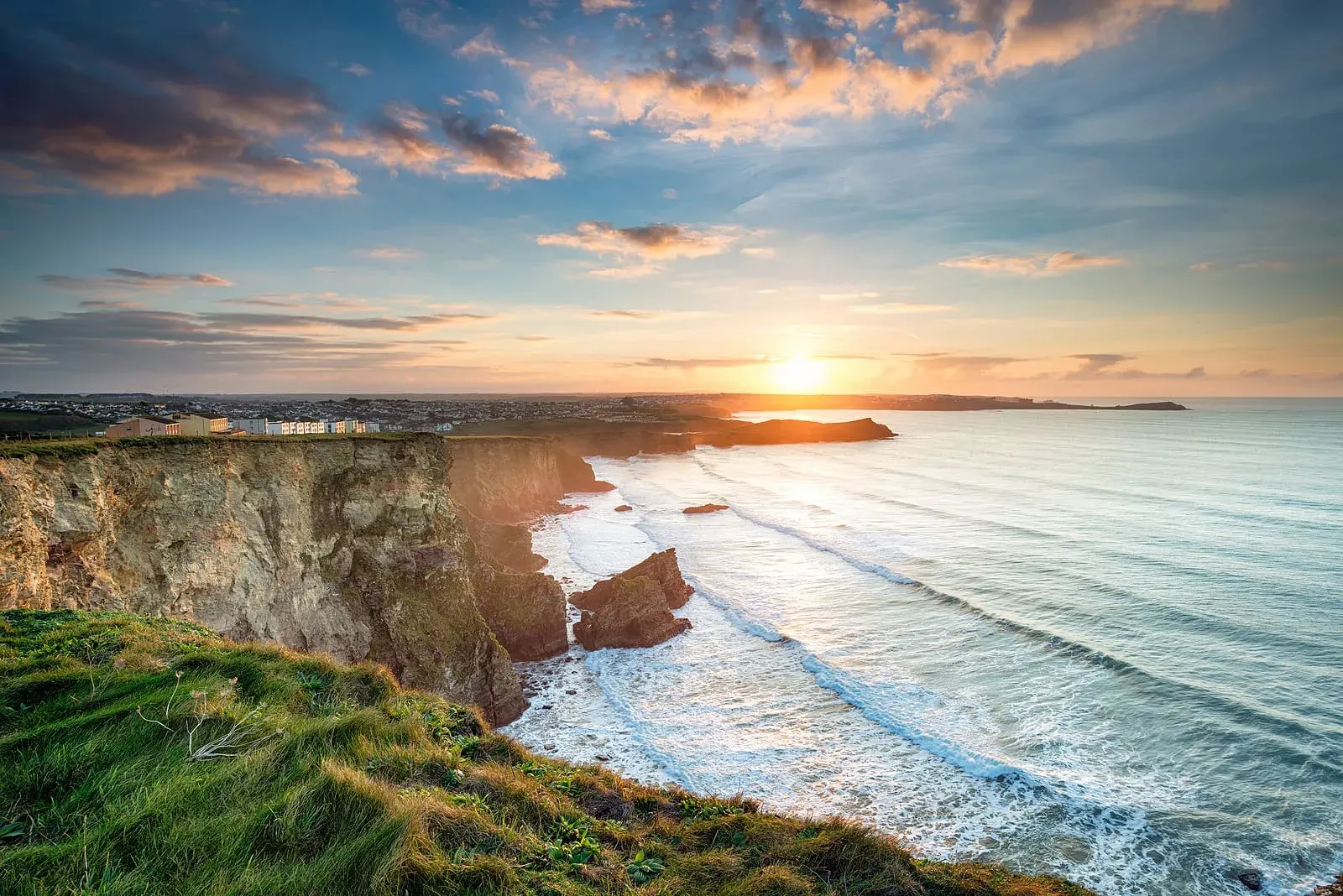
There’s a certain pull to St Agnes that’s hard to pin down. It’s in the crunch of gravel on the coast path, the way the wind changes as you round a headland, and the sight of a beach opening up below you when you least expect it. Here, mining chimneys share the skyline with gulls, and the sea is always close enough to smell; you can walk, swim, explore, or just sit with a coffee and watch the whole show play out, and somehow it never gets old.
Historical Attractions
If you like your history with a side of sea spray, St Agnes will keep you happy. Here, centuries of mining, fishing, and faith are stitched into the landscape so tightly you can’t walk far without bumping into them.
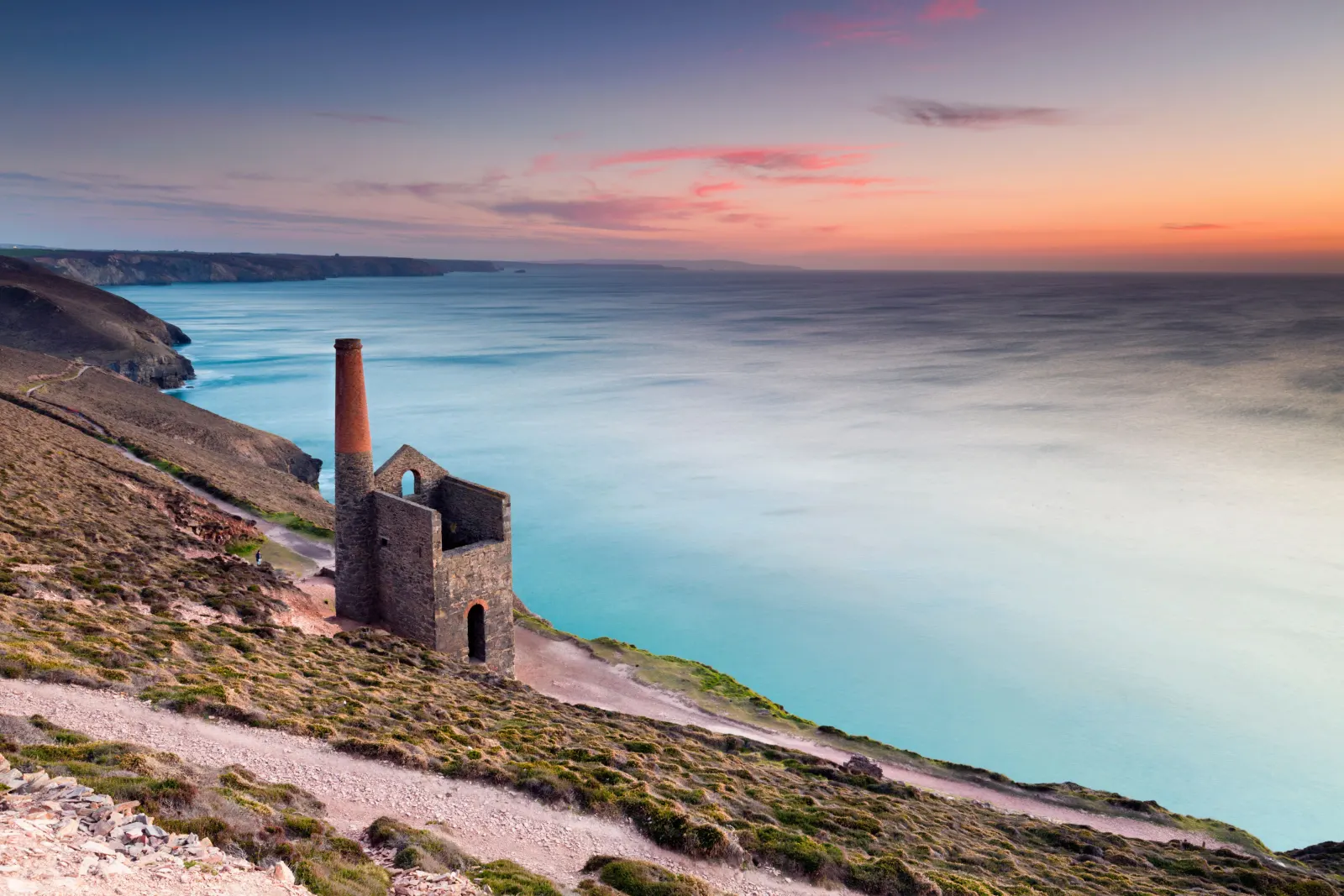
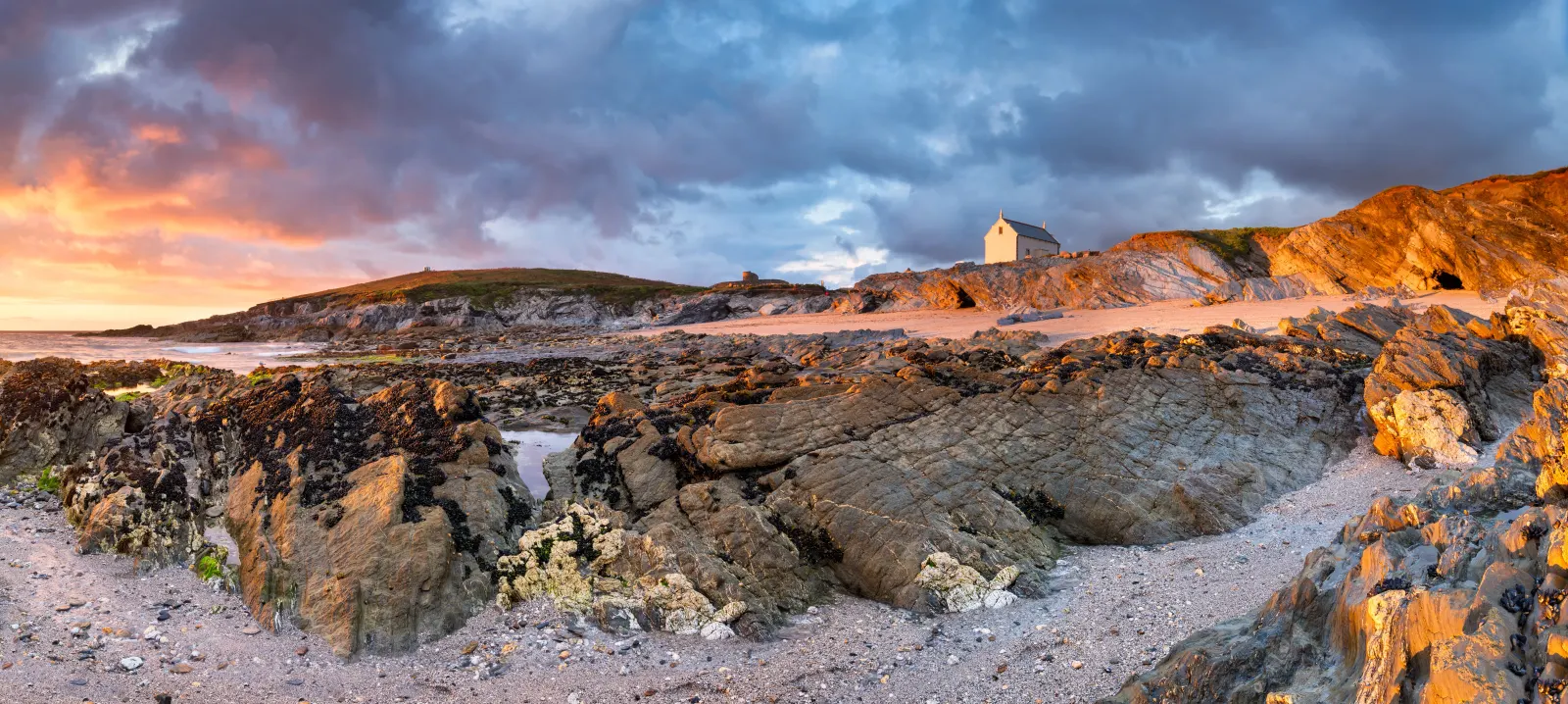
Wheal Coates: If Cornwall ever held a “most photogenic ruin” contest, Wheal Coates would win without even trying. Built in the 1870s to mine tin and copper (and now well looked after by the National Trust), it clings to the cliffs above Chapel Porth Beach, looking out over the Atlantic with that sort of weathered defiance only Cornish buildings seem to manage. On a sunny day, the red brick glows against the blue sea; on a stormy one, you can almost hear the echoes of the stamps and the shouts.1
St Agnes Museum: Small, friendly, and run by people who really care about the place, the St Agnes Museum covers everything from Bronze Age finds to mining artefacts and tales of Bolster, the local giant with a blood problem. It’s a museum where you might learn about the geology in one room and a shipwreck in the next, with a volunteer on hand to fill in the bits the display boards leave out.2
St Agnes Beacon: This 630ft hill has been a lookout point for longer than anyone can say for sure – the Bronze Age people used it, the Napoleonic signal chain used it, and today’s walkers still use it, although that’s mostly for the view, which stretches up to Newquay, down past Porthtowan and Portreath, and even to the Isles of Scilly on a clear day.3
Parish Church of St Agnes: The current parish church building dates from the late 1400s, but the site’s connection to the Christian faith goes back much further. It honours both Agnes of Rome, the village’s patron saint, and the Cornish saint linked to the area – a two-for-one deal in holy dedications. Inside, it’s cool, calm, and full of carved details.4
Methodist Heritage in Mount Hawke: A short hop inland takes you to Mount Hawke, where the Methodist chapel stands as a reminder of how deeply west Cornwall’s mining villages embraced the movement. The buildings may be modest, but their role in shaping community life was anything but.5
Family Activities
St Agnes is the kind of place where kids can run, climb, and get gloriously sandy without you needing to orchestrate every moment because the beach, the coast path, and the village itself all have a way of keeping young explorers occupied, but there are also a few spots worth planning into your day if you want to mix a bit of learning in with the fun.
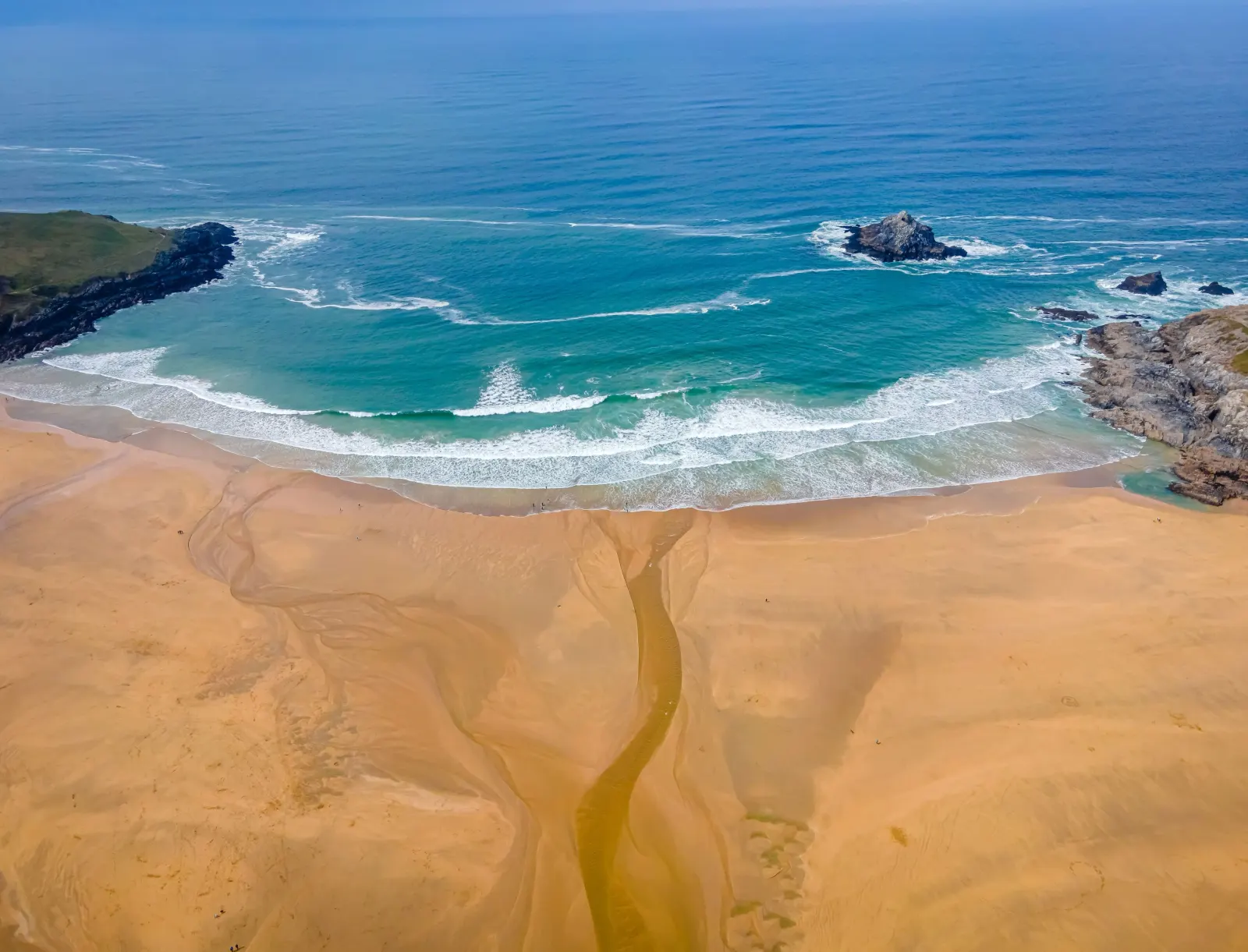
Chapel Porth Beach: At low tide this stretch of sand opens right out, giving plenty of room for sandcastles, football, or a paddle and at high tide, it’s a bit more intimate, so it’s good for rock pooling and watching the surfers make the most of the waves. In summer there’s usually a lifeguard on duty, which makes it easier to relax while the kids get stuck in. And yes, there’s a café close enough to grab an ice cream without drying off first. See: Chapel Porth Beach Guide.
Trevaunance Cove: The main beach for St Agnes, this sheltered cove has a bit of everything: sandy stretches for playing, shallow rock pools to investigate, and a slipway that’s great for launching paddleboards or kayaks. And at low tide you can even walk across to neighbouring coves, although keep an eye on the time because the tide turns quickly here.6
St Agnes Museum (Family Trail): While it’s firmly a historical attraction, the museum makes an easy hour or two with children if you take the family trail, and there’s enough hands-on material and storytelling to hold their attention, plus the bonus of hearing about Bolster the giant, which usually goes down well with younger visitors.
Mount Hawke Skatepark: Just inland from St Agnes, Mount Hawke boasts one of the biggest indoor skateparks in the UK, and it’s perfect for older kids who want to swap sand for ramps, plus there are beginner sessions for those still finding their balance.7
Outdoor Activities
The outdoors in St Agnes isn’t something you visit… it’s the main event.
St Agnes Beacon Walk: This is the hill you’ve probably seen from just about anywhere in the St Agnes area, and climbing it is worth every step. On a clear day, you can spot Newquay to the north, Penzance to the west, and if you’re lucky, the faint outline of the Isles of Scilly out to sea. The best part is that the path isn’t too challenging, making it a good option for a breezy morning walk or a sunset stroll.8
Chapel Porth to Porthtowan Coast Path: Part of the South West Coast Path, this walk takes you past Wheal Coates and along cliff tops dotted with wildflowers in spring and summer. It’s especially lovely because it’s a good one for anyone who likes their exercise with a view, but keep an eye on the wind, because it can get lively up there.10
Trevaunance Cove Kayaking and Paddleboarding: When the sea’s calm, hiring a kayak or paddleboard from Trevaunance Cove is a great way to see the cliffs from a completely different angle; you might spot seals, seabirds, or even the odd dolphin if you’re lucky (and a lot of people are).
Surfing at Porthtowan: Just a few minutes down the road, Porthtowan is a Blue Flag beach with a reputation for excellent surf, and whether you’re a total beginner or can already handle a decent wave, there are local surf schools to get you in the water safely.
Food and Drink
St Agnes does food the way it does everything else – with a mix of local pride, a dash of quirk, and a tendency to let the scenery do half the work. You can perch with a coffee while watching surfers wrestle the tide, tuck into a pasty that’s still hot enough to make you juggle it between bites, or linger over a plate of fresh fish that was swimming off the coast this morning. There’s no rush here unless you count racing the queue for the last hedgehog ice cream at Chapel Porth, and even then, it’s done with a smile.
Cafés and Coffee Houses
In St Agnes, coffee isn’t just fuel – it’s an excuse to pause, swap a few words with whoever’s behind the counter, and watch the world drift by at its own pace. You’ll find the kind of places where they remember your order, and where you can arrive in sandy flip-flops without feeling like you’ve broken some café dress code.
The Sorting Office: Once the village post office, now one of the friendliest coffee stops in Cornwall. The Sorting Office roasts its own beans, serves them with care, and somehow manages to keep the place feeling both stylish and relaxed. You’ll spot locals reading the paper next to holidaymakers planning the day over a flat white.11
Genki Café: Half hidden just off the main street, Genki is the kind of place where you pop in for “just a coffee” and end up staying for lunch. Smooth lattes, fresh juices, hearty sandwiches… all served in a bright, welcoming space with a garden that’s perfect for sunny days.12
Wheal Kitty Café: Up at Wheal Kitty Workshops, this bright and airy café attracts a mix of locals, surfers, and the creative folk who work in the surrounding studios. It’s a great spot for breakfast rolls, good coffee, and people-watching before heading down to the coast path.
Café Q: A stone’s throw from Trevaunance Cove, Café Q keeps things small, fresh, and unfussy, where breakfast feels almost too wholesome to be this tasty, and lunch is served until it sells out (which it usually does). There’s a mix of plant-based, veggie, and gluten-free options, coffee that’s worth lingering over, and enough outdoor seating to catch the sea breeze on a good day.13
Breakers Beach Café: Right on Trevaunance Cove, Breakers makes the most of its location – you can hear the waves from the counter and smell the sea in your coffee steam. The menu is straight-up beach fuel: pasties, bacon baps, ice creams, and cakes that always seem to go quicker than you expect. Grab something, find a spot on the wall outside, and you’ve got front-row seats to watch surfers dodge the shore break.14
Aggie Beach Café: Sitting just above Trevaunance Cove, Aggie Beach Café is all about relaxed, sandy-footed pit stops with a view. They do hearty breakfasts, toasted sandwiches, and coffee that tastes even better with the sea breeze in your face. On sunny days, the outside tables are prime real estate, but even in winter, it’s a cosy spot to watch the waves crash and locals chat about the tide.15
Pubs
For a small village, St Agnes has a knack for making its pubs feel like old friends. Some have been here for centuries, others have only recently found their feet, but all share that Cornish mix of good beer, better conversation, and just enough sea air to make you believe one more pint is a good idea.
Driftwood Spars: If you’ve only got time for one pint in St Agnes, make it here. Housed in a building that’s been a fish cellar, a chandlery, and a sail loft, it now pulls award-winning ales brewed just next door, and there’s live music some nights, a wood-burner for stormy evenings, and a beer garden that almost dares you to stay “for just one more” when the sun’s out.16
The Railway Inn: A nod to St Agnes’s short-lived branch line, The Railway Inn is the place to go for a good pint and a proper pub meal without fuss. It’s a friendly, no-nonsense local where the welcome is warm and the portion sizes suggest someone’s trying to keep you here a while.17
The Peterville Inn: Found near the heart of the village, The Peterville Inn mixes traditional pub cosiness with a menu that’s a bit more ambitious than you might expect – you might come in for a pint and end up with pan-seared scallops or a Sunday roast that’ll have you planning your week around it.18
Taphouse St Agnes: Part pub, part café, part live music venue, The Taphouse doesn’t sit neatly in a category, and that’s why it’s so well loved. There’s a pretty impressive range of local ales, decent cocktails, and a food menu that keeps one foot in pub classics while wandering happily into street-food territory.19
Breweries and Distilleries
We’ve seen that St Agnes definitely knows how to pour a pint or mix a drink, but did you know it makes sure what’s in your glass actually tastes like it belongs here? That could mean ale with a whisper of sea air in its foam, gin laced with the sort of botanicals you’d usually spot on a cliff walk, or wine made under skies that can’t decide between sunshine and a light drizzle, and the good news is you can try them all.
Driftwood Spars Brewery: Just behind its namesake pub – dangerously convenient – Driftwood Spars Brewery20 has been crafting award-winning ales since 2000. They’ve got stalwarts like Alfie’s Revenge, plus seasonal brews that change with the weather. Book a tour if you like seeing how the magic happens, or just wander in for a tasting and somehow lose an hour.
Knightor Winery: A short drive away, Knightor Winery produces award-winning still and sparkling wines in a setting so pretty you’ll wonder if they rent it out for postcards. Old stone barns, neat rows of vines, and a tasting room you’ll struggle to leave. They also make Cornish vermouth, using local herbs for that extra “grown here” bragging right.21
Healey’s Cornish Cyder Farm: Not right in the village, but worth stretching for, Healey’s is based near Truro, and they started nearby making their own scrumpy, and now craft everything from cider and brandy to Cornish whisky. It’s an honest, family-run operation often visited by food lovers heading into the heart of West Cornwall.22
Westward Farm “Wild Wingletang” Gin: Technically on St Agnes of the Isles of Scilly (not this St Agnes), but charmingly close if you’re island hopping. Run by the Hicks family, this gin is distilled using botanicals like gorse, rose geranium, and heather – ingredients literally plucked from the granite-lined down. It might be off the mainland, but it brings a slice of real Isle-of-St-Agnes spirit to the table.23
Farm Shops
Cornwall does food well, but St Agnes and its neighbours take it one step further by letting you meet the people (and sometimes the animals) behind your lunch. These farm shops are where you can stock up on local produce, try something you’ve never heard of, and have at least one chat about the weather before you leave.
Etherington’s Farm Shop: About ten minutes from St Agnes, Etherington’s is a family-run butchery and deli that’s been serving the area for decades. You’ll find everything from Cornish beef and lamb to fresh bread, pies, and cheeses that demand a good cracker. They also run butchery courses for anyone who fancies learning the difference between a ribeye and a rump without relying on Google.24
Great Cornish Food Store: A short drive away but worth it if you’re heading into Truro, this airy, modern shop is packed with produce from all over Cornwall. Think Cornish gouda, hand-made pasties, fresh fish from Newlyn, and even local wines.25
Places to Stay in St Agnes
In St Agnes, even the accommodation comes with a bit of character. You won’t find faceless chain hotels here – more likely it’s converted cottages, friendly pubs with rooms upstairs, and guesthouses that somehow always smell faintly of sea air.
Expedia.com: If you want to browse a big mix of stays in and around St Agnes, Expedia.com has everything from boutique hotels and coastal cottages to budget B&Bs. Filters make it easy to narrow down by sea view, breakfast included, or pet-friendly, and the guest reviews give you a sense of the place before you commit. Check availability and best prices.
TripAdvisor: TripAdvisor is useful if you want to see how other visitors rate local accommodation before booking. You can compare hotels, guesthouses, and holiday lets in St Agnes, check out candid photos from guests, and see which places get consistent praise for location, comfort, or service. It’s also good for spotting hidden gems that might not show up on larger booking sites.
The Driftwood Spars: More than just a pub with a good pint, The Driftwood Spars offers rooms above the bar and in a separate building a few steps away. You’ll get hearty breakfasts, easy access to the cove, and that smug feeling of being first to the bar in the evening. Perfect for walkers, surfers, and anyone who thinks “sea breeze” should be on the amenities list.26
Beacon Country House Hotel: Perched with views of the sea and St Agnes Beacon, this family-run hotel feels very special. Rooms are light and airy, the gardens are well-kept, and the breakfast is exactly what you need before tackling the coast path.27
Rose in Vale Country House Hotel: A Georgian house tucked into a wooded valley, Rose in Vale offers a touch of old-school elegance with the bonus of an outdoor pool for warm days. Think sash windows, open fires, and the kind of staff who remember how you take your tea. Plus, it’s highly rated on Booking.com for comfort and location.28
St Agnes Hotel: Right in the heart of the village, the St Agnes Hotel is a lively pub with comfortable rooms upstairs. Great for travellers who like their evenings sociable and their mornings just a short stroll from coffee. TripAdvisor reviewers regularly praise the atmosphere and hearty food.29
Porthtowan Tourist Park: If you prefer your accommodation under canvas or in a caravan, this well-kept park just outside St Agnes offers spacious pitches, modern facilities, and easy access to nearby beaches. There’s a friendly, family-run feel, and it’s an affordable way to stay close to the coast without giving up your morning hot shower.30
History of St Agnes
History in St Agnes isn’t tucked away in museums or behind glass – it’s baked into the cliffs, stamped into old engine houses, and occasionally acted out by people in giant costumes. From Bronze Age barrows to wartime lookout posts, the parish has a habit of collecting stories, and not all of them are tidy. Here’s how it unfolded, with the facts, the quirks, and a few stubborn legends along the way.
C2500 BC – 5th century AD: Before Chapels and Chimneys – the Bronze Age to Early Christianity
Long before engine houses photobombed holiday snaps, people were climbing St Agnes Beacon. The mound on its summit is a Bronze Age bowl barrow later reused as a signal site, which neatly explains why locals could both bury ancestors and light warning fires on the same hill.31 Efficient, if a little macabre. St Agnes sits inside the Cornwall Area of Outstanding Natural Beauty (now branded Cornwall National Landscape), so those views from the Beacon across west Cornwall aren’t a modern marketing ploy – they’ve been here all along.
4th Century – 1846: Saint, Story, and a Parish Takes Shape
The village takes its name from Agnes of Rome – yes, that Christian teen martyr with the lamb32 – whose cult of veneration spread far and wide. In legend, the Roman prefect Sempronius wanted her married off (to his son, naturally). She refused, remained steadfast, and became a patron saint of purity; versions of the story involve public humiliation foiled by a miracle and, ultimately, execution. That’s the saint behind Saint Agnes on Cornwall’s map (not to be confused with the island of the same name in the Isles of Scilly).33
A chapel here existed by the later Middle Ages, and the present parish church (Church of England) stands at the heart of St Agnes parish, now in the Diocese of Truro. St Agnes only became an independent ecclesiastical parish in 1846 (previously it was a chapelry of Perranzabuloe), which says a lot about how industry and population nudged the church to catch up.34
1632 – 1916: Sea Fights Back: Harbours, Hopes, and Repeated Heartbreak
St Agnes tried very hard to be a harbour town. The Trevaunance Cove story reads like a Cornish Groundhog Day: grand plans, serious money, winter storms… repeat. The Tonkin family led multiple builds from 1632 onward; one attempt even brought in Henry Winstanley (of early Eddystone Lighthouse fame).36 Several quays were wrecked within years. A later pier company in the 1790s made better headway, but Atlantic swell and maintenance woes kept erasing the work. You can still see broken blocks at low tide, a granite reminder that the ocean sets the rules.
18th–19th centuries: Lodes, Stamps, and Skylines – The Mining Boom
This coast sits on a geological sweet spot where granite meets “killas” (metamorphosed country rock), and it paid out: copper first, then tin. From Trevellas Porth and the Blue Hills valley to cliff-top Wheal Coates above Chapel Porth, the St Agnes Mining District38 became industrial theatre – engine houses on the skyline, sandy beach below, and a workforce carving wealth from hard rock. Many surface remains you walk past today are protected within the Cornwall and West Devon Mining Landscape UNESCO World Heritage Site.39
1914 – 1945: Wartime St Agnes
The First World War claimed dozens of local lives, recorded on the parish memorial. In the Second World War, St Agnes Beacon became home to Cameron Camp (1939–40), an army training and anti-aircraft site replacing an earlier Napoleonic rifle practice wall.40 Nearby Perranporth Airfield, operational from 1941, hosted Spitfire squadrons tasked with defending Cornwall’s coast.41 Wartime also brought tragedy: in September 1943, a returning aircraft crashed in Trevellas, killing the pilot and two civilians, including a young boy, Barry, now buried in St Agnes cemetery.42 After the war, Cameron Camp served as emergency housing – a post-war estate with arguably the best coastal views in Britain.
1847 – 1958: Chapels Multiply, Parishes Split, and a Roman Catholic Foothold
Industrial growth brought souls as well as shafts. Methodism spread fast through the 1800s, seeding chapels across the St Agnes parish (you’ll still spot many re-purposed). Mount Hawke became its own parish in 1847, reflecting that spread of settlement.
On the Roman Catholic side, Mass was being said locally by the late 19th century; a small chapel near Cligga Head preceded the present Catholic church – Our Lady, Star of the Sea – opened in 1958 on Trevaunance Road.43 It’s very much part of the living faith map alongside the Anglican parish.
Late 19th Century – Present: Rails, Roads, and the Big Pivot to Holidays
Mineral traffic didn’t only go by sea. The branch across the north coast connected locals to the main line at Chacewater (between Truro and Penzance) and on toward Newquay; St Agnes railway station served the parish until mid-20th-century closures removed passenger services along the Chacewater–Newquay route.44 The rails went; the walking and cycling began.
With industry ebbing and harbours gone, the coast stepped back into the limelight. National Trust care, the South West Coast Path, and surf culture gave neighbouring Porthtowan and Chapel Porth a second life. Engine houses stayed as the accidental sculpture park; surfers and walkers did the rest.
Folklore that Refuses to Sit Quietly: Bolster
Because Cornwall never met a legend it didn’t like, the cliffs also host an annual bout of theatre. Each May, the village re-enacts the giant Bolster myth on the headlands above Chapel Porth – giant puppets, music, and the small matter of a lovesick monster outwitted by a saint. It’s history-adjacent, joyfully Cornish, and very St Agnes. If you’re planning around upcoming events, keep an eye on local listings.45
Modern Developments
If the history of St Agnes was all pickaxes, parishes, and harbour heartbreaks, the modern story is about what happens after the dust (and kaolin) settles. Industry faded, but the village didn’t – it reshaped itself into a place where old chimneys stand as photo ops, surfers queue for hedgehog ice creams, and community groups argue about recycling with as much passion as their great-grandparents once argued about chapel hymns.
From Ore to Outdoors
By the time the last serious mining attempt fizzled out in the mid-20th century, St Agnes faced the same question as many Cornish villages: what next, when the lodes run dry? The answer, as it turned out, was a shift from exporting ore to exporting scenery, and the world was happy to import it.
Rails Close, Trails Open
The closure of the Chacewater–Newquay railway line in 1963 (a Beeching cut) could have been the end of convenient connections, but it also set the stage for the rise of walking and cycling. Old tracks became trails, and the village leaned into a different kind of traffic: backpacks, surfboards, and muddy boots instead of wagons and coal.46
Surfboards and Coast Paths
Tourism became the new backbone of the area, and Chapel Porth’s beach café, with its hedgehog ice creams, turned into an unlikely cultural landmark. The South West Coast Path brought walkers from all over the United Kingdom and beyond, while surfers discovered that St Agnes Beacon wasn’t the only high point around here. The waves at Trevaunance Cove and Porthtowan began attracting a generation of wetsuit-wearers who didn’t mind a few Atlantic bruises.47
Heritage as an Asset
The environment, once bent under the weight of industry, became an asset in itself. In 1986 the St Agnes Heritage Coast was officially designated, and later absorbed into the Cornwall Area of Outstanding Natural Beauty (now Cornwall National Landscape).48 The UNESCO recognition of the Cornwall and West Devon Mining Landscape in 2006 sealed the parish’s place on the global heritage map, proving that engine houses could be as photogenic as cathedrals if you gave them a cliff to perch on.
A Parish Reinvented
Local life adjusted accordingly, and old chapels found second lives as galleries, studios, and quirky homes. The parish has seen waves of incomers drawn by the mix of rugged scenery and creative energy, leading to a thriving arts scene that pairs paintings of tin mines with surf photography in the same shop window. Even the folklore refuses to stand still – the Bolster festival, once a homespun event, now draws regional attention every May.
Key Buildings in St Agnes
St Agnes doesn’t have a castle keep or a stately pile with tea rooms and a maze, but its buildings tell you plenty about how faith, industry, and community shaped the place, from a parish church that still watches over the village to ruined engine houses that became the backdrop to TV drama.
- St Agnes Parish Church (Church of St Agnes): The Anglican parish church, dedicated to Saint Agnes of Rome, sits right in the centre of the village. The current structure dates mainly from the late 15th century, though it was heavily rebuilt in 1848 when St Agnes became its own parish. Inside you’ll find a striking east window depicting its patron saint with her lamb, and outside, a peaceful churchyard that still serves as a hub for local life. The tower is granite-built, square and sturdy – you can spot it from across the valley.
- Wheal Coates Engine Houses: Perched dramatically on the cliff tops above Chapel Porth, the remains of Wheal Coates tin mine are the most photographed buildings in the parish (and possibly in Cornwall). The Towanroath Shaft engine house, built in 1872, is pure industrial theatre: tall chimney, Cornish granite walls, and the sea crashing below.
- The Driftwood Spars: Technically a pub, but also a landmark. This 17th-century building in Trevaunance Cove once stored the massive timbers (or “spars”) used in shipbuilding. Its whitewashed exterior and jumble of low-beamed rooms make it look like something dreamt up for a Cornish postcard, but it’s firmly rooted in the area’s working history. Today it doubles as a brewery and a much-loved stop for walkers.
- Miners’ & Mechanics’ Institute: This unassuming building, founded in the 19th century, shows how seriously mining communities took self-improvement. Institutes like this sprang up across Cornwall to provide lectures, libraries, and classes for working men who wanted education beyond the engine house, and St Agnes’s own still survives as a community hub.50
Famous People from St Agnes
St Agnes may not be a celebrity factory, but the folk who’ve come from here earned their moments in history, whether by painting portraits fit for royalty, writing Cornwall’s story, or giving libraries to everyone who wanted a look.
- John Opie: Born at Harmony Cottage in Trevellas, just outside St Agnes, John Opie was a local kid with a talent so sharp he was teaching Euclid at age 12 and running an evening school before most of us knew what Euclid even was. Discovered by Dr John Wolcot (aka Peter Pindar) around 1775, Opie was brought to Truro, launched in London by 1781, and eventually became a Royal Academician. His portraits – rough-limbed but achingly vivid – still hang in galleries.51
- Thomas Tonkin: Thomas Tonkin of Trevaunance was baptised here in St Agnes on 26th September 1678. He inherited the family estate and committed decades to assembling what he hoped would be a three-volume Parochial History of Cornwall. Though those volumes never made it to print, his research underpins much of what later historians leaned on, and it passed into Davies Gilbert’s History of Cornwall.
- John Passmore Edwards: Though born in nearby Blackwater on 24th March 1823, John Passmore Edwards is part of the St Agnes orbit, and his generosity still echoes through the parish. After building a career in publishing (owning titles like Building News and English Mechanic), he spent his fortune funding libraries, institutes, and schools, including one in St Agnes dedicated to his brother William. His libraries bear his name in bold letters, for everyone, everywhere.52
Education in St Agnes
Schooling in St Agnes has always carried that mix of Cornish independence and close-knit community. You don’t just drop the kids at the gate here – you wave them off into a parish where everyone seems to know everyone else’s surname, and often their grandparents too. From small primaries with sea views to bigger academies a bus ride away, the local education system reflects the same blend of local pride and outward-looking opportunity that has shaped the village for centuries.
Primary Schools
At the centre of things is St Agnes Academy, a well-regarded primary school in the heart of the village. It’s part of the Cornwall Education Learning Trust and puts strong emphasis on outdoor learning (hard not to, when you’ve got a beach down the road) and community links.53 The school has earned praise for both academic standards and its sense of care – a place where the playground chatter ranges from maths homework to who caught the biggest wave at Trevaunance Cove.
Nearby, Mithian School – tucked just outside the village – offers another option, smaller in size but rich in character. Set within leafy surroundings, it manages to combine traditional village-school charm with modern teaching standards. Parents often highlight its family feel and close-knit atmosphere.54
For those nearer Mount Hawke, Mount Hawke Academy provides a larger setting, again under the Cornwall Education Learning Trust umbrella. It’s particularly well-regarded for sport and creative arts, with pupils often taking part in regional competitions.55
Secondary Schools
When it comes to secondary education, students typically travel a little further because the closest is Richard Lander School in Truro, around seven miles away, which has a strong reputation for both academic achievement and extracurricular opportunities ranging from music to Duke of Edinburgh expeditions.56
Some families choose Truro School, an independent option with historic buildings and a broader curriculum, and although it’s fee-paying, it draws pupils from across mid- and west Cornwall.57
Further and Higher Education
For post-16 study, most students head to Truro and Penwith College, a highly rated further education college offering A-levels, vocational qualifications, and apprenticeships. Its St Austell campus isn’t far, but many opt for the main Truro site, known nationally for its teaching quality.58
University-level education is within reach too: Falmouth University59 and the University of Exeter’s Cornwall Campus at Penryn60 provide higher education with a creative and research-led slant. From marine science to fine art, Cornish students don’t have to leave the county to study at degree level.
Demographics of St Agnes
For a parish that hugs the north Cornish coast, St Agnes carries a population that’s bigger than a village but not quite town-sized. The 2021 Census put it at 6,593 residents spread across 3,381 households, which is enough to keep the schools and shops busy but still small enough that you’ll nod to the same faces at the bakery queue more than once a week.61
Age and Generations
St Agnes isn’t skewed one way or the other; it’s a genuine mix. Around 18.3% of the population are children under 15, which means Chapel Porth never runs out of sandcastle architects. The working-age bracket (16–64) makes up just over 58%, balancing laptops, tools, and surfboards in roughly equal measure. Then there’s the older crowd – 23.2% of residents are 65 or over – who know exactly when to head down to Trevaunance Cove before the parking fills up.62
Households and Homes
Those 3,381 households range from centuries-old cottages with low beams to newer builds tucked in village corners. About 64% of homes are owner-occupied, 19% privately rented, and the rest social housing. As with much of Cornwall, second homes and holiday lets creep into the mix, but St Agnes still feels lived-in year round. It’s the kind of place where neighbours trade surplus courgettes and look out for each other’s cats.
Identity and Belief
Identity here leans strongly Cornish. In the 2021 Census, nearly 11% of residents specifically wrote in “Cornish” as part of their national identity – a figure higher than the England and Wales average by some margin. When it comes to faith, 47% ticked Christian, 44% said no religion, and the rest was shared among smaller groups or none at all. The result is a parish where you’ll find Sunday morning worship at the parish church and Sunday morning surf lessons on the same timetable.
A Parish Holding Steady
The population has grown modestly since 2011, showing St Agnes hasn’t ballooned beyond recognition. It’s stable enough to keep the schools lively and the pubs busy, but not so fast that you lose track of who’s who. In Cornish terms, it’s a tide that creeps in rather than crashes, and that’s exactly how most locals like it.
Crime in St Agnes
If crime dramas are your thing, you might be disappointed in St Agnes. There’s not much in the way of high-stakes action here, unless you count a seagull grabbing the last pasty from the bakery.
A Good Kind of Safe
On paper, St Agnes is one of the safest small towns in Cornwall, and in 2025, the village saw around 24 crimes per 1,000 people.63 To put that in perspective, the Cornwall average is more than double at 53 per 1,000. So, yes, if you accidentally leave your surfboard outside the pub, there’s a good chance it’ll still be there when you come back.
What Does Happen?
The most common category is violence and sexual offences, but before you picture something dramatic, it’s worth knowing the numbers are low – about 14 per 1,000 people in 2025, and even that has dropped compared with the year before. Bicycle theft, meanwhile, was a non-event: not a single one recorded all year.63
Little Quirks in the Data
Other types of crime – shoplifting, weapons, criminal damage – barely register compared with national figures. The crime “risk score” (which combines frequency and severity) comes in lower than the Cornwall average too. Translation: the biggest risk on a night out in St Agnes is missing the last order for chips.
The Takeaway
This is a village where crime is more background noise than headline. People know each other, news travels fast, and if something does happen, you’ll hear about it in the shop queue before you see it on any report. It’s not crime-free – nowhere is – but if you’re after a peaceful base in Cornwall, St Agnes more than fits the bill.
Transport in St Agnes
Getting around St Agnes isn’t as complicated as the twisting lanes make it look, but it does require a little patience and the odd deep breath when you meet a tractor coming the other way. Modern transport here is all about balance: cars and buses do most of the heavy lifting, trains are a memory, and walking or cycling often turn out to be the most reliable options on a sunny day.
Roads and Car Travel
The B3277 is the main funnel in and out, linking the village to the A30 in about ten minutes, and from there, Truro, Newquay, and Redruth are within easy reach, though anyone who’s driven in Cornwall knows “ten minutes” is more of a theory than a promise. Parking in St Agnes64 itself can be a bit of a contact sport in summer, with Trevaunance Cove filling up fast on beach days. Still, for many locals and visitors, the car is king, simply because it makes those scattered hamlets and coves part of daily life.
Bus Links
First Kernow buses connect St Agnes with Truro, Newquay, and Perranporth, with stops in the village and down at the cove. Services aren’t as frequent as city commuters might hope, but they do run year-round, which means you can technically go from a pint in St Agnes to a train in Truro without touching the steering wheel.
Nearest Railway Stations
The village lost its own railway station back in 1963, but the tracks to Truro and Redruth are short drives away. Truro is the main hub, with direct trains to London Paddington, Plymouth, and Penzance, which makes it the go-to for longer trips, and Redruth offers similar west–east services.
Air Travel
If you need to leave Cornwall altogether (though why would you?), Newquay Cornwall Airport is only about 20 minutes away. Flights connect to London, Manchester, and a few European destinations, making it a handy gateway, though many locals will tell you they still prefer the train if time isn’t pressing, just for the views out of Dawlish and across Devon.
On Foot and By Bike
The South West Coast Path doubles as both exercise and transport here, connecting St Agnes with Chapel Porth, Porthtowan, and beyond , and plenty of residents treat it as their daily commute, whether that means walking the dog, jogging to clear their heads, or pedalling down to the shop. In summer, with car parks groaning and lanes clogged, a bike or a pair of sturdy boots is often the quickest way to get anywhere.
Is St Agnes Worth Visiting?
St Agnes is absolutely worth a visit if you like your Cornwall with a bit of edge. It’s got the coast path, the beaches, the mining history, and even a giant-slaying festival for good measure. But what makes it stick is the mix – surfers and walkers sharing the same cafe queue, ruined engine houses becoming landmarks, and views from the Beacon that really do live up to the postcards.
Article Sources
- Wheal Coates | Cornwall (no date) National Trust. Available at: https://www.nationaltrust.org.uk/visit/cornwall/wheal-coates National Trust[↩]
- Welcome to St Agnes Museum | St Agnes Museum (2021) St Agnes Museum. Available at: https://www.stagnesmuseum.org.uk/ (Accessed: 14 August 2025) St Agnes Museum[↩]
- esdale77 (2019) St Agnes Beacon – The Cornish Bird, The Cornish Bird. Available at: https://cornishbirdblog.com/st-agnes-beacon/ (Accessed: 14 August 2025) The Cornish Bird Blog[↩]
- Heritage Gateway – Results (2025) Heritagegateway.org.uk. Available at: https://www.heritagegateway.org.uk/Gateway/Results_Single.aspx?uid=428393&resourceID=19191 (Accessed: 14 August 2025) Heritage Gateway[↩]
- Kresen Kernow (2025) Kresen Kernow. Available at: https://kresenkernow.org/SOAP/search/RelatedNameCode.keyword/CRO%7CUK%7C106/ (Accessed: 14 August 2025) Kresen Kernow[↩]
- Visit Cornwall | Beaches: Trevaunance Cove Beach (no date) www.visitcornwall.com. Available at: https://www.visitcornwall.com/things-to-do/beaches/trevaunance-cove-beach Visit Cornwall[↩]
- Kresen Kernow (2025) Kresen Kernow. Available at: https://kresenkernow.org/SOAP/search/RelatedNameCode.keyword/CRO%7CUK%7C106 Kresen Kernow[↩]
- White Rocks to St Agnes Beacon | Cornwall (2025) National Trust. Available at: https://www.nationaltrust.org.uk/visit/cornwall/st-agnes-head/white-rocks-to-st-agnes-beacon-loop (Accessed: 14 August 2025) National Trust[↩]
- Places to see in Cornwall – St Agnes Head | We Are Cornwall (2015) We Are Cornwall. Available at: https://wearecornwall.com/listings/st-agnes-head/ (Accessed: 14 August 2025) We Are Cornwall[↩]
- North (2021) The Humble Home. Available at: https://thehumblehome.uk/posts/north-cornwall-chapel-porth-and-porthtowan (Accessed: 14 August 2025) The Humble Home[↩]
- The Sorting Office, St Agnes (no date) TripAdvisor. Available at: https://www.tripadvisor.co.uk/Restaurant_Review-g528877-d10770166-Reviews-The_Sorting_Office-St_Agnes_Truro_District_Cornwall_England.html Tripadvisor[↩]
- Serving the finest Yallah coffee (2025) Genkiwww.cornwall.co.uk. Available at: https://www.genkiwww.cornwall.co.uk/ (Accessed: 15 August 2025) Genki[↩]
- Cornish Cottages (2025) Cafe Q, Cornishcottages.co.uk. Available at: https://www.cornishcottages.co.uk/things-to-do/Cafes/Cafe_Q (Accessed: 15 August 2025) Cornish Cottages[↩]
- Breakers Beach Cafe – Visit St Agnes (2019) Visit St Agnes. Available at: https://visitstagnes.com/portfolio_page/breakers-beach-cafe/ (Accessed: 15 August 2025) Visit St Agnes[↩]
- Aggie Beach Cafe (2025) Aggie Beach Cafe, Aggie Beach Cafe. Available at: https://aggiebeachcafe.co.uk/ (Accessed: 15 August 2025) Aggie Beach Cafe[↩]
- 4 Star Guest Accommodation in St Agnes Cornwall | Driftwood Spars (2025) The Driftwood Spars | 4 Star Guest Accommodation in St Agnes Cornwall. Available at: https://driftwoodspars.co.uk/ (Accessed: 15 August 2025) The Driftwood Spars[↩]
- Railway Inn – Our Local Pub (2025) Railwaystagnes.co.uk. Available at: https://www.railwaystagnes.co.uk/ (Accessed: 15 August 2025) Railway Inn[↩]
- The Peterville Inn (2024) The Peterville Inn. Available at: https://www.thepetervilleinn.co.uk/ (Accessed: 15 August 2025) The Peterville Inn[↩]
- The Taphouse – Pubs in St Agnes Cornwall (2017) The-taphouse.co.uk. Available at: https://the-taphouse.co.uk/ (Accessed: 15 August 2025) The Taphouse[↩]
- The Driftwood Spars Brewery (2020) The Driftwood Spars Brewery. Available at: https://www.driftwoodsparsbrewery.com The Driftwood Spars Brewery[↩]
- Boutique Winery and Wedding Venue (2025) Knightor Winery. Available at: https://www.knightor.com/ Knightor Winery[↩]
- Healeys Cornish Cyder Farm (no date) healeyscyder.co.uk. Available at: https://healeyscyder.co.uk/ Healeys Cyder[↩]
- Wild Wingletang Gin (2025) Westward Farm. Available at: https://www.westwardfarm.co.uk/store/p5/Wild_Wingletang_Gin.html (Accessed: 15 August 2025) Westward Farm[↩]
- Etherington’s Award Winning Farm Shop in Cornwall (no date) Etherington’s meat. Available at: https://www.etherington-meats.co.uk/etheringtons-farm-shop-in-cornwall/ Etherington Meats[↩]
- Venn Creative (2025) Home – Great Cornish Food, Great Cornish Food. Available at: https://greatcornishfood.co.uk Great Cornish Food[↩]
- Accommodation Cornish Style in beautiful St Agnes | The Driftwood Spars (2025) The Driftwood Spars | 4 Star Guest Accommodation in St Agnes Cornwall. Available at: https://driftwoodspars.co.uk/bed-and-breakfast/ (Accessed: 15 August 2025) The Driftwood Spars[↩]
- The Beacon Country House Hotel in St Agnes, Cornwall (2025) Beacon Country House Hotel. Available at: https://beaconhotel.co.uk/ (Accessed: 15 August 2025) Beacon Hotel[↩]
- Rose in Vale Official Site | Idyllic Country House Hotel Near St Agnes (2022) Rose in Vale Official Site | Idyllic Country House Hotel Near St Agnes And Perranporth Cornwall. Available at: https://roseinvalehotel.co.uk/ (Accessed: 15 August 2025) Rose in Vale Hotel[↩]
- St. Agnes Hotel (2025) Stagneshotel.co.uk. Available at: https://stagneshotel.co.uk/ (Accessed: 15 August 2025) St. Agnes Hotel[↩]
- Porthtowan Tourist Park (2025) Porthtowan Tourist Park. Available at: https://www.porthtowantouristpark.co.uk/ (Accessed: 15 August 2025) Porthtowan Tourist Park[↩]
- Cornwall National Landscape (2020) Cornwall National Landscape. Available at: https://cornwall-landscape.org/section/05-st-agnes (Accessed: 16 August 2025) Cornwall National Landscape[↩]
- Vatican News (2025) The lambs of St Agnes: An ancient tradition of the Roman Church, Vaticannews.va. Vatican News. Available at: https://www.vaticannews.va/en/church/news/2025-01/the-lambs-of-st-agnes-an-ancient-tradition-of-the-roman-church.html (Accessed: 16 August 2025) Vatican News[↩]
- Saint Agnes of Rome – Newman Connection (2024) Newman Connection. Available at: https://connection.newmanministry.com/saint/saint-agnes-of-rome (Accessed: 16 August 2025) Newman Connection[↩]
- Parish of St Agnes (2021) Opc-cornwall.org. Available at: https://www.opc-cornwall.org/Par_new/a_d/agnes_st.php (Accessed: 16 August 2025) OPC Cornwall[↩]
- Current Archaeology (2024) Medieval walls found during ‘A Monumental Improvement’ works at Chapel Porth | The Past, The-past.com. Available at: https://the-past.com/news/medieval-walls-found-during-a-monumental-improvement-works-at-chapel-porth/ (Accessed: 16 August 2025) The Past[↩]
- St Agnes history on into Cornwall Guide (2025) Intocornwall.com. Available at: https://www.intocornwall.com/engine/azabout_history.asp?guide=St+Agnes (Accessed: 16 August 2025) Into Cornwall[↩]
- History of St Agnes | St Agnes Museum (2023) St Agnes Museum. Available at: https://www.stagnesmuseum.org.uk/history-of-st-agnes/ (Accessed: 16 August 2025) St Agnes Museum[↩]
- Cornish Mining WHS – A7 St Agnes Mining District (2025) Cornishmining.org.uk. Available at: https://www.cornishmining.org.uk/areas/st-agnes-mining-district Cornish Mining[↩]
- UNESCO. (2006) Cornwall and West Devon Mining Landscape, UNESCO World Heritage Centre. Available at: https://whc.unesco.org/en/list/1215 UNECSO[↩]
- SeaDogIT (2021) Cameron Camp, Cornwall Heritage Trust. Available at: https://www.cornwallheritagetrust.org/commemorative_plaque/cameron-camp/ (Accessed: 16 August 2025) Cornwall Heritage Trust[↩]
- Perranporth Airfield (no date) TripAdvisor. Available at: https://www.tripadvisor.co.uk/AttTripadvisor[↩]
- Help on Illogan Cornwall War Dead (2016) WW2Talk. Available at: https://ww2talk.com/index.php?threads/help-on-illogan-cornwall-war-dead.34139/ (Accessed: 16 August 2025) WW2 Talk[↩]
- St Agnes – Our Lady Star of the Sea – Taking Stock (2021) Taking Stock. Available at: https://taking-stock.org.uk/building/st-agnes-our-lady-star-of-the-sea/ (Accessed: 16 August 2025) Taking Stock[↩]
- Chacewater – Newquay. 50th Anniversary of closure (2025) Cornwall Railway Society. Available at: https://www.cornwallrailwaysociety.org.uk/chacewater—newquay-50th-anniversary-of-closure.html (Accessed: 16 August 2025) Cornwall Railway Society[↩]
- Giant Bolster legend & St Agnes Festival (2016) National Trust. Available at: https://www.nationaltrust.org.uk/visit/cornwall/chapel-porth/the-st-agnes-bolster-festival-and-legend-of-the-giant-bolster National Trust[↩]
- Walks around St Agnes (2025) iwalkwww.cornwall.co.uk. Available at: https://www.iwalkwww.cornwall.co.uk/walks/near/st_agnes (Accessed: 16 August 2025) iWalk Cornwall[↩]
- Cornwall Beaches. (2025) Trevaunance Cove surfing information, UK Beach Guide. Available at: https://www.cornwall-beaches.co.uk/north-coast/trevaunance-cove-surf.htm (Accessed: 16 August 2025) Cornwall Beaches[↩]
- Cornwall National Landscape (2020) Cornwall National Landscape. Available at: https://cornwall-landscape.org/ Cornwall National Landscape[↩]
- Plastic free Community (2022) Discover Beaminster. Available at: https://discoverbeaminster.co.uk/2022/12/05/plastic-free-community/ (Accessed: 16 August 2025) Plastic free Community[↩]
- St Agnes Miners & Mechanics Institute (2024) Stagnesmmi.co.uk. Available at: https://stagnesmmi.co.uk/ St Agnes Miners & Mechanics’ Institute[↩]
- Opie, John, 1761–1807 | Art UK (2025) Artuk.org. Available at: https://artuk.org/discover/artists/opie-john-17611807 Art UK[↩]
- The Passmore Edwards Legacy – The life and work of John Passmore Edwards (1823-1911). (2025) Thepassmoreedwardslegacy.org.uk. Available at: https://thepassmoreedwardslegacy.org.uk/ The Passmore Edwards Legacy[↩]
- Home (2025) St Agnes Academy. Available at: https://www.stagnes.kernowlearning.co.uk/ St Agnes Academy[↩]
- Mithian School – Emerge (2024) Cornwall.sch.uk. Available at: https://www.mithian.cornwall.sch.uk/ (Accessed: 16 August 2025) Mithian School[↩]
- Mount Hawke Academy (2025) Mounthawke.org. Available at: https://www.mounthawke.org/web/ (Accessed: 16 August 2025) Mount Hawke Academy[↩]
- Richard Lander School, Truro (2025) Richardlander.co.uk. Available at: https://www.richardlander.co.uk/ (Accessed: 16 August 2025) Richard Lander School[↩]
- Truro School | Independent School, Cornwall UK, Girls & Boys 3-18 (2025) Truro School. Available at: https://www.truroschool.com/ (Accessed: 16 August 2025) Truro School[↩]
- College courses in Cornwall – Truro and Penwith College (2019) Truro & Penwith College. Available at: https://www.truro-penwith.ac.uk Truro and Penwith College[↩]
- Welcome to Falmouth University | Falmouth University (no date) www.falmouth.ac.uk. Available at: https://www.falmouth.ac.uk Falmouth University[↩]
- Cornwall campuses | Cornwall campuses | University of Exeter (2018) Exeter.ac.uk. Available at: https://www.exeter.ac.uk/about/cornwall University of Exeter[↩]
- St Agnes (no date) Census Data UK. Available at: https://censusdata.uk/e63006976-st-agnes Census Data UK[↩]
- Custom report – Nomis – Official Census and Labour Market Statistics (2020) Nomisweb.co.uk. Available at: https://www.nomisweb.co.uk/sources/census_2021/report#section_7 (Accessed: 16 August 2025) Nomisweb[↩]
- Buck, T. (2024) CrimeRate, Crimerate.co.uk. Available at: https://crimerate.co.uk/cornwall/st-agnes (Accessed: 16 August 2025) Crimerate.co.uk[↩]
- St Agnes Cornwall parking – free or cheap lots, garages and street meter spots (2025) Parkopedia.co.uk. Available at: https://en.parkopedia.co.uk/parking/st_agnes_cornwall/?arriving=202508161100&leaving=202508161300 (Accessed: 16 August 2025) Parkopedia
Frequently Asked Questions
From the village centre it’s roughly 15–25 minutes on foot (about a mile) down to Trevaunance Cove; Chapel Porth is a short drive or a longer scenic walk.
Agnes of Rome is venerated as a teenage martyr famed for her steadfast Christian faith and purity in the early 4th century.
Yes, there’s a well-used route from the village to Trevaunance Cove; it’s downhill on the way there and a bit of a puff coming back.
Tradition says her hair miraculously grew to preserve her modesty when she was stripped for humiliation; other versions say would-be abusers were struck blind or fell dead.
Walk the coast path around Wheal Coates, swim or surf at Trevaunance Cove or Chapel Porth, climb St Agnes Beacon for the views, and finish with a pint or a hedgehog ice cream (or maybe both!).
St Agnes was a young Roman Christian (d. c. 304 AD) who was later canonised, and she’s usually shown with a lamb as a symbol of innocence.
There are seven in total: Baptism, Confirmation, Eucharist, Penance (Reconciliation), Anointing of the Sick, Holy Orders, and Matrimony.
There are definitely plenty to choose from, and a few examples are Wheal Coates engine houses above Chapel Porth, the remains of Trevaunance Cove’s harbour works, St Agnes Parish Church, St Agnes Museum, and the Bronze Age barrow on St Agnes Beacon.
Marked on 21st January, St Agnes’s Day commemorates Agnes of Rome, and in folk tradition it’s also linked with “St Agnes’ Eve,” when maidens supposedly dream of future husbands.
When it comes to lovely walks, the South West Coast Path from Chapel Porth to Porthtowan (and back via the Beacon) is a classic; shorter loops take in Wheal Coates and Towanroath Shaft.
St Agnes is remembered as an early-church martyr whose cult spread widely across Europe; churches, feast days, and art keep her story alive, from Rome to Cornwall.
Written by
Lisamarie is a writer and researcher with a long-standing love for Cornwall – its towns, coastlines, folklore, and everything in between. Most of her work involves blogging and articles, often focused on places and people, which pairs neatly with her fiction writing since both sides of her work let her balance research with imagination (and indulge a fondness for obscure facts). She lives with her husband, daughter, and a cat called Cheryl in a cottage in the Kent countryside, where she writes, paints, and watches horror films.
35 articles published on Cornwall.co.uk
Read more from Lisamarie Lamb →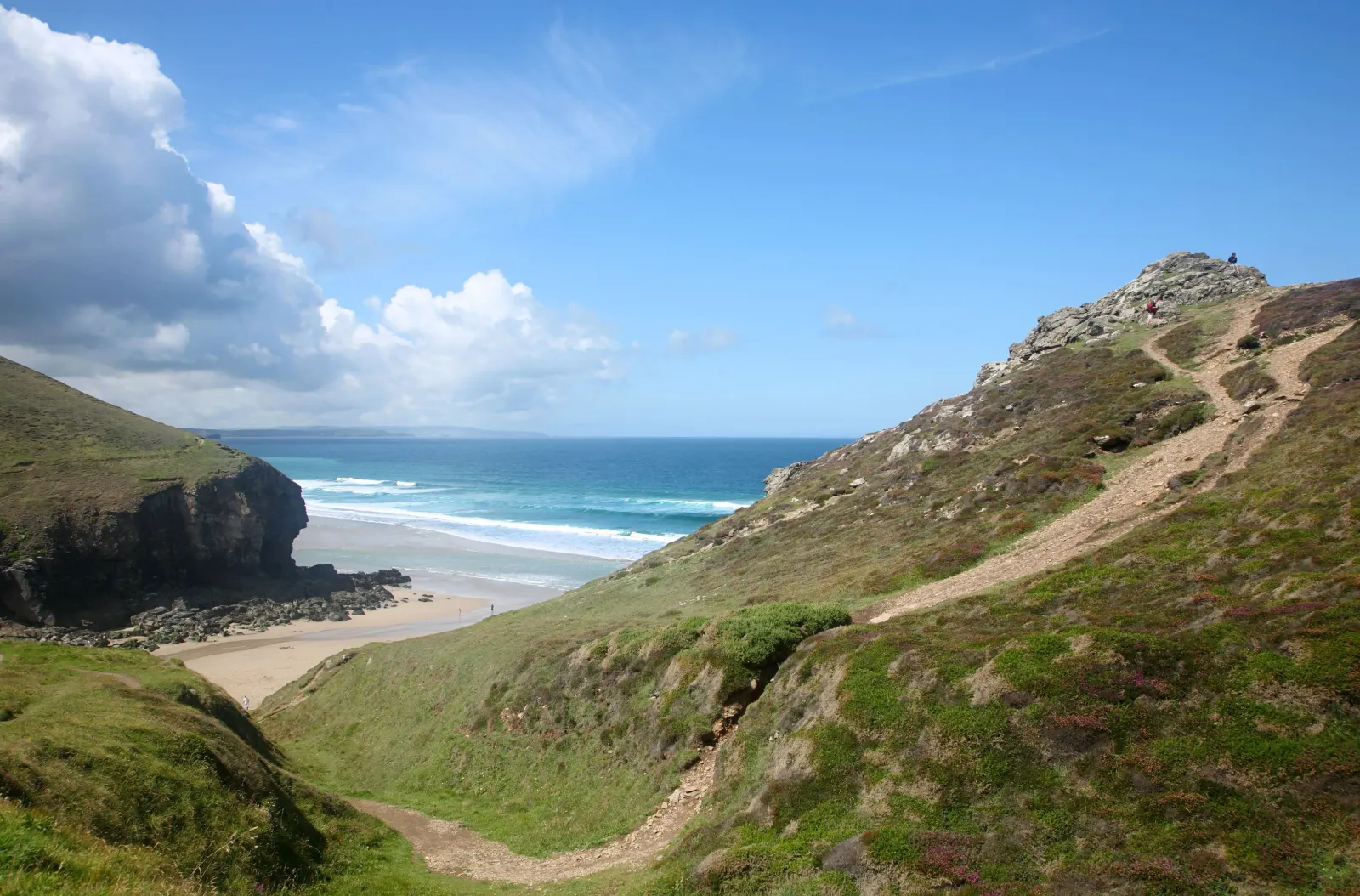
Comments
No comments yet — be the first to share your thoughts.
Leave a comment
Your email won’t be published. Comments are checked before they appear.