

9 articles
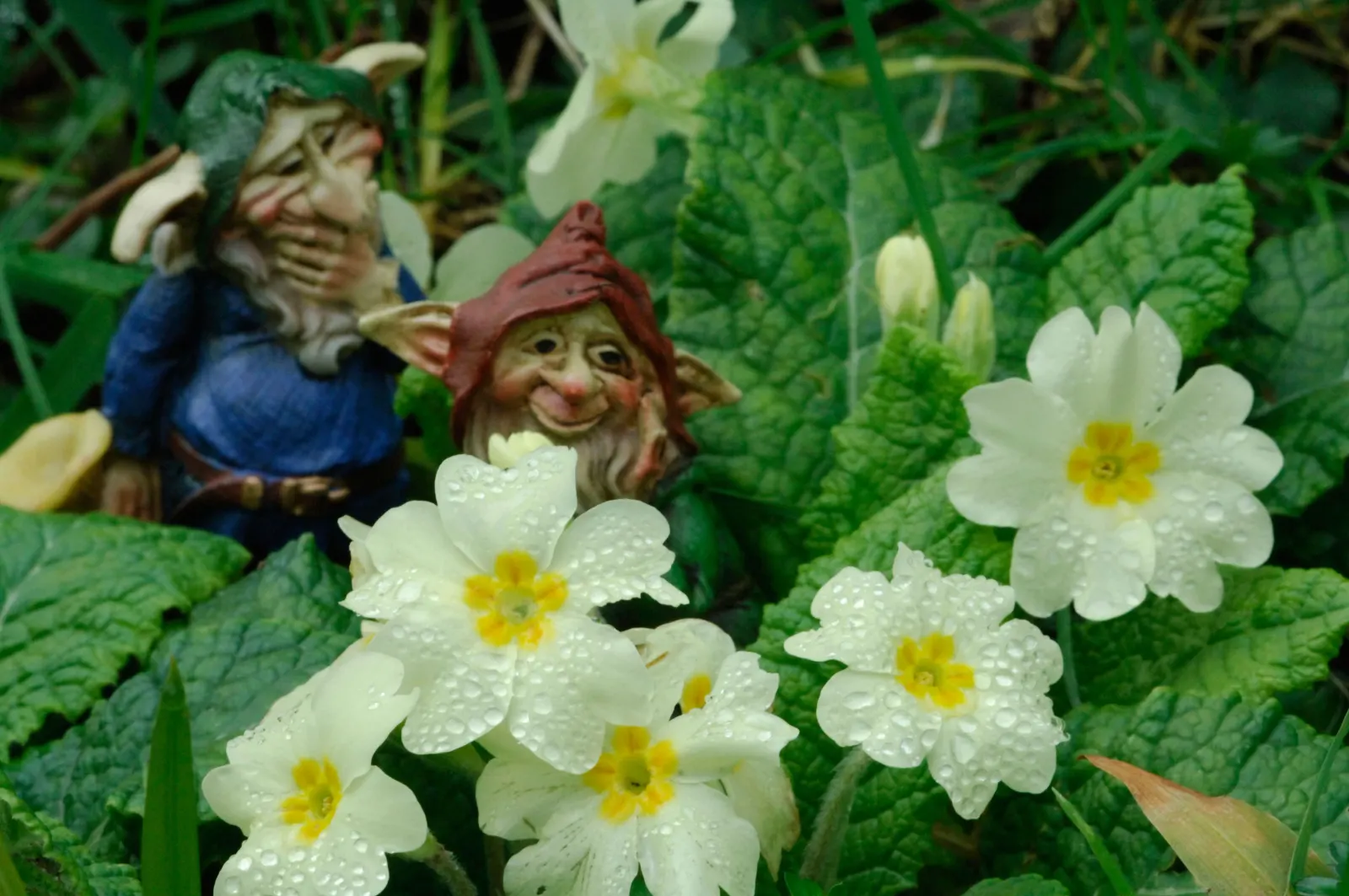
If you visit one of Cornwall’s many gift shops you might well come across a piece of art or maybe a small figurine depicting a curious pixie character. In Cornwall little sprites of this sort are called a piskies. If you’ve ever wondered what a Cornish pisky is and what tales the Cornish tell about these strange little sprites, then read on.
What are Piskies?
Cornish piskies are basically Cornish pixies. They are little people, rarely standing any higher than a man’s kneecap. They are famously skilled in the arts of charms and bewitchments and can even use their magic to fly or even teleport over vast distances in an instant. Piskies can become invisible at will (which they often do to conceal their business from the prying eyes of us big folk).
According to pixie folklore, these little sprites live underground in communities hidden from the world of men by powerful enchantments. You are unlikely to find them near villages or towns as they much prefer to live in the countryside, on remote moorlands or near stone circles and other ancient neolithic sites.1
Cornish Piskies in Folklore and Mythology
In the latter part of the 19th century, Victorian folklorists such as Robert Hunt (from Falmouth) and William Bottrell (from Madron, near Penzance) began collecting and publishing old Cornish folktales. At the time they felt that the old traditions of Celtic Cornwall were in danger of dying out, swept away by the new Victorian age of steam, urbanisation and ‘progress’.
They collected stories relating to all manner of different Cornish fairy folk. This included marvellous tales of bucca, knockers, spriggans and brownies. Many of these creatures are unique to Cornwall. One Cornish sprite that often appears in these collections is the pisky (which you’ll sometimes see spelt as piskey, or piskie).
A great deal of what survives of Cornish pisky folklore was preserved thanks to the work of Hunt and Bottrell.
Mischievous Cornish Piskies: Tricksters of Folklore
Piskies can be helpful and friendly, but they are also notoriously capricious. They can easily take offence if anyone pries too closely into their affairs and are often quite mischievous.
Piskies have a habit of bewitching unwary travellers, causing them to become hopelessly lost on remote moorlands. They find such mischievous pranks highly amusing. People who are led astray in this manner are said to be ‘mazed’, signifying that they’ve become hopelessly bewildered by pisky magic.2 Sometimes, if they have a mind, piskies might even bewitch and abduct people to become their servants.
Such was their reputation in British pixie folklore that Robert Hunt described Cornish piskies as “a most mischievous and very unsociable sprite.2”
So, would you like to hear some old Cornish pisky stories?
Cornish Fairy Tale: The Pisky Who Lost His Laugh
The Pisky’s Lost Laugh
Everyone knows that piskies love to laugh, dance and make merry. And once there was a young pisky who, amongst all his kind, was the merriest dancer with the most infectious laugh. But, alas, one day whilst in the middle of a most merry revel, the little fellow collapsed in a melancholy.
Not knowing what had come over him, his friends took him to see Grandfer Pisky. The old man looked him up and down and, after a time, concluded that the young pisky had lost his laugh!
“You’d best go and find it!” said Granfer.
“But where should I look?” asked the youngster.
“No idea.” replied Granfer with a shrug of his shoulders.
So, a little unsure of where to even start, off he went.
The Quest to Find the Pisky’s Lost Laugh
First, he came upon a mole. It was no common mole but a great Lady who’d been transformed into a mole on account of her vanity. She was quite haughty and claimed her name was Lady Want. But Lady Want did not know where the pisky’s laugh might be. “Perhaps the Jack-o-lanterns may know”, said she.
So, the pisky sought out a Jack-o-Lantern. Sadly, he too, did not know where to find such a thing as a laugh. “Perhaps the giant Tregeagle might know.”, said he. The pisky asked where he might find this giant and Lantern Man told him that, due to his past sins, Tregeagle was doomed to labour endlessly until he’d emptied Dozmary Pool with a limpet shell.
So next the pisky came to Dozmary Pool on Bodmin Moor and sought out the dreaded giant. But old Tregeagle was not much help. “You have lost your laugh? Why should I care? I have lost my soul!” wailed the evil giant.
How King Arthur Helped the Pisky Find His Laugh
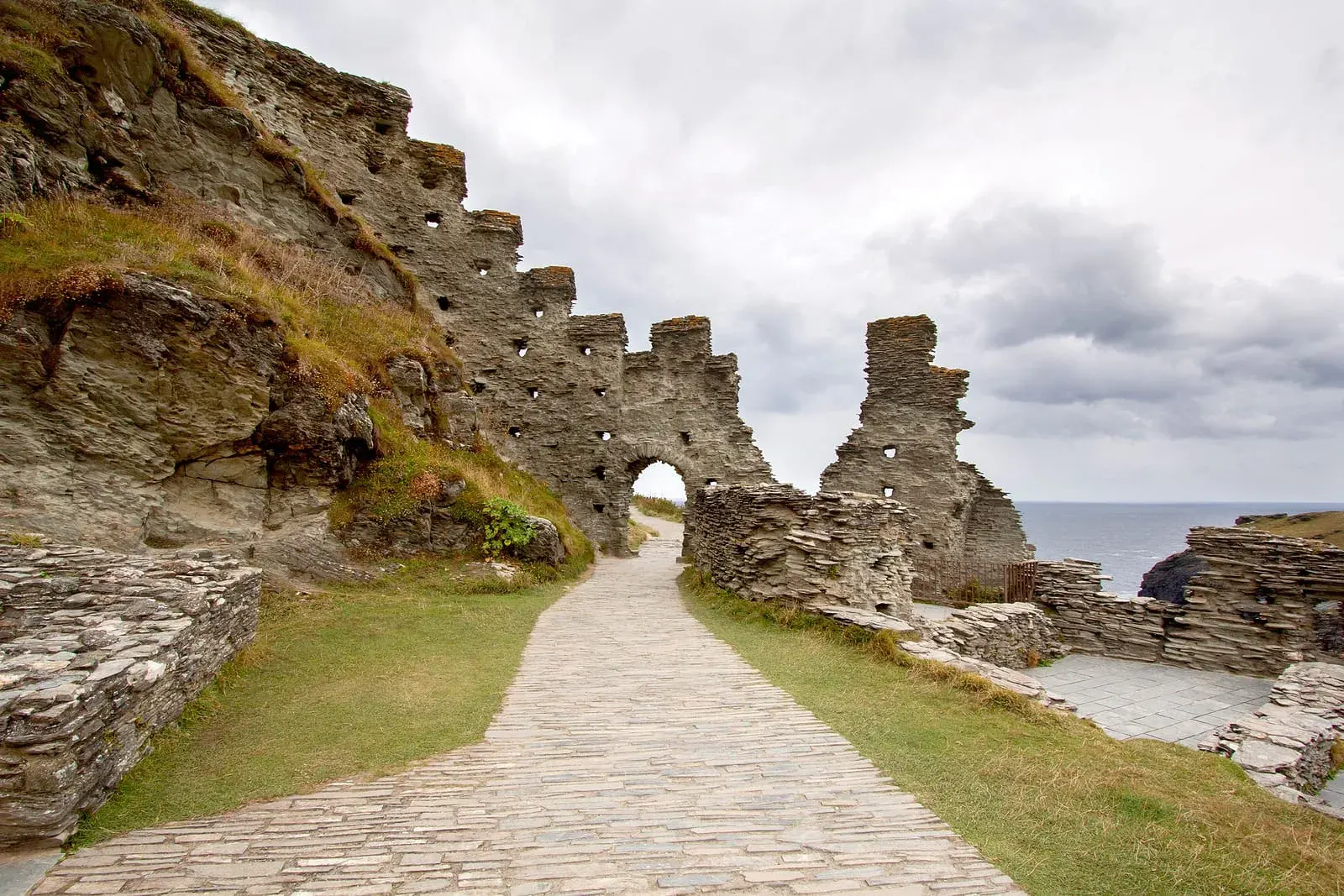
Whoever the pisky asked, it was to no avail. No one seemed to know where his laugh had got to. In the end he came to the cliffs upon which the ruins of old Tintagel Castle lie. And there he met with a chough, but this was no ordinary bird. It was none other than the ancient spirit of King Arthur in the form of a chough!
Of all the strange creatures the pisky had met, King Arthur alone had seen the laugh. Indeed, the laugh was hiding in the grass not far from where the pisky and chough met. Arthur directed the pisky to where he’d last seen the laugh and the pisky called out for his laugh to return. And then, sure enough, it flew back to him!
And so it was that the pisky found his laugh and danced and laughed his way all the way back to his friends.
Enys Tregarthen’s Celtic Fairy Tales
Poor Nellie was paralysed at a very young age and, unable to get out and about very much, she devoted herself to writing.1 In Nellie’s version of the story the pisky is unnamed, but in later versions he is named Omfra.4
The Truth Behind Cornish Pisky Stories and Legends
Anne Jeffries and the Piskies of Cornwall
In 1696, a curious first-hand account of a real-life encounter with piskies was published by Moses Pitt. It concerned a certain Anne Jeffries, who’d been a young servant girl in the Pitt household near Bodmin in 1645.
Anne had been sitting knitting in an arbour in the garden one day when six small people, clad in green, appeared to her. She claimed that the little men whisked her away by means of magic, transporting her to an incredible fairy-world. There were beautiful palaces, temples, lakes filled with marvellous fish, and gardens filled with the most spectacular and vibrantly coloured flowers.
After spending some time in this enchanted world, pisky magic returned Anne to the garden. It was then that the Pitt family found her collapsed in the arbour, suffering a convulsive fit. They took her into the house to recover and once she’d regained her faculties, she related her incredible story.
Pisky Magic and Supernatural Powers
As it turned out, this was only the first of many encounters she had with the small folk. On several future occasions she claimed to have danced with them in the orchard.
Her dealings with the piskies conferred strange supernatural abilities upon Anne. She seemed able to survive on little or no food and developed miraculous healing powers. She soon acquired a considerable reputation, attracting folk from all over the country, seeking her cures. [James]
At one point she was detained in Bodmin jail, under suspicion of witchcraft. Luckily for her, she was soon set free and continued to dance with piskies and offer her miraculous cures until her death in 1698.6
Pisky-Led: The Darkside of Cornish Pisky Folklore
Not all encounters with piskies were so benevolent as Anne’s. Piskies are inscrutable creatures and as likely to prove mischievous as helpful.
One of William Bottrell’s tales tells of a troubling encounter with a pisky experienced by a certain Captain John Anthony whilst travelling from St Ives to Penzance. Wandering across the Cornish countryside through many ancient lanes and byways, the intrepid captain eventually found himself hopelessly lost. As night came, a fog descended, and he had no idea at all as to which direction he should take.
Eventually he came across an old cottage on the Lelant Downs inhabited by a pair of country women. When he asked directions from the women, they soon became convinced that Anthony was being ‘pisky-led’.
Those who are pisky-led, they informed him, are bewildered and have little hope of ever finding their way. They see a broad road when in fact they are travelling upon a winding lane. They see the distant lights of houses but when they seek them out, they find nothing but glow worms in hedges. All the while a laughing pisky continues to confuse them with strange charms.
To be free of pisky charms, the women advised him, he must turn his coat inside out. Anthony did as the women advised and, sure enough, he was able to find his way back to Penzance, free from further pisky mischief.5
Lelant Downs
Trencrom Hill:
- Grid Reference: SW 51599 36007
- What3words: ///runners.lotteries.champions
Cornish Folk Tale: The Pisky’s New Suit
Piskies are not always so mischievous. Indeed, they can sometimes be amongst the most helpful fairy creatures in Cornwall – but only on their own terms, as one Cornish farmer found out.
One morning this farmer entered his barn as usual only to discover, to his surprise, that some of the grain stored there had been mysteriously threshed overnight. Curious to discover the cause of this curious phenomenon, he decided to hide in the barn and keep watch.
Later that night he saw a tiny man, clad in a ragged green suit, enter the barn and begin busily threshing the grain. It could only be a pisky! The little fellow was so industrious that a truly phenomenal amount of grain was threshed in just a few hours.
The farmer was very grateful but a little worried. He knew that piskies could be tricky folk if they weren’t kept happy. So, noting the dishevelled state of the pisky’s suit, he decided to have a new one made for the little fellow. When the new clothes were finally ready, he left them in the barn one evening as a gift.
Later that night the pisky returned as usual and, seeing the new suit, he immediately put it on. The little chap seemed very pleased. Puffing out his chest with pride, he strutted around like a peacock, pausing now and then to admire his fine new suit. Then the pisky sang a little song:
Pisky fine, and pisky gay;
Pisky now will fly away!7
And with that the pisky flew away, never to be seen again!
Joan the Wad: Cornwall’s Most Famous Pisky
Only a few piskies are named in Cornish folklore. One such character is Joan the Wad, a pisky originally associated with the village of Polperro in south eastern Cornwall.
She is mentioned in Jonathan Crouch’s history of Polperro as being famous for her mysterious supernatural light. Her name, ‘Wad’, is a local dialect term for a torch. She could appear in the countryside around Polperro, sometimes leading travellers astray for a joke and sometimes leading them to safety. She could be very mischievous and had a reputation for sneaking up on people and tickling them!
She is mentioned in an old rhyme:
Jack o’ Lantern! Joan the Wad.
Who tickled the maid and made her mad!
Light me home, the weather’s bad!8
Joan the Wad and Cornish Pisky Charms
The practice can be traced back to a businessman named F.T. Nettleinghame, who began manufacturing and marketing these charms on a large scale in 1931.9
Where Can I Find Piskies in Cornwall Today?
There are several locations dotted across Cornwall that have an old association with piskies. Perhaps you might still find them there:
- Mên-an-Tol: Jane Tregurtha from Newlyn claimed, in the early 20th century, that a friendly pisky lives in this ancient megalithic stone monument.
- Grid Reference: SW 42647 34943
- What3words: ///greet.former.goodbye
- The Pisky House: This is an underground iron age structure known as a Fogou located near the village of Constantine. These days it is known as Trewardreva fogou, but it has been called The Pisky House in past times due to its long association with these sprites.
- Grid Reference: SW 72797 30026
- What3words:///friday.quench.trackers
- Boscastle Museum of Witchcraft and Magic: If you are interested in Joan the Wad lucky charms you can see a small collection of them at the Boscastle Museum of Witchcraft and Magic.10
Piskies in the Cornish Countryside
Now that you read a little about our Cornish Pisky Stories and Legends, you might be wondering if all the piskies been driven away by science and progress in modern times? Could a few still be found in some of the wilder and more remote parts of the Cornish landscape? Maybe, if you are very lucky and know where to look, you might one day come across one of these elusive Cornish fairies.
But beware! Should you ever meet a pisky be ready to turn your clothes inside out if you wish to avoid falling prey to their charms!
Article Sources
- James, RM. (2022). The Folklore of Cornwall, the oral tradition of a Celtic nation. Exeter: University of Exeter Press[↩]
- O’Connor, M. (2025). The Little History of Storytelling in Cornwall. Cheltenham: The History Press[↩]
- Hunt, R. (2025). Popular Romances of the West of England: The Fairies: The… | Sacred Texts Archive. [online] Internet Sacred Text Archive. Available at: https://sacred-texts.com/neu/eng/prwe/prwe023.htm [Accessed 1 Oct. 2025][↩]
- Sloggett, N. (1906). North Cornwall Fairies and Legends. [online] Gutenberg.org. Available at: https://www.gutenberg.org/files/40246/40246-h/40246-h.htm#ch1 [Accessed 2 Oct. 2025] Gutenberg.org[↩]
- Rawe, D.R. (1992). The Pisky Who Lost His Laugh | Cornwall Heritage Trust. [online] Cornwall Heritage Trust. Available at: https://www.cornwallheritagetrust.org/learn/resources/stories-and-rhymes/pisky-who-lost-his-laugh/ [Accessed 3 Oct. 2025] Cornwall Heritage Trust[↩]
- Briggs, K. (2002). British Folk-Tales and Legends. Abingdon: Routledge Classics[↩]
- Bottrell, W. & Jones, K.I. (2016), Traditions and Hearthside Stories of West Cornwall. CreateSpace Independent Publishing Platform[↩]
- National Trust. (2025). Trencrom Hill trail | Cornwall. [online] Available at: https://www.nationaltrust.org.uk/visit/cornwall/godolphin/trencrom-hill-trail [Accessed 3 Oct. 2025][↩]
- James, RM. (2022). The Folklore of Cornwall, the oral tradition of a Celtic nation. Quoted on p.66. Exeter: University of Exeter Press[↩]
- Simpson, J. & Roud, S. (2001). Oxford Dictionary of English Folklore. Quoted on p.200. Oxford: Oxford University Press[↩]
- White, R. Artcornwall.org. (2015). Nettleinghame and his piskey-empire. [online] Available at: Artcornwall.org [Accessed 2 Oct. 2025]
- Museum of Witchcraft and Magic. (2024). 2053 – Joan the Wad Pisky Charm – Museum of Witchcraft and Magic. [online] Available at: https://museumofwitchcraftandmagic.co.uk/object/pisky-good-luck-charm-4/ [Accessed 3 Oct. 2025] Museum of Witchcraft and Magic
Frequently Asked Questions
A pisky is a fairy creature that features in many old Cornish folk tales. They are almost always described as small. They are often associated with remote moorlands and ancient neolithic sites, where they are believed to dwell in secret underground communities.
There is no significant difference between pixies and piskies. In Cornwall, people call these fairies piskies. The same sprites are also found elsewhere in Britain but the further you travel over the border, into Devon and away from the south west, the more likely you are to hear them called pixies
Piskies are perhaps the most intriguing and elusive fairy creatures in Cornish mythology. They are small – only about knee high to a man. They live in remote places and can remain invisible if they choose. Although they can be helpful, they can also be mischievous.
Cornish pixies make an appearance in the Harry Potter films. In the Chamber of Secrets, Gilderoy Lockheart foolishly employed these mischievous creatures in one of his lessons. Unfortunately, he very quickly lost control of them as that ran amok in the classroom.
Joan the Wad is a pisky with will-o-the-wisp type powers. Over the past century or so people have been making small lucky charms in the image of Joan. You can see a collection of these at the Museum of Witchcraft in Boscastle.
A great number of pisky stories were recorded by the folklorist William Bottrell in his book Traditions and Hearthside Stories of West Cornwall (1870). More pisky stories can be found in Popular Romances of the West of England (1865) by Robert Hunt.
People started carrying good luck charms in the image of piskies in the 20th century. However, in the 19th century people regarded piskies as capricious creatures who could bring ill fortune if offended. Traditionally piskies were not specifically associated with good fortune.
Piskies are small (about knee high to a man). Although some tales speak of magical flight, traditional stories never claimed they had wings. They can even teleport over great distances in an instant. But you can’t see them unless they want you to as they have the power of invisibility.
Cornish Piskies are said to live in moorlands, forests, ancient paths, and stone circles across Cornwall.
In Cornish folklore, piskies sometimes help farmers or households that respect nature and leave offerings.
Cornish Piskies influence modern fantasy and are often confused with pixies in books, films, and folklore-inspired media.
Cornish Piskies are a key part of Cornwall’s cultural identity, reflecting its history, landscape, and storytelling traditions.
Written by
Paul Watts is a local writer based in Launceston with a keen interest in history and folklore, having studied A History of Folklore at Oxford University. He is the author of Myths and Legends of the Medieval World (Pen & Sword Books) as well as a leading medieval history blog (named a ‘Top blog’ by Feedspot in 2025)
9 articles published on Cornwall.co.uk
Read more from Paul Watts →
Comments
No comments yet — be the first to share your thoughts.
Leave a comment
Your email won’t be published. Comments are checked before they appear.