

13 articles
If you’re a fan of history like me, you’ll appreciate that castles in Cornwall are amongst some of the most spectacular in the country. Cornwall’s landscape is shaped by centuries of medieval and Celtic heritage – most evidently seen in its many castles and fortresses. Including prehistoric hill forts and cliff castles once ruled by Celtic chieftains, medieval strongholds built as symbols of power and status, and coastal fortifications built under King Henry VIII, between them they reveal over 2,000 years of Cornish history.
Wondering which Cornwall castles to visit? This guide explores the most significant castles in Cornwall and uncovers the history, legends and local insights that make each one worth visiting.
Best Castles in Cornwall (At a Glance)
- Best for legend: Tintagel Castle
- Best coastal views: St Michael’s Mount
- Best for families: Pendennis Castle
- Best Tudor fortress: St Mawes Castle
- Best Norman stronghold: Restormel
- Best for historic importance: Launceston
The History of Castles in Cornwall
Castles in Cornwall were built over a distinct range of historical periods – each of them is a reflection of the powers and people who lived in Cornwall during that time.
- Early Cornish hillforts and pre-Norman strongholds – The south west has more prehistoric monuments than anywhere else in Britain (and 1,346 Scheduled Monuments), including many hill forts and cliff castles.1 These were used to defend Celtic tribes from outside invasion and as meeting places.2 There is also evidence that Cornish strongholds were used as centres for international tin trade during the European Bronze Age.3
- Norman conquest and the rise of medieval stone castles – Following the Norman Conquest (1066), stone castles were systematically built throughout Cornwall and the rest of England to establish and maintain Norman power – as well as for administration purposes.4 Amongst Cornwall’s most famous Norman castles are Tintagel, Restormel, Launceston and Trematon.
- Tudor and Civil War influences on Cornish castle construction – By the 16th century, Tudor fortresses were being constructed along the Cornish coastline to protect King Henry VIII’s kingdom from French and Spanish invasion by sea.5 These artillery fortresses were typically round and made of stone – and were later used in the English Civil War (1642 – 1651) by both Royalist and Parliamentarian fighters.
- Defensive castles vs romantic 19th-century rebuilds – Not all castles in Cornwall were built for defensive purposes. Some, including Caerhays Castle on the Roseland Peninsula, were built in more recent centuries as a statement of wealth by local aristocratic families.6
Famous Castles in Cornwall (Must-Visit)
Discover these famous castles in Cornwall and their role in Cornish history. Opening times may be seasonal, so it’s best to check the individual castle’s website before you plan your visit.
Tintagel Castle – Home of King Arthur
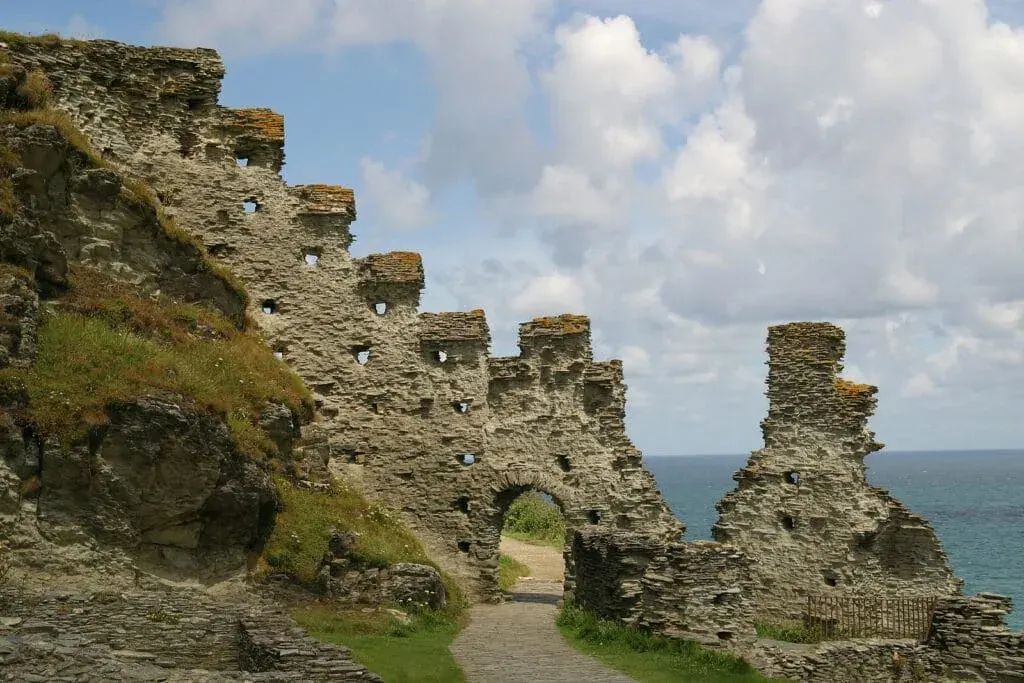
Legendary home of King Arthur, Tintagel Castle is probably Cornwall’s most famous castle. Each year over 250,000 people visit the site which is run by English Heritage on the north coast of the county.7 The present ruins are those of a 12th century castle, built by Richard Earl of Cornwall – though a prior headland fortress was the stronghold of post-Roman Cornish rulers from the 5th to 7th centuries BC.8 Tintagel plays a key role in Cornish identity and mythology, and has influenced Cornish art, inspired Cornish literature and cements ties between Cornwall and the Arthurian legend. Visitors can expect to see crumbling clifftop ruins, explore Merlin’s cave and cross a suspended footbridge with sea views to reach the island.
Why Visit
- Discover the legend of King Arthur and Merlin’s cave, perfect for inspiring both adults and children.
- Uncover 700 years of history and gain insight into medieval Cornwall.
- Unrivalled cliff top views over the stunning north Cornwall coast and Atlantic ocean.
How to Visit
- Park in one of the town car parks, which are 600 metres from the castle. From there, it’s a 20 minute walk.
- Grid reference: SX 05668 88481
- What3words: ///required.painters.twinkled
St Michael’s Mount Castle – Unique Island Fortress
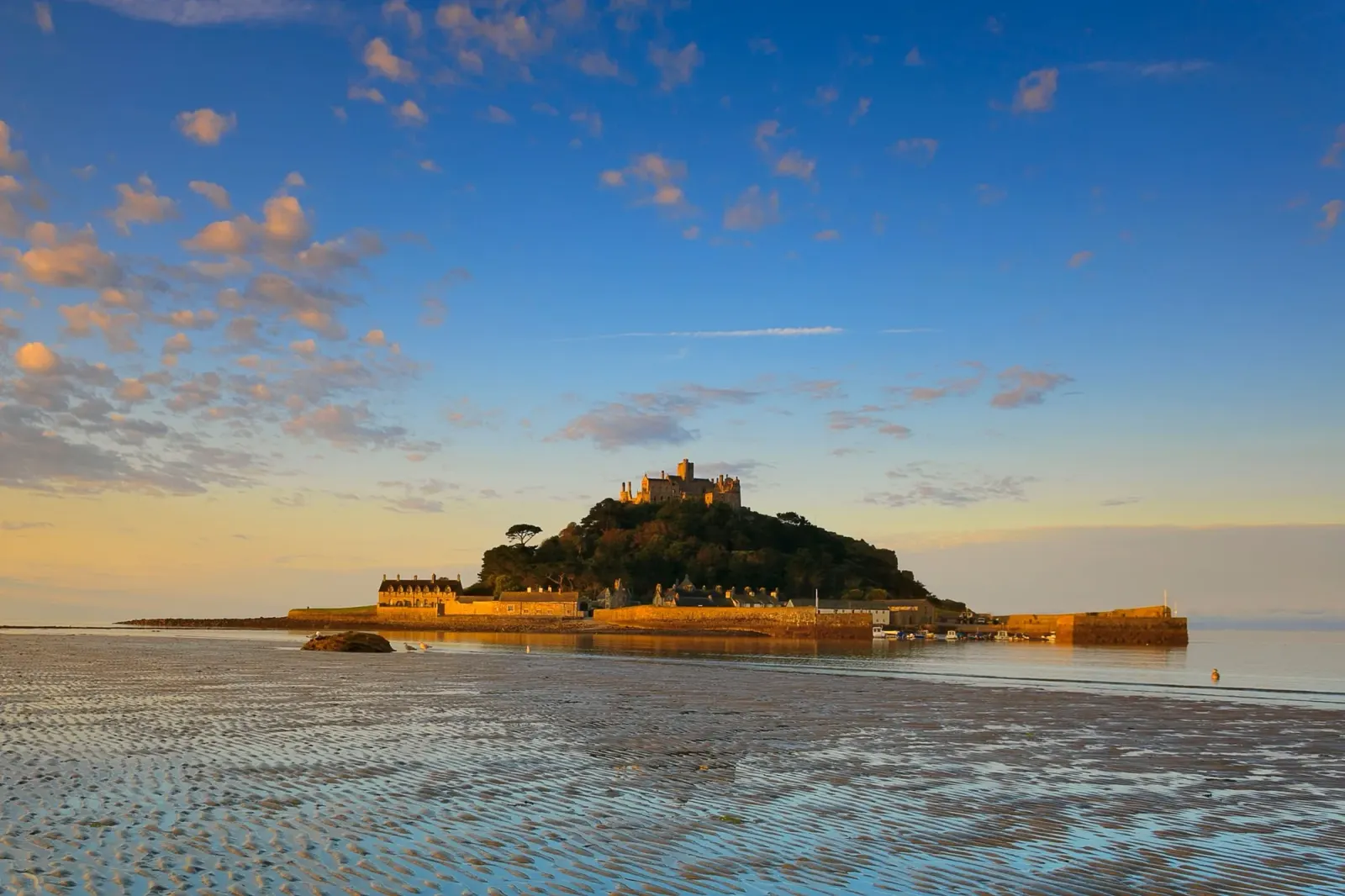
Based on a tidal island in Mounts Bay, St Michael’s Mount is one of my favourite Cornish castles. Originally thought to be a trading post for Cornish tin during the Bronze Age, by the 12th century it became a Norman monastery and site of pilgrimage dedicated to the Archangel Michael. However, despite its peaceful beginnings, St Michael’s Mount has also seen its fair share of conflict and plays an important role in local maritime defence – including during the Civil War when soldiers loyal to the crown defended it from Oliver Cromwell’s forces and during the Napoleonic Wars when its cannons sank a French ship.9 In 1647, Colonel John St Aubyn was appointed Captain of St Michael’s Mount to maintain peace in the surrounding area after the English Civil War. Today, the St Aubyn family still live on the island, though it is also run by the National Trust and open to the public.
Why visit
- Walk the famous island causeway, and take images at one of Cornwall’s best photography locations.
- Visit the island museum with fascinating artefacts including a Samurai suit of armour and Napoleon’s coat.
- Explore the cobbled streets of historic village underneath the castle.
How to visit
- Visit at low tide to walk along the causeway that leads to the island and explore its museum, castle, tea room and gardens. During the summer season boats can transport you at high tide. Leave your car in one of Marazion’s pay and display car parks.
- Grid reference: SW 51477 29912
- What3words: ///venturing.musical.waiters
Pendennis Castle – Best Family-Friendly Castle
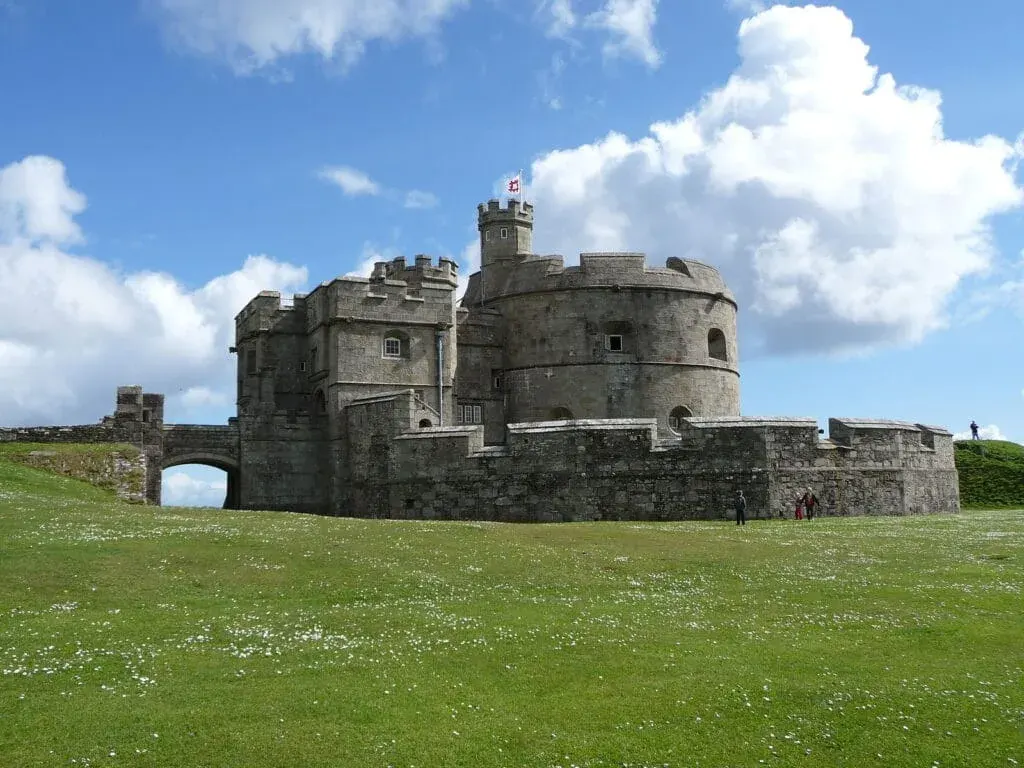
One of many Tudor coastal fortresses built by King Henry VIII, Pendennis Castle has been standing guard over the River Fal since 1542. Initially built to defend the English coast from attack by the Holy Roman Empire, Pendennis didn’t see military action until the English Civil War (1642-1651). During this time it was a Royalist stronghold and endured a five month siege. Pendennis also played an important role in modern history – during WWI and WWII it was the centre of command for coastal defences in west Cornwall.10 Today, Pendennis is a popular family day out and has a range of activities and events on throughout the year. It is one of the best preserved artillery fortifications in Cornwall, and treats you to panoramic views over the river and ocean as you walk its ramparts.
Why Visit
- Climb the Tudor keep to enjoy panoramic views over Falmouth Bay and the Carrick Roads.
- Learn about historic weaponry from the Tudor, Napoleonic and Victorian eras.
- Take part in seasonal events, family friendly activities and have fun in the soft play area.
How to Visit
- Parking is next to the castle. There is wheelchair access to the ground floor of Royal Artillery Barrack Block and a lift to the first floor.
- Grid reference: SW 82326 32071
- What3words: ///carbon.leaves.empire
St Mawes Castle – Best Preserved Tudor Castle
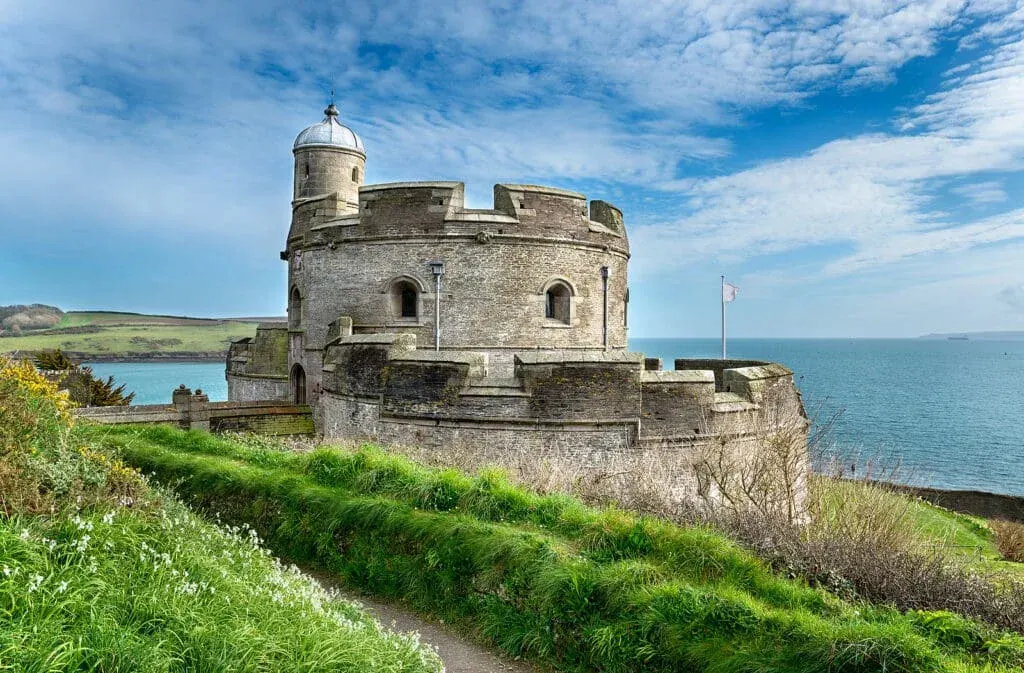
Sister fortress to Pendennis Castle, St Mawes Castle sits on the other side of the Fal River. Together they were designed to defend the entrance to the Carrick Roads and Falmouth harbour from invading enemy ships with cannon fire. Though smaller than Pendennis, St Mawes Castle is admired for its cloverleaf design and because it is one of the best-preserved of King Henry VIII’s Tudor fortresses. Visitors can still see inscriptions in the stone regaling the king and his son Edward VI, along with a refurbished collection of guns and cannons.11 For a full day out, my recommendation is to tie it in with an exploration of St Mawes and a walk along the South West Coast Path.
Why Visit
- Wander around the distinctive clover leaf-shaped castle and admire its carved inscriptions.
- Learn about daily castle life and how the castle was defended.
- Explore the wider area, including St Mawes village, the South West Coast Path and a ferry ride from Falmouth.
How to Visit
- Parking is next to the castle. Alternatively, catch the St Mawes ferry from Falmouth and walk uphill half a mile from the harbour to reach the entrance.
Restormel Castle – Ancient Norman Stronghold
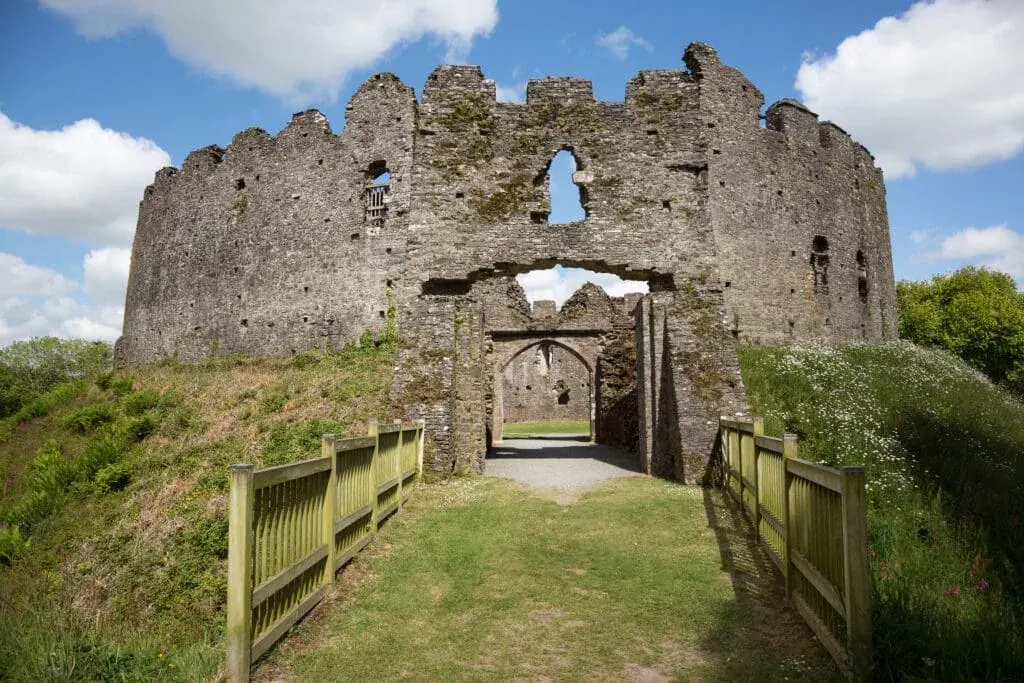
Once a Norman stronghold, the 13th century circular shell keep of Restormel Castle later became a luxurious retreat for the nobility. In 1337, it was bestowed upon Edward First Duke of Cornwall, otherwise known as the Black Prince. During this time it became an important site for administering the region and the Stannaries (organisations charged with monitoring everything to do with Cornish tin mining). Later, during the English Civil War, the castle served as a garrison for Parliamentarian forces – who suffered their worst defeat of the war in nearby Lostwithiel in 1644.12 Today, Restormel is a fantastic example of a circular medieval fortress and its elevated position provides sweeping views over the River Fowey.
Why Visit
- Explore the circular walls of a Norman fortress, which was once a grand royal castle.
- Enjoy stunning views of the countryside and the Fowey valley.
- Spot wildflowers and wildlife in the surrounding greenery, including spring and summer flowers and pheasants.
How to Visit
- There is plenty of free parking 70 metres from the castle entrance.
- Grid reference: SX 10239 61291
- What3words: ///excavated.classic.revives
Launceston Castle – Cornwall’s Most Important Castle
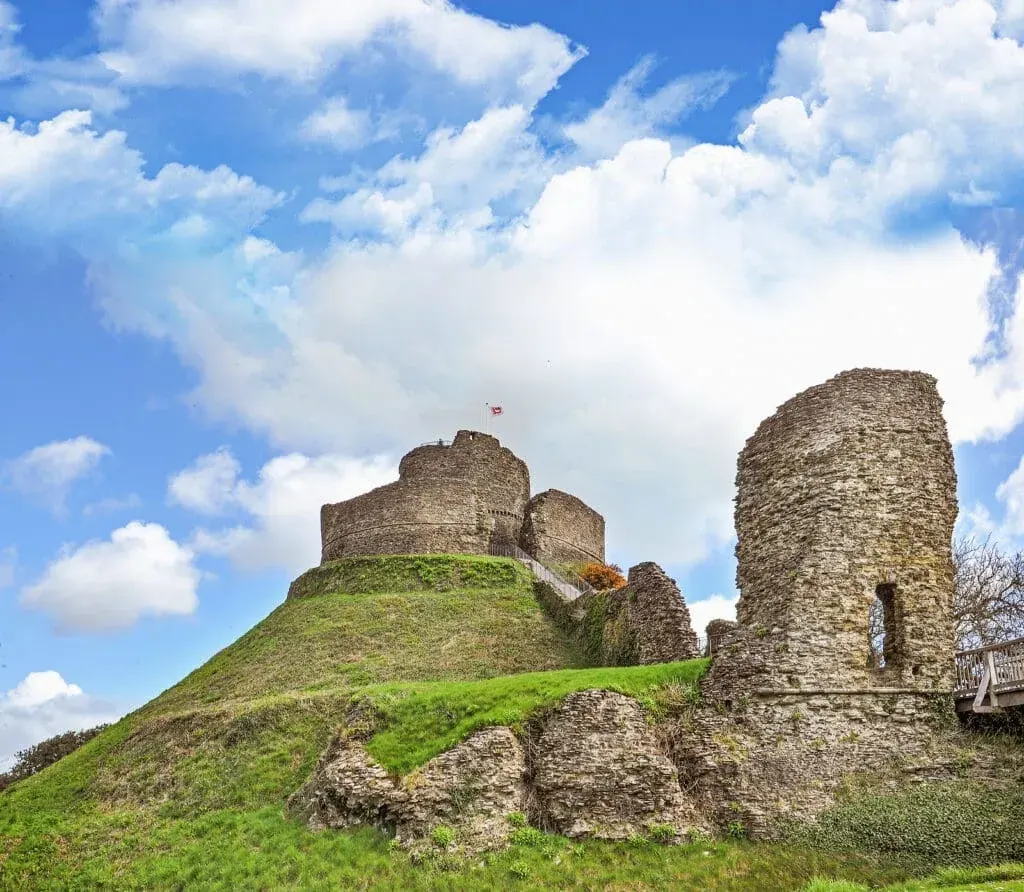
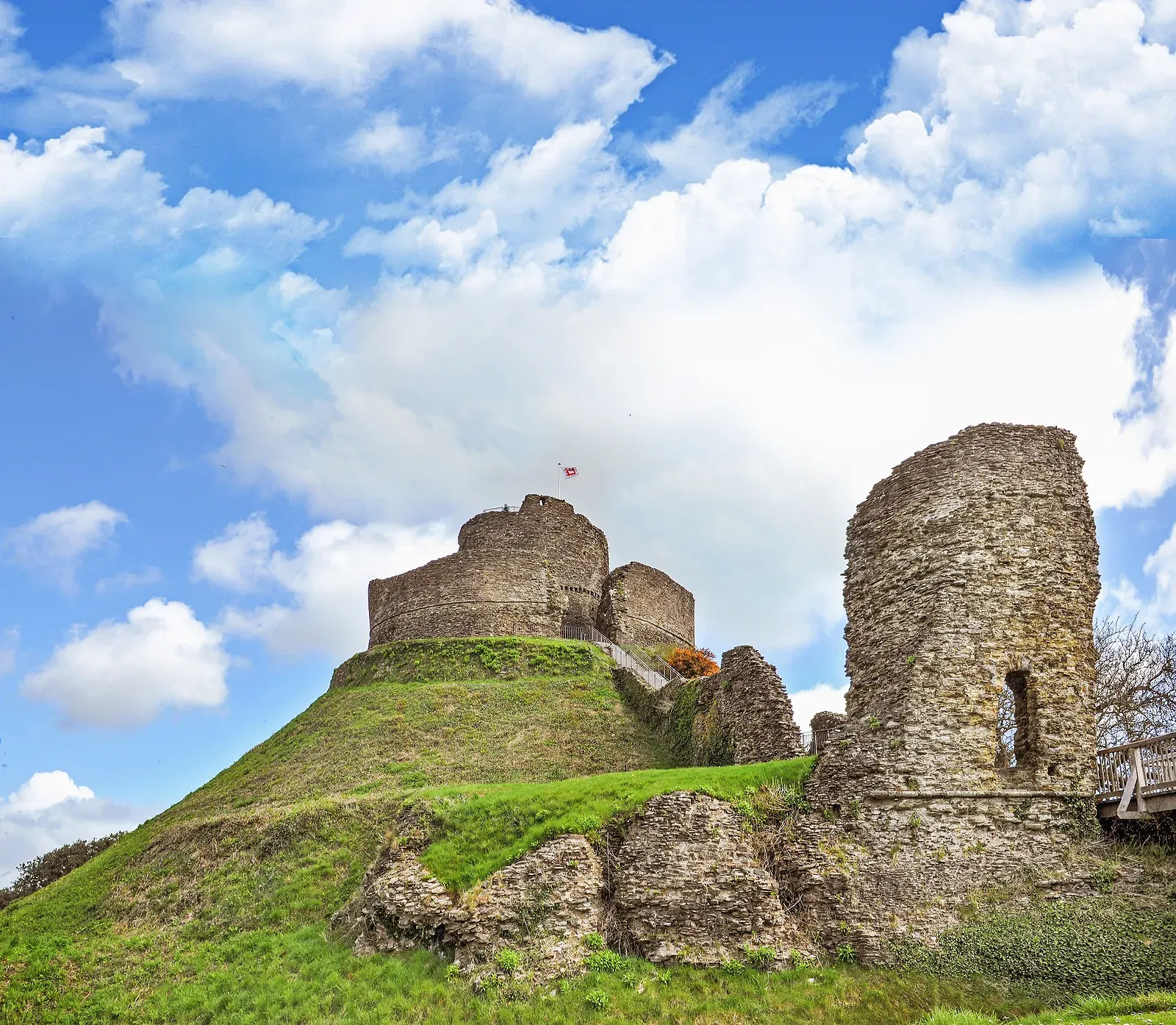
Between the 11th and 16th centuries, Launceston Castle was the most important fortress in Cornwall. Built by the Normans, it was of motte-and-bailey design perched atop a hill (motte) and held an important strategic position, overlooking the border between Devon and Cornwall. Throughout the years, the fortress served as the administrative centre for the county, its most important court house and jail (later garnering the nickname ‘castle terrible’.) It also played an important role in managing the tin industry and alongside Restormel was used as a base to test the purity of the tin being produced.13 Today, visitors will find a steep set of steps which lead from the gatehouse up to the crumbling circular walls of the castle – where you can enjoy spectacular views over the surrounding area. It’s also a tranquil spot for a picnic and includes a small museum.
Why Visit
- Follow the family trail to uncover the castle’s fascinating history.
- Visit the museum to discover rare artefacts including whale bones.
- Walk the gatehouse, climb the tower and see the doorway to the prison.
How to Visit
- There is no on-site parking, though accessible parking can be arranged prior to arrival. The nearest pay-and-display parking is an NCP multi-storey opposite the castle.
- Grid reference: SX 33107 84649
- What3words: ///tinned.hikes.jacuzzi
Additional Historic Castles in Cornwall (Hidden Gems)
Looking for more historic castles in Cornwall? These sites are lesser known, yet are still some of the best castles in Cornwall.
- Doyden Castle – Built in 1830 on the secluded headland of Port Quin, Doyden Castle is a perfect example of a romantic 19th century folly. Originally built by wealthy hedonist Samuel Symons as a place to entertain friends, today it is one of Cornwall’s finest holiday cottages – complete with medieval inspired arched windows, cosy open fires and panoramic views over the ocean.
- Caerhays Castle – A Grade I listed building, Caerhays Castle was built in the 19th century as an extravagant home for the Trevanion family by renowned regency architect John Nash. Originally surrounded by deer parks, today Caerhays is one of Cornwall’s spring gardens, famous for its champion magnolia trees (best seen in February and March) and other rare plant species.
- Carn Brea Castle – Built in the 14th century as a chapel to St Michael, Carn Brea Castle has also been a hunting lodge and a meeting point for the Freemasons. Today, the castle is a restaurant and conservation area, with restorations preserving its unique character including a medieval garderobe. Visitors can also enjoy far reaching views over the Cornwall UNESCO Mining Heritage Landscape.
- Chun Castle (free entry) – An Iron Age hillfort and one of the best ruined castles in Cornwall, Chun Castle lies on the summit of the Chun Downs in West Penwith. It’s one of Cornwall’s oldest castles, thought to have been inhabited between 300 BC and 100 AD. Today all that remains are a series of dilapidated stone walls in a roughly circular shape which overlook Mounts Bay and the Atlantic Ocean.
- Pengersick Castle – Occupied by the Pengersicks from the 12th century, Pengersick Castle’s history tells of a psychopathic member of the family who murdered a monk and tales of a later owner who dabbled in black magic. It’s also known as a haunted site, with ghosts and paranormal activities reported. Today’s 16th century fortified manor is one of Cornwall’s most desired wedding venues, thanks to its coastal position, medieval architecture and immaculate landscaped gardens.
What Makes Cornish Castles Unique?
For me, what makes Cornish castles unique is how they’re tied to the landscape and local history.
When I think of visiting Tintagel on a windy day, I remember a sense of catharsis as I looked over the storm-battered cliffs and down into the boiling sea below. Surrounded by power of the elements it made it easy for me to understand how the castle’s historical narrative has become tied to the legend of Merlin and King Arthur.
My local castle, Pendennis, is one of my favourite places to visit on a sunny day where there are far-reaching views out to sea – and where I imagine the old packet ships and galleons that once would have sailed in and out of these same waters, protected by the fortress.
Even Cornwall’s newer castles, built as a statement of wealth and power, help me to connect to the local history and people of the past – with much of the wealth coming from tin mines which my ancestors would have worked in.
Collectively, these castles – most of them built from local granite and stone – provide a gateway to understanding Cornwall’s story. A story which spans all the way from prehistory to the modern day.
Castles in Cornwall and the Arthurian Legend
No castle in Cornwall intertwines myth, legend and genuine history more intricately than Tintagel Castle. As a result, Tintagel has shaped Cornwall’s castle tourism industry because of its links to the Arthurian legend.
Tintagel’s links to King Arthur started with Geoffrey of Monmouth, a medieval chronicler and bishop from Wales. His 12th century publication, History of the Kings of Britain, documented the castle as King Arthur’s birthplace.14 Later, stories written by Alfred, Lord Tennyson led to a huge influx of Arthurian tourism to the area in the 19th century.15 As a result, the village of Trevena was renamed after the castle and from then on Tintagel became the epicentre of Arthurian tourism in Cornwall.
Since then, the Cornish tourism industry has been significantly shaped by its links to King Arthur and Tintagel has become a must-visit attraction. Tintagel is one of many sites within the county linked to Arthur and I’d recommend anyone with an interest in the legends to also visit Dozmary Pool, thought to be the magic sword Excalibur’s final resting place; St Nectan’s Glen, a magical waterfall with links to Arthur’s knights; and Slaughterbridge, where Arthur fought his last battle.
Tips for Visiting Castles in Cornwall
Planning on visiting a Cornish castle? Here are my top tips:
Tie it in with a coastal walk – Many of Cornwall’s best castles are perched on the cliffs, which make them the perfect stop-off point during a coastal walk. My favourites are walking the sea wall from Penzance to Marazion and St Michael’s Mount or walking the South West Coast Path from Readymoney Cove to St Catherine’s Castle.
Take your camera – Cornwall’s castles are extremely photogenic, making them the perfect place to capture memories or stunning landscape photography. I strongly encourage you to bring your camera with you – but do take care when taking shots. These are ancient monuments to be preserved, so avoid clambering on them and double check whether cameras are allowed inside the castle museums. You may also find that drones are prohibited at some of the managed sites.
Visit on less busy days – Cornish castles are a key draw for visitors – especially Tintagel in recent years. So, if you visit during the autumn and winter it’s easier to imagine what it used to be like because there are less people there. It’s also a great rainy family day out because when the seas are wild and the wind is howling, they become incredibly atmospheric.
Research accessibility beforehand – Some castles in Cornwall are in remote places, or aren’t safe to visit when the weather is bad because of their clifftop or hilltop location. Do your research and figure out how you will get there, how long the walk is, where you can leave your car and whether it’s safe to visit. It’s also a good idea to wear decent footwear as some have uneven terrain or lots of steps.
Conclusion
Cornwall’s castles are amongst its best landmarks and visitor attractions, offering unique insight into Cornish history and mythology. From the legend of King Arthur and the Norman castles that have stood for over a thousand years, to King Henry VIII’s Tudor artillery fortresses and later follies constructed during the era of Romanticism, each has it’s own unique story to tell and is well worth a visit. However, perhaps almost as impressive as the fortresses themselves are the wildly beautiful and unruly landscapes which they set within. Despite living here my entire life, each visit to a Cornish keep still fills me with joy and sparks my imagination. Which one are you visiting first?
Article Sources
- Jones, A.M., 2012. Going west: ceremony, barrows and cairns in the south west peninsula. Reflections on the Past: Essays in Honour of Frances Lynch, pp.172-94[↩]
- Association for Cornish Heritage [no date]. Ertach Kernow – Cornish hillforts and cliff castles [online]. Available at: https://www.cornwallheritage.com/ertach-kernow-blogs-2022-2023/ertach-kernow-cornish-hillforts-and-cliff-castles/ Association for Cornish Heritage[↩]
- Williams, R.A. et al. (2025) ‘From Land’s End to the Levant: did Britain’s tin sources transform the Bronze Age in Europe and the Mediterranean?’, Antiquity, 99(405), pp. 708–726[↩]
- Creighton, O.H. and Freeman, J.P., 2017. Castles and the Medieval Landscape. Medieval Devon and Cornwall: Shaping an Ancient Countryside, p.104[↩]
- Harrington, P., 2013. The castles of Henry VIII (Vol. 66). Bloomsbury Publishing[↩]
- Caerhays Estate (no date). Castle & Family [online]. Available at: https://visit.caerhays.co.uk/the-estate/castle-and-family/ Caerhays Estate[↩]
- English Heritage (2019). Tintagel Castle Reunited [online]. Available at: https://www.english-heritage.org.uk/about/search-news/pr-tintagel-reopening/ English Heritage[↩]
- English Heritage (no date). Tintagel Castle [online]. Available at: https://www.english-heritage.org.uk/visit/places/tintagel-castle/ English Heritage[↩]
- St Michael’s Mount (no date). History and legends [online]. Available at: https://stmichaelsmount.co.uk/explore-the-mount/history-legends/#:~:text=From%201193%2C%20when%20the%20Mount,Search%20for: St Michael’s Mount[↩]
- English Heritage (no date). Pendennis Castle [online]. Available at: https://www.english-heritage.org.uk/visit/places/pendennis-castle/history-and-stories/history English Heritage[↩]
- English Heritage (no date). St Mawes Castle [online]. Available at: https://www.english-heritage.org.uk/visit/places/st-mawes-castle/ English Heritage[↩]
- English Heritage (no date). Restormel Castle [online]. Available at: https://www.english-heritage.org.uk/visit/places/restormel-castle/history/ English Heritage[↩]
- English Heritage (no date). History of Launceston Castle [online]. Available at: https://www.english-heritage.org.uk/visit/places/launceston-castle/history/ English Heritage[↩]
- Geoffrey, 1100?-1154 & Thorpe, L. 1984. The history of the Kings of Britain. Penguin Books[↩]
- Tennyson, A. T. (1989). Idylls of the King. London: Penguin Classics[↩]
Frequently Asked Questions
The oldest known castle in Cornwall is Chun Castle, which has been standing for over 2,500 years. Originally built during the Iron Age, today it is one of the best examples of a ruined castle in Cornwall and can be accessed via public footpaths in West Penwith.
The best castles in Cornwall for families are Tintagel Castle and Pendennis Castle. Tintagel inspires the imagination with its tales of King Arthur and the Wizard Merlin, whilst Pendennis (in Falmouth) provides insight to Tudor and World War history through a range of interactive exhibitions and galleries.
Tintagel is well worth visiting for those interested in Cornish history and the legend of King Arthur. Visitors can look forward to atmospheric ruins and clifftop scenery, exploring the island via a footbridge crossing, taking photos with the statue of Gallos and discovering the beach and Merlin’s cave.
Tintagel is run by English Heritage and therefore a fee is required to enter the castle and cross the island footbridge. However, you can access Merlin’s cave for free (at low tide) via the South West Coast Path and admire the fortress and surrounding landscape from afar.
The best castles in Cornwall include Tintagel and Pendennis, which offer great family days out. However, Caerhays Castle offers the best spring gardens and St Michael’s Mount is admired for its unique position on an island in the middle of the sea.
King Arthur’s castle, otherwise known as Tintagel Castle, stands on the north Cornwall cliffs 600 metres from the town centre. Rumoured to be the birthplace of King Arthur, visitors can also explore Merlin’s cave and roam the 13th century island ruins via an impressive elevated footbridge.
Doyden Castle in Cornwall offers the rare opportunity for visitors to stay overnight in a romantic 19th century folly. There are also holiday cottages within the grounds of other Cornish castles including Pendennis Castle and Tregenna Castle.
Yes! Many Cornwall castles are family-friendly and have interactive trails, picnic spots, and easy walking routes. Tintagel Castle and St Michael’s Mount are particularly popular for families due to their dramatic landscapes and fascinating legends.
Ticket prices vary by site. For example, Tintagel Castle and St Michael’s Mount usually charge an entry fee, while some ruins like Restormel Castle are free to explore. Prices change seasonally, so it’s best to check the official site before visiting.
Yes, many castles are accessible by train or bus, but some require a short walk or taxi from the nearest station. Tintagel Castle and Launceston Castle are well-connected, while others may need more planning.
Most castles in Cornwall are seasonal, with limited access in winter. Major sites usually close during the coldest months, so always check opening times before you travel.
Many castles offer guided tours or audio guides, especially during peak season. Guided tours are ideal for learning the history behind the ruins and hearing stories you might otherwise miss.
Written by
Lydia Paleschi is a Falmouth local and freelance writer whose family have been based in Cornwall for many generations. However, it wasn’t until she spent several years living in Cardiff and London that Lydia realised that living next to the ocean is where she belongs. After moving back to Falmouth and launching her freelance career in order to make the most of a Cornish lifestyle determined by weather and tides, Lydia now spends most of her free time wild swimming and sailing in Cornish waters. And despite being lucky to travel far and wide – sailing as far away as Central America – it is the Cornish coastline that Lydia finds provides the greatest nourishment to her soul. More recently, Lydia has been exploring Cornwall in her van, which has only made her fall in love with her home county more. Lydia’s book A Guide to Wild Swimming in Cornwall aims to help others share in her love of the Cornish coastline and the wellbeing benefits that can be enjoyed by spending time there.
13 articles published on Cornwall.co.uk
Read more from Lydia Paleschi →


Comments
No comments yet — be the first to share your thoughts.
Leave a comment
Your email won’t be published. Comments are checked before they appear.