

9 articles
The Duchy of Cornwall is a historic royal estate established in 1337 to provide income for the monarch’s eldest son. Today, it is owned by His Royal Highness Prince William and comprises around 129,000 acres of land across England and Wales, with a unique legal status separate from the Crown Estate.
As a major landowner, the Duchy has a key role to play in Cornwall’s economy and community life today.
By tradition the eldest son of the reigning UK monarch is granted the title of Duke of Cornwall. In situations where the monarch has no sons, the Duchy reverts to the Crown. Usually, this means that the Duke of Cornwall is also the Prince of Wales. However, this was not automatically the case when the Duchy was first created.
What is the Duchy of Cornwall? Overview & Key Facts
The Origins and History of the Duchy of Cornwall
- Duchy of Cornwall history began in 1337 when it was created by Edward III for his son, Edward of Woodstock (the Black Prince).1
- Traditionally, the reigning monarch’s eldest son inherits the Duchy.
- During the later Tudor period the Duchy reverted to the Crown (since, after the death of Henry VIII, the monarchy had no male heirs).
- At the end of the English Civil War, Parliament assumed full control of the Duchy estate. The Duchy was not reconstituted until the restoration of Charles II in 1660.
- In the 1838 Parliament empowered HRM Treasury with financial oversight of the Duchy.2
- By the 1880s the Duchy of Cornwall estate comprised around 74,000 acres of land. This has increased to 129,000 acres today and now forms part of the current Prince of Wales’ estate.3
- Only 14% of the total estate lies within Cornwall itself, with significant holdings elsewhere in the southwest and beyond.3
- The Duchy enjoys unique historic rights and privileges (e.g. the right of bona vacantia, such that property becoming vacant on Duchy land reverts to the Duchy rather than the Crown).
- The Duchy is now well established as a key facet of Cornish heritage.
Duchy of Cornwall and the Prince of Wales: Ownership
In terms of who owns the Duchy of Cornwall, it is one of several private royal family estates; in this case owned by the Duke of Cornwall. The Duchy of Cornwall legal status is therefore technically that of a private estate rather than a Crown estate. HRH Prince William owns the estate in his capacity as duke rather than because of his royal status.
Prince William received a Duchy of Cornwall income of £23m in 2025.4
How is the Duchy of Cornwall Managed?
Although HRM Treasury has oversight of its finances, it does not run the Duchy of Cornwall estate.
Overall strategy for the Duchy is determined by a Prince’s Council, which Prince William chairs. It meets four times a year with a remit to determine overall strategy for the following:
- Asset management
- Risk management
- Regeneration initiatives
- Climate, nature and renewable policies
- Budgeting.
The Council also holds the power to appoint the High Sheriffs of Cornwall.4
Operational management is handled by an Executive Committee that meets monthly. The Committee is headed by the Secretary and the Keeper of Records, who also sits on the Prince’s Council.
What is the Purpose of the Duchy of Cornwall today?
In the Middle Ages the Duchy role was purely to provide the monarch’s eldest son with an independent income.1 But what is the Duchy of Cornwall today? In modern times, the Duchy has been repurposed to encompass a much wider remit.
As a major landowner, the Duchy focuses considerable effort on ensuring its land and properties are used and developed in ways that benefit the wider community. There has been a strong focus on eco-friendly initiates ever since King Charles III became Duke during Queen Elizabeth II’s reign.
Estate management in the Duchy today places a much stronger emphasis on ethical and sustainable land stewardship.
Duchy of Cornwall Land & Estates in Cornwall
Duchy of Cornwall land ownership in Cornwall consists of:
- A Cornish community project at Nansledan, consisting of 3,700 homes.3
- Tregooden Farm, near St. Tudy, is a 340-acre farm consisting of beef cattle, sheep and arable produce.
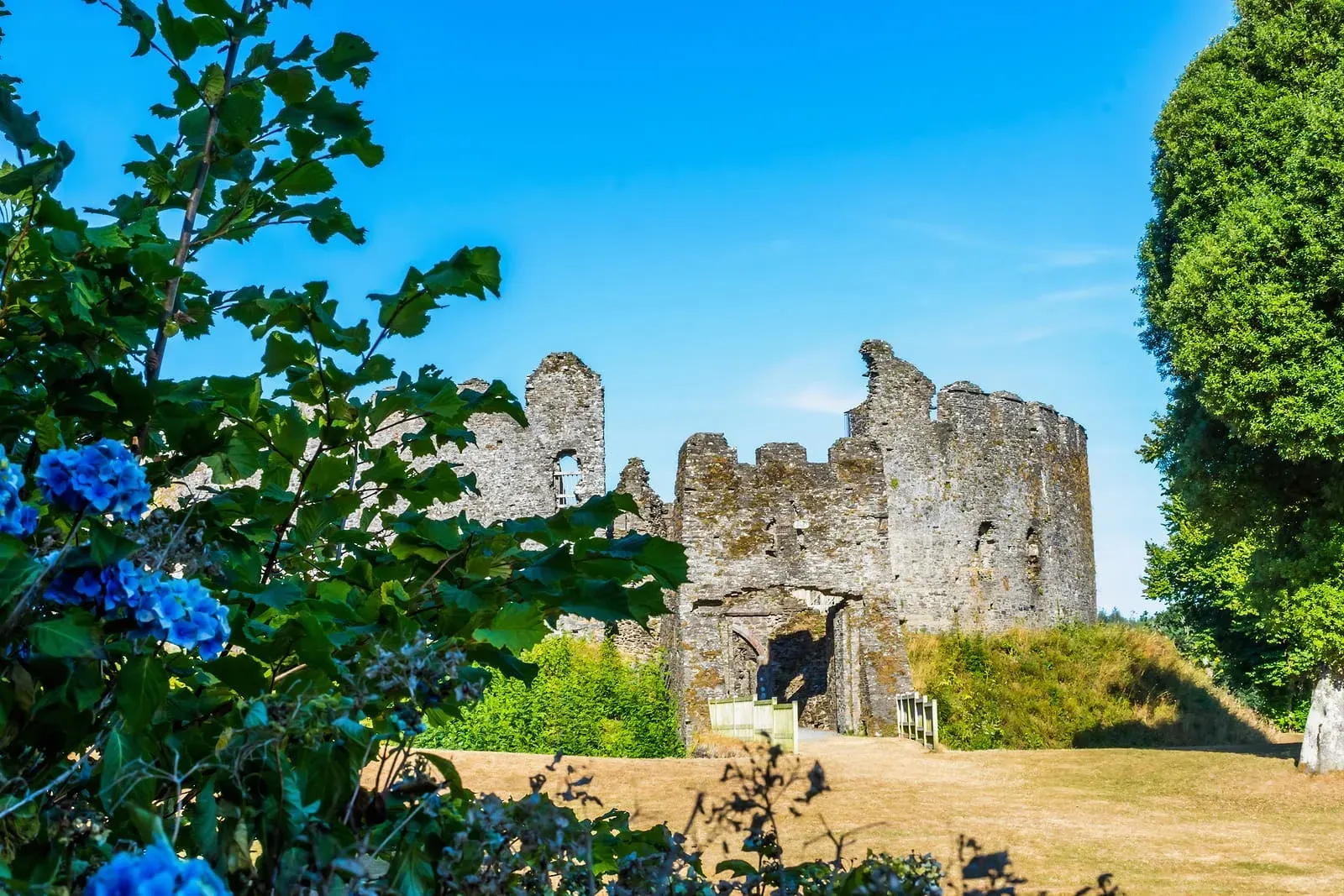
- Several castles, including Restormel, Launceston and Tintagel Castle.4
- Pre-historic sites such as Castle an Dinas and Trethevy Quoit.6
- Woodland sites such as Greenscombe Woods.
- The Duchy Nursery and Gardens at Lostwithiel.7
- Holiday cottages at Lostwithiel, Newquay, Truro and St. Mary’s on the Isles of Scilly.8
In all, Duchy of Cornwall land ownership extends to 18,530 acres of land across Cornwall.3
How does the Duchy of Cornwall Operate?
Duchy of Cornwall Land Ownership, Management and Long-Term Planning
Duchy of Cornwall Estate planning has evolved to take a more proactive role in overall land strategy for Cornwall.
Long-term stewardship is now a major focus, with an emphasis on sustainable growth that benefits the wider local community and an eco-friendly approach. A key feature of this strategy is the aspiration to become a Net Zero estate by 2032.4
What is the Economic Impact of the Duchy in Cornwall?
Gauging the overall impact on the Cornish economy is difficult because the Duchy generates a significant proportion of its income from properties, land and activities outside the County.
Overall, the Duchy generated a turnover of £38m in 2025 and employed 205 people across the UK.4 It certainly plays an important role in rural development and agricultural support across the county and impacts many local communities indirectly through partnerships, property and land leases. For example, Duchy College, which offers vocational training for the agricultural sector, although not owned by the Duchy, leases its land from the Duchy.
Duchy-Branded Products and Businesses
In 1990 King Charles III, then Duke of Cornwall, founded the Duchy Originals brand. Today the Duchy Organic range is retailed through Waitrose, who now own the brand. Royalties from the brand are used to help finance the work of the Charles III charitable fund.5
The range now boasts over 250 organic food and drinks products, supplied by organic farmers both within the UK and internationally. The precise proportion that is purely Cornish produce is unknown.
What are the Duchy’s Future Plans and Strategic Goals?
The Duchy’s vision for the future remains focused upon ethical and sustainable Cornwall development. Key future projects focus primarily on eco-friendly initiates, community welfare and sustainable development.
The 2025 Duchy Impact Report identified four core goals for the future:4
- To become a net zero estate by 2032.
- To work with partners to address homelessness in the areas in which the Duchy operates.
- To provide exemplary mental healthcare provision for estate staff and tenants.
- To deliver value to estate communities whilst growing the Duchy of Cornwall income.
What is the Duchy of Cornwall’s Role in Modern Cornwall?
Sustainability and Environmental Projects
Duchy sustainability has become a key guiding principle, first under Prince Charles during his mother’s reign and now under Prince William. A number of sustainability initiatives are now in place across the estate.
Housing and Urban Community Developments
Duchy urban planning has focused on responsible development and delivering affordable housing Cornwall desperately needs.
Developing model towns represents an emerging feature of Duchy strategy. One example is the community at Poundbury, in West Dorset, near to Dorchester. In Cornwall another model town exists at Nansledan on the outskirts of Newquay.
Rural Land Management
Cornish farming has long been a priority of the Duchy, not least because Duchy owns a significant number of tenanted farms contributing to the rural economy of Cornwall.
The Duchy’s flagship project for rural development in the county is the Focus Farm at Tregoogen. In 2025 the Duchy planted 12 hectares of woodland at the farm as part of its wider woodland creation goals. The farm practices holistic grazing and innovative soil management techniques to reduce its carbon footprint.6
Overall, Duchy of Cornwall land ownership includes 2,550 acres of Cornish woodland, including Greenscombe Woods (designated a Site of Special Scientific Interest).
Support for Agriculture and Rural Businesses
Duchy business support is provided to its farms across several areas, including assistance in achieving reduced emissions and introducing more sustainable farming practices. The Duchy’s 2025 report states that “75 farms (approximately 40% of the Duchy’s let farms) have now received at least two farm emissions reports, with 65% of them reducing emissions.”4
The Duchy also supports an initiative to promote mental health wellbeing amongst its farming tenants via a partnership with We Are Farming Minds.
Access to Duchy Sites for the General Public
The Duchy owns sites of natural beauty and many heritage locations such as castles and ancient monuments that you might wish to visit. Many are maintained for the Duchy by organisations such as English Heritage.
If you are thinking about visiting sites or properties owned by the Duchy you should always check a seasonal guide to Cornwall or other relevant websites for opening times, accessibility, parking availability and dog friendliness prior to your visit.
For general information and advice re. Cornwall tourism, click here.
Which Duchy of Cornwall heritage sites can I visit?
- Restormel Manor: Guest house. Grid Ref: SX 10729 61283 | What3Words: ///hook.diplomats.introduce
- Sancreed Beacon: Burial mounds. Grid Ref: SW 41491 29579 | What3Words: ///lows.button.riverboat
- Trethevy Quoit: Standing stones. Grid Ref: SX 25935 68813 | What3words: ///countries.extent.nibbles
- King Doniert’s Stone: Medieval crosses. Grid Ref: SX 23609 68845 | What3words: ///bland.destined.impressed
- Restormel Castle: Medieval castle. Grid Ref: SX 10359 61380 | What3words: ///outs.appraised.groom
- Tintagel Castle: Medieval castle. Grid Ref: SX 05225 89008 | What3words: ///rollover.gangway.panicking
- Launceston Castle: Medieval castle. Grid Ref: SX 33107 84649 | What3words: ///tinned.hikes.jacuzzi
- Castle an Dinas: Iron age hillfort. Grid Ref: SW 94525 62351 | What3Words: ///tiredness.thrilled.waggled
Conclusion
The Duchy of Cornwall is more than a historic royal estate; it is a powerful institution that continues to shape Cornwall’s landscape, economy and communities. Founded in the Middle Ages to provide independence for the monarch’s heir, it has evolved into a major landowner with significant influence over housing, farming, conservation and development across the county.
Its unique legal status and long history make the Duchy both a custodian of heritage and a subject of ongoing debate in modern Britain. Understanding how the Duchy of Cornwall operates today offers valuable insight into Cornwall’s past — and into how historic power structures continue to influence life in the present.
Article Sources
- Mortimer, I. (2008). The perfect king: the life of Edward III, father of the English nation. London: Vintage[↩]
- Legislation.gov.uk. (2026). Duchies of Lancaster and Cornwall (Accounts) Act 1838. [online] Available at: https://www.legislation.gov.uk/ukpga/Vict/1-2/101/contents [Accessed 6 Jan. 2026] Legislation.gov.uk[↩]
- Duchyofcornwall.org. (n.d.). Home | The Duchy of Cornwall. [online] Available at: https://Duchyofcornwall.org Duchyofcornwall.org[↩]
- Duchy of Cornwall, (2025). Integrated Impact Report. London: The Duchy of Cornwall with Flag Communications Ltd[↩]
- English Heritage. (n.d.). Places to Visit. [online] Available at: https://www.english-heritage.org.uk/visit English Heritage.[↩]
- SeaDogIT (2020). The sites we protect | Cornwall Heritage Trust. [online] Cornwall Heritage Trust. Available at: https://www.cornwallheritagetrust.org/visit/our-sites SeaDogIT[↩]
- Duchy of Cornwall Nursery. (2026). Duchy plant nursery & garden centre in Cornwall | Duchy of Cornwall Nursery. [online] Available at: https://www.duchyofcornwallnursery.co.uk/ [Accessed 6 Jan. 2026] Duchy of Cornwall Nursery
- Duchy of Cornwall Holiday Cottages. (2026). Home | Duchy of Cornwall Holiday Cottages. [online] Available at: https://www.duchyofcornwallholidaycottages.co.uk/ [Accessed 6 Jan. 2026] Duchy of Cornwall Holiday Cottages
- King Charles III Charitable Fund. (2025). Our income – King Charles III Charitable Fund. [online] Available at: https://www.kccf.org.uk/our-income King Charles III Charitable Fund
- Nansledan. (n.d.). Nansledan, an extension to the Cornwall coastal town of Newquay. [online] Available at: https://nansledan.com Nansledan
Frequently Asked Questions
The Duchy of Cornwall is owned by the Duke of Cornwall. Traditionally, this is the eldest son of the reigning monarch of the United Kingdom. The current duke is HRH Prince William. Once William becomes king, the Duchy will pass to Prince George.
Prince William earns around £23 million a year from the Duchy. The Duchy is exempt from corporation tax but Prince William has chosen to pay voluntary income tax on his Duchy income.
The Duchy consists of a large estate of land and properties. Overall, the Duchy owns nearly 129,000 acres of land. However, only 14% of the estate lies in Cornwall. 54% is in Devon (primarily Dartmoor), and 10% in Herefordshire and Wales. The remaining 22% is distributed across 16 other counties.
The Duchy makes most of its money through rentals and leases of its land and property. It also gains some revenue from mining rights and historic feudal rights (relating to such things as river crossings).
Duchy finances have been overseen by HM Treasury since 1838. However, strategic management of the Duchy is undertaken by the Prince’s Council, which Prince William chairs. Operational management is handled by an Executive Committee.
The estate includes farms and residential, retail and commercial properties. It also owns several unique properties such as the Oval Cricket ground, Dartmoor Prison and Launceston Castle.
The Duchy was established by King Edward III in 1337 for his infant son and heir, Edward of Woodstock (the Black Prince). At the time it was seen as a major innovation since England had never had dukes or duchies before.
The Duchy of Cornwall is the oldest Duchy in England. Since the Duchy has historically enjoyed several unique powers and privileges, it has helped to accentuate Cornwall’s unique cultural identity.
The Duchy supports a number of flagship eco-initiatives in Cornwall:
1) Marine ecology projects, promoting biodiversity, installing Living Seawalls and supporting the Isles of Scilly Recovery Strategy,
2) A Future Farming team devoted to habitat restoration and regenerative agriculture projects,
3) Woodland creation, sustainable forestry and biodiversity projects.
Checking a travel guide for Cornwall prior to your trip is advisable. The following links provide a basic guide to Cornwall transport, driving routes and tourist information:
- Bus routes and timetables: https://www.transportforcornwall.co.uk/
- Train routes and advice: https://dcrp.org.uk/travel-advice/map-of-the-network/
- Road traffic news: https://www.theaa.com/route-planner/traffic-news
- Planning road journeys: https://www.google.com/maps
- Travel guide: https://www.visitcornwall.com/
Nansledan is a sustainable Cornish community, currently consisting of 800 homes and 40 commercial properties. Around 30% of housing is allocated to affordable homes and 24 homes are specifically allocated for people experiencing homelessness. Nansledan received the prestigious 2025 Gindroz Award for Excellence in Affordable Housing.
The Duchy Nursery at Lostwithiel, has a country walk via Restormel Manor, to the old Anglo-Norman castle. (c. 45 minutes).
Written by
Paul Watts is a local writer based in Launceston with a keen interest in history and folklore, having studied A History of Folklore at Oxford University. He is the author of Myths and Legends of the Medieval World (Pen & Sword Books) as well as a leading medieval history blog (named a ‘Top blog’ by Feedspot in 2025)
9 articles published on Cornwall.co.uk
Read more from Paul Watts →

Comments
No comments yet — be the first to share your thoughts.
Leave a comment
Your email won’t be published. Comments are checked before they appear.