

35 articles
Cornwall lingers with you — maybe it’s the sharp sea air, the cry of gulls, or the light catching at the edges. Guidebooks make it neat, but the truth is scruffier, louder, and more beautiful. Over 4.5 million people visit each year for its beaches, fishing villages, and familiar landmarks. Most leave with Cornwall still clinging to them, though some stumble into the same easy mistakes. With our Cornwall travel tips guide, you can avoid common visitor pitfalls and have a trip that truly stays with you.
Cornwall Travel Mistake 1: Underestimating the County’s Size
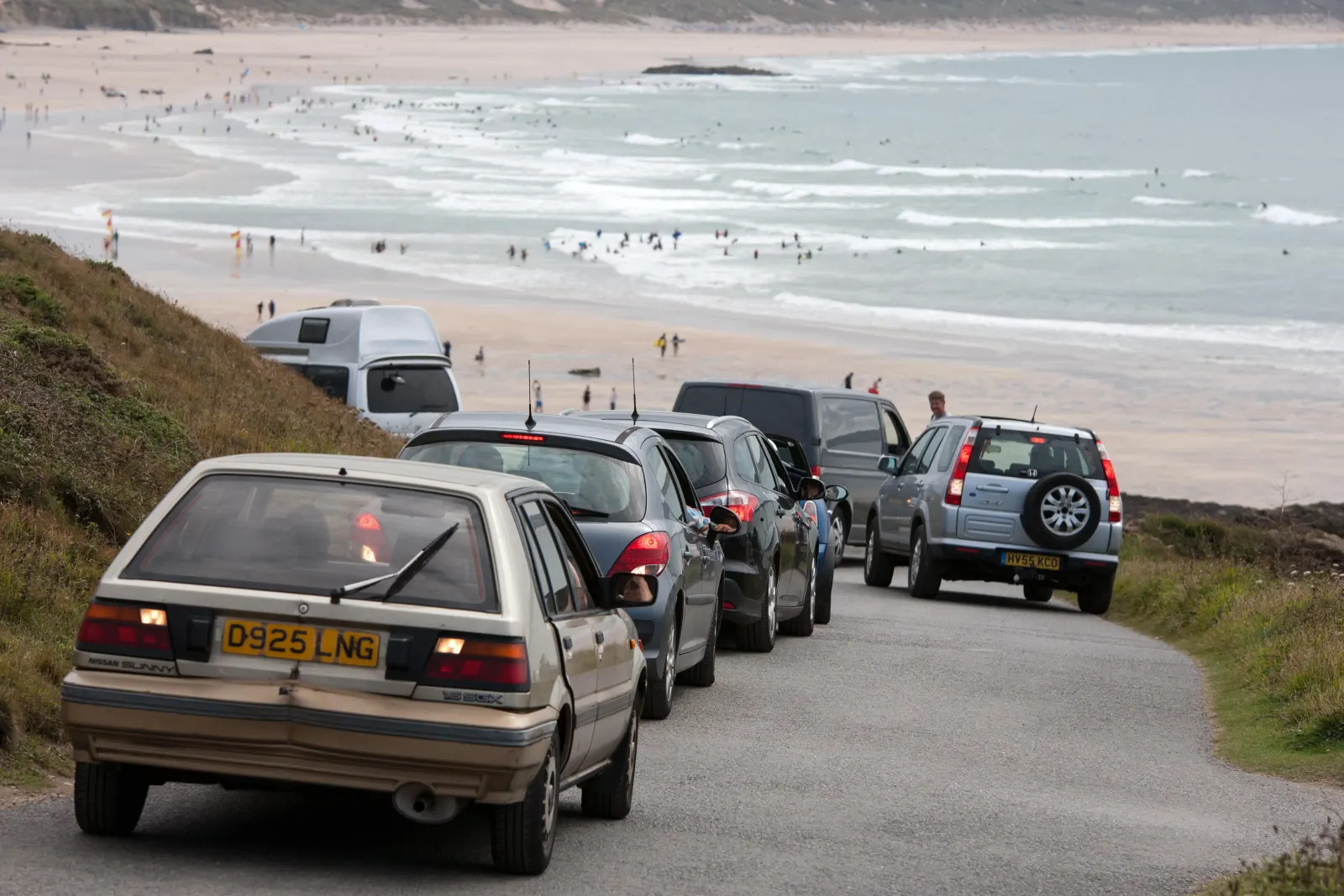
Cornwall looks deceptively compact on the map, but once you’re actually there the scale starts to stretch out around you and what seems like a quick hop between Newquay and St Ives can easily become a slow, frustrating crawl behind caravans weaving their way through hedgerows and over rolling hills. The roads are beautiful in that classic countryside way, lined with stone walls, Cornish hedges,1 and wildflowers, but they were never designed for speed or volume, and that small detail catches a lot of visitors out.
The county runs for roughly 80 miles from the River Tamar2 to Land’s End, which doesn’t sound like much at first glance, yet the reality is that you can lose hours of your trip to traffic if you’re not prepared; a single-track lane leading into a small village like Mousehole can back up for miles on a busy day, and the A303 in summer can be a solid line of cars crawling along at walking pace, especially on Saturdays when holiday lets change over and everyone seems to be on the move at once.
Plenty of first-timers think they can pick one base and drive out each day as if Cornwall works like a city; it doesn’t. Journeys that look short on a map have a way of swallowing whole afternoons, and if you don’t build that into your plans, you end up seeing more tail lights than coastline.
Cornwall Road Trip Tips: Travel Times Aren’t What You Think
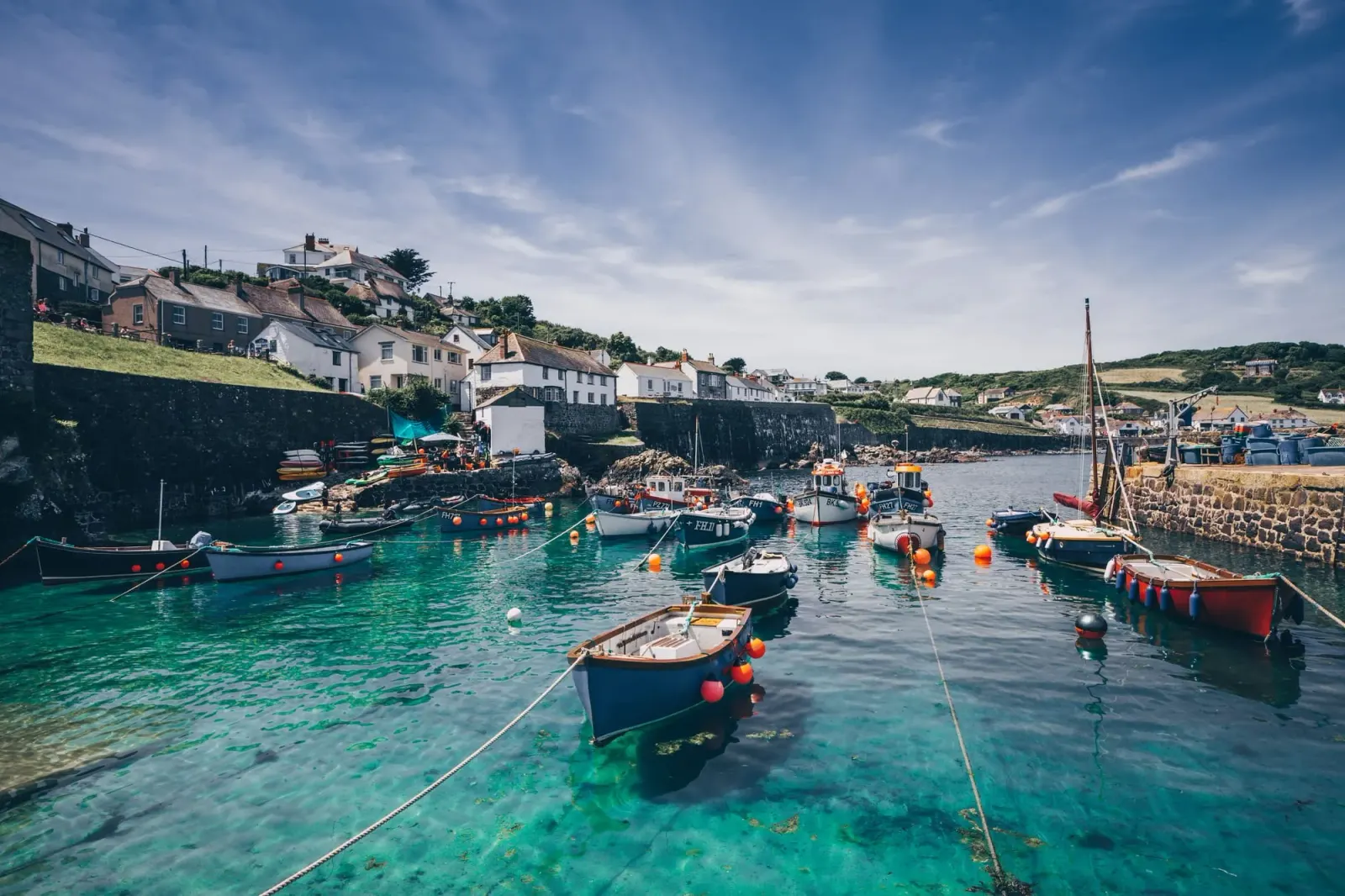
It isn’t just the traffic that slows everything down either, and the actual geography itself does a fair bit of the work too. A lot of Cornwall’s coastal villages, especially the ones at the edges of the map like Mevagissey or Port Isaac, grew up around medieval street patterns4 and they were absolutely not meant for modern cars. So you’ll end up with tight corners, narrow lanes, and parking that disappears faster than the tide (sometimes literally), and even with a satnav chirping away and the best intentions to keep moving, journeys stretch out longer than you’d planned, and what looks like a quick detour often turns into a slow, careful shuffle through streets that feel more like corridors than roads.
Average summer driving times:
- Newquay to St Ives: around 45 minutes5
- Falmouth to Tintagel Castle: around 1 hour 15 minutes6
- Penzance to Padstow: around 1 hour7
Those are optimistic figures. Add summer traffic, tourist stops, and a cream tea detour, and it can be double.
Public transport exists, but it’s not quite like what you’ll be used to and although trains and buses run between larger towns, connections to smaller villages are often infrequent, especially outside peak season. The Looe Valley Line,8 for example, is stunning but operates on a set timetable – miss a train and you might be waiting an hour or more.
Tips for Better Planning
- Base yourself in two locations if you want to explore both north and south Cornwall. For example, Padstow for the north coast and Falmouth for the south.
Cornwall Travel Mistake 2: Ignoring the Tides and Coastal Safety
This one catches people out every single year; Cornwall’s coast may look calm and inviting, but it’s shaped entirely by the tide, and the tide here isn’t something you can ignore mainly because it rewrites the coastline every few hours, reshaping beaches, closing off paths, and cutting off routes that looked perfectly safe earlier in the day.
The most famous example is the causeway to St Michael’s Mount,10 which at low tide is nothing more than a charming walk across ancient cobbles, the kind of thing that makes you feel like you’ve stepped into a storybook, but when the tide turns, that path disappears beneath the water as if it was never there at all, leaving you either waiting on the shore or handing over a few pounds for a boat ride back. Every summer, the RNLI is called out to deal with dozens of these completely avoidable situations, from stranded walkers on tidal islands to cars sitting half-submerged in flooded lanes.11
And it isn’t only the well-known spots that cause trouble – smaller coves near places like Porthcurno, Sennen, and Perranporth can vanish beneath the water in what feels like minutes, and a wide stretch of golden sand can turn into a narrow sliver of shoreline very quickly, and if you’ve wandered in on foot without paying attention to the tide, you can find your way out has slipped beneath the waves.
Why Low Tide Matters
Low tide opens up the landscape. At Perranporth, the beach becomes a vast flat stretch that’s perfect for walking.12 At Sennen, rock pools appear along the shore.13 But once the tide turns, everything changes quickly. If you’re exploring on foot with children or dogs, that can become dangerous in minutes.
Tides also affect parking, although you might not think it. Some car parks along the coast, including ones near Marazion, partially flood during high tide, meaning visitors who don’t check the signs can end up with wet tyres and soggy interiors.14
How to Avoid Getting Caught Out
- Check tide tables before heading out, especially if you’re visiting tidal sites like St Michael’s Mount.
- Download a reliable local tide app.
- Ask café staff or lifeguards for the day’s tide information.
- Plan your coastal walks along beaches or coastal paths so that you’re not cut off at high tide.
- If you park near the waterline, check the signs twice.
- Avoid tourist traps at peak season
Cornwall Travel Mistake 3: Overcrowding the Must-Sees
Every Cornwall travel guide shouts about the big sights. Eden Project, Minack Theatre, Land’s End, Tate St Ives, Tintagel Castle. And they are spectacular, but they’re also where everyone else is going.
In 2023, Eden Project welcomed more than 1 million visitors, Land’s End sees up to 5,000 people on a single summer day, the Minack Theatre sells out performances months ahead, and by 10am on a sunny day in August, the car park at Porthmeor Beach is usually full…
Cornwall’s popularity is deserved, but it means that if you’re visiting in summer without a plan, you’ll spend more time queuing than exploring all those fantastic hidden gems, and they’re often the best things about any trip.
Peak Season Pitfalls
Cornwall’s population swells by around half a million during the school holidays, and that means:
- Long queues for attractions like Tate St Ives
- Full car parks by mid-morning
- Traffic jams on the A30
- Long waits for cafés and fish and chips on the harbourfront
- Beaches packed shoulder-to-shoulder on sunny days
Even places that feel remote, like the Lizard Peninsula or Golitha Falls, get busy at peak times. It’s easy to end up spending a chunk of your trip stuck in a car park queue.
Smarter Ways to Explore
- Visit major attractions early in the morning or later in the day when crowds thin out.
- Travel in May, June, or September. The weather is mild, and the crowds are smaller, so this is the best time to visit Cornwall.
- Discover quieter fishing villages like Mevagissey, Fowey, or Mousehole.
- If you’re set on the Eden Project or Tintagel Castle, pre-book tickets online.
- Check live car park availability online where possible.
- Consider National Trust or English Heritage memberships if you’re visiting multiple sites.
- Quieter doesn’t mean dull. Some of the best places (and best beaches) you’ll find won’t be the ones on every top ten list.
Cornwall Travel Mistake 4: Not Preparing for Cornwall’s Weather
If you’ve ever stood on the coast at Sennen or Perranporth when the weather turns, you’ll know how fast everything can change; one moment it’s all blue skies and soft wind, and the next it’s sheets of rain driving sideways off the Atlantic. Cornwall sits right on the edge of the ocean, so weather systems don’t creep in slowly – they arrive like they own the place.
The Met Office reports around 900-1000mm of rain a year here;15 November and December are usually the wettest, but even in summer the sky can flip without warning. Average temperatures sit around 19°C,16 though on the cliffs near Land’s End or the south west coast path, it often feels colder than that.
A surprising number of visitors still turn up in flip-flops and hoodies; fine for a lazy stroll along Carbis Bay, not so great halfway up Bodmin Moor in a downpour. This is definitely a what not to do in Cornwall situation.
Cornwall’s Four Seasons in a Day
It’s a running joke among locals that Cornwall can give you all four seasons in 24 hours – sunshine at breakfast, drizzle at lunch, a howling gale at tea, and then a clear night sky. And the weather is part of the charm, of course, but only if you’re prepared.
Good kit matters if you’re exploring places like Jamaica Inn, Golitha Falls, or sections of the coastal path. Wet feet and cold hands have cut many planned walks short.
What to Pack
- A proper waterproof jacket with a hood (umbrellas don’t work well in Atlantic winds)
- Layers: T-shirt, fleece or jumper, waterproof top layer
- Good walking shoes or boots for coastal paths and Bodmin Moor
- A warm jumper or coat for evenings, even in summer
- Sunscreen, sunglasses, and a hat for the surprisingly strong Cornish sun
- A small rucksack with a reusable water bottle and snacks
Cornwall is breathtaking in any weather. The trick is to dress so that it doesn’t matter what the clouds are doing.
Cornwall Travel Mistake 5: Missing Cornwall’s Local Culture and Food
Some people come to Cornwall and move through it too fast. They rush the way they might in a city. They look, they take a photo, they leave. And it works for a day or two. But Cornwall doesn’t work like that. It’s not meant to be rushed.
The language still lives here. Kernowek. Not loud, not in every conversation, but it lingers in the corners. In the names on signposts. In festival songs. In the way people talk about home. Golowan in Penzance. St Piran’s Day. The Falmouth Sea Shanty Festival. None of it’s a show. It’s just what happens. Why not learn the Top 10 Essential Cornish Phrases before your next visit? Even knowing how to say “cheers” in Cornish will set you apart!
And then there’s the food. Not fancy. Just right. A warm Cornish pasty in your hand. Jam first, then cream on a scone (the other way belongs to Devon). A pile of fish and chips on a harbour wall. Gulls watching, waiting. Simple things that somehow stay with you.
More Than Just Ice Cream and Cream Tea
When you slow down and step away from the packed attractions, you start to notice the small things. The old men with their dogs outside a harbour café in Looe. The quiet in the churchyard at St Mawes. The sound of waves hitting the wall at Mousehole long after the crowds have gone.
Easy Ways to Experience It
- Visit National Trust properties like Cotehele and explore local gardens like the Lost Gardens of Heligan17
- Walk sections of the coastal path to find dog-friendly coves and quiet viewpoints.
- Spend a day in St Ives, not just rushing Tate St Ives but wandering its narrow streets.
- Explore Tintagel Castle and hear the myths of King Arthur where they were born.
- Try a traditional pub in Perranporth or a harbour café in Fowey.
Cornwall is layered. The more time you give it, the more it gives back.
Practical Travel Tips
A little local knowledge can save a lot of hassle. These practical tips can make your Cornwall travel smoother, whether you’re here for a day trip or a week-long road trip.
Getting Around
Driving gives you the most freedom here, though it isn’t always as simple as it sounds; parking can be tight, especially in places like St Ives or Padstow where the spaces disappear early and the queues snake back before midday. Most coastal car parks run on pay-and-display, and more than a few rely on apps or card payments, which has a habit of catching people out when they’re already standing at the machine.
Public transport works well enough if you’re moving between the bigger towns – Truro, Penzance, Newquay, Plymouth – but the further out you go, the patchier it gets. Rural buses appear when they feel like it, taxis cost more than you think, and once it gets late, your options shrink fast. In those smaller fishing villages, or along the stretches of coastal path that don’t belong to timetables, walking or cycling often ends up being the easiest way to get anywhere at all.
When to Visit
Peak season (July and August) has the best weather but the largest crowds. Shoulder seasons (May, June, and September) offer warm temperatures, fewer queues, and better availability. Cornwall in winter is quiet, cheaper, and atmospheric, especially in north Cornwall, but some attractions close or reduce hours.
See: The Best Time to Visit Cornwall (and What to Do in Every Season)
Local Food and Traditions
Cornwall is fiercely proud of its food. A proper scone topped with jam and clotted cream is practically law. Local ice cream tastes richer here thanks to the dairy. Fish and chips are best enjoyed on the seafront at places like Padstow or Mevagissey. Markets and farm shops often sell local cider and chutneys. And how could you forget a proper Cornish pasty? The answer is, you can’t.
See: What is Cornwall Most Famous For?
Coastal Etiquette
- Respect signs on the south west coast path.
- Keep dogs on leads around livestock and nesting birds.
- Check tide times before long walks on beaches.
- Leave nothing behind except footprints.
- Support local businesses by buying from them, not just photographing their shopfronts.
Closing Thoughts
Cornwall isn’t a place to rush through; it’s one to sink into slowly, like your feet in wet sand. If you take your time, check the tides, respect the land, and let the culture wrap around you, it’ll give you more than just a holiday – it’ll give you something you’ll keep with you, long after you’ve brushed the sand from the beautiful beaches from your shoes.
Article Sources
- Cornish hedges – Cornwall Council (2024) Cornwall.gov.uk. Available at: https://www.cornwall.gov.uk/environment/trees-hedges-and-woodlands/hedges Cornwall Council[↩]
- Sarah (2023) 7 things you might not know about the River Tamar, Visit the Tamar Valley. Available at: https://visittamarvalley.co.uk/a-tale-of-the-river-7-things-you-might-not-know-about-the-river-tamar Visit Cornwall[↩]
- A30 | Roads.org.uk (2016) Roads.org.uk. Available at: https://www.roads.org.uk/routes/a30 (Accessed: 18 October 2025) Roads.org.uk[↩]
- 9 Cities with Medieval Plans Seen from Above (2020) ArchDaily. Available at: https://www.archdaily.com/952084/9-cities-with-medieval-plans-seen-from-above ArchDaily[↩]
- 36 Best Stops Between Newquay and St Ives (2023) Wanderlog. Available at: https://wanderlog.com/drive/between/10011/10218/newquay-to-st-ives-drive (Accessed: 18 October 2025) Wanderlog[↩]
- 40 Best Stops Between Falmouth and Tintagel (2023) Wanderlog. Available at: https://wanderlog.com/drive/between/10119/13013/falmouth-to-tintagel-drive (Accessed: 18 October 2025) Wanderlog[↩]
- 40 Best Stops Between Padstow and Penzance (2023) Wanderlog. Available at: https://wanderlog.com/drive/between/11017/10209/padstow-to-penzance-drive (Accessed: 18 October 2025 Wanderlog[↩]
- Looe Valley Line – Scenic Rail Britain (2024) Scenic Rail Britain. Available at: https://scenicrailbritain.com/lines/looe-valley-line/ (Accessed: 18 October 2025) Scenic Rail Britain[↩]
- Home – South West Coast Path (2025) Southwestcoastpath.org.uk. Available at: https://www.southwestcoastpath.org.uk/ (Accessed: 18 October 2025) South West Coast Path[↩]
- St Michael’s Mount Cornwall – Historic Castle & Island (no date) St Michael’s Mount. Available at: https://stmichaelsmount.co.uk/ St Michael’s Mount[↩]
- Cornwall Fire and Rescue Service exercise on St Michael’s Mount (2024) St Michael’s Mount. Available at: https://stmichaelsmount.co.uk/news/cornwall-fire-and-rescue-service-and-st-michaels-mount-join-forces-for-a-fu/ (Accessed: 18 October 2025) St Michael’s Mount[↩]
- Visit Cornwall | Beaches: Perranporth Beach (no date) www.visitcornwall.com. Available at: https://www.visitcornwall.com/things-to-do/beaches/perranporth-beach Visit Cornwall[↩]
- Rockpooling guide for Sennen Beach and Gwenver Beach in Cornwall (2025) Vellandreathcornishcottages.com. Available at: https://www.vellandreathcornishcottages.com/your-stay/rock-pooling-in-cornwall/ (Accessed: 18 October 2025) Vellandreath Cornish Cottages[↩]
- Flood Alert Info – South Cornwall Coast from Lands End to Lizard Point | Flood Assist Insurance (2025) Floodassist.co.uk. Available at: https://floodassist.co.uk/flood-warnings/flood-area-info/cornwall/114wact1t1aa00/south-cornwall-coast-from-lands-end-to-lizard-point (Accessed: 18 October 2025) Flood Assist Insurance[↩]
- Climate National Meteorological Library and Archive Factsheet 7 -Climate of southwest England (no date). Available at: https://www.metoffice.gov.uk/binaries/content/assets/metofficegovuk/pdf/research/library-and-archive/library/publications/factsheets/factsheet_7-climate-of-south-west-england_2023.pdf Met Office[↩]
- The Best Time to Visit Cornwall: A Seasonal Guide (2023) The Cornwall Hotel & Spa. Available at: https://www.thecornwall.com/hotel/news/discover-the-ideal-season-when-is-the-best-time-to-visit-cornwall The Cornwall[↩]
- The Lost Gardens of Heligan (2019) Heligan.com. Available at: https://www.heligan.com Lost Gardens of Heligan[↩]
Frequently Asked Questions
The easiest way to get around Cornwall is by car, especially for reaching rural villages, beaches, and hidden coastal spots. Major towns like Truro, Falmouth, and Penzance are connected by the A30 road, while local buses and trains link key towns and coastal areas. For tourists, cycling the Camel Trail or walking parts of the South West Coast Path is popular. Keep in mind that public transport is limited in rural areas, so planning ahead is essential.
To see the highlights of Cornwall, 3–5 days is ideal. This allows time to explore coastal towns like St Ives, Penzance, and Falmouth, visit beaches and gardens, and enjoy iconic sites such as Tintagel Castle and the Eden Project. For a more relaxed experience with surfing, hiking, and hidden villages, a week or more is recommended.
For a first visit to Cornwall, start with St Ives for art and beaches, Falmouth for the harbor and gardens, and Penzance for history and coastal views. Don’t miss Tintagel Castle, the legendary birthplace of King Arthur, or the Eden Project for unique rainforest and biome experiences. For scenic walks, explore parts of the South West Coast Path.
The best months to visit Cornwall are May to September, when the weather is mild, days are longer, and coastal attractions and beaches are at their best. July and August are peak tourist months, ideal for festivals and surfing but busy. For quieter trips with pleasant weather, May, June, or September offer fewer crowds and still plenty of sunshine.
For a Cornwall road trip, pack layers and waterproof clothing for changeable coastal weather, comfortable walking shoes for hikes and the South West Coast Path, and swimwear for beaches and surf. Don’t forget sunglasses, sunscreen, a camera, and a car charger or power bank for long drives between towns and scenic spots.
Top attractions in Cornwall include St Ives for art and beaches, Tintagel Castle, the legendary birthplace of King Arthur, and the Eden Project with its rainforest biomes. Don’t miss Land’s End for dramatic coastal views, Falmouth’s harbour and gardens, and scenic walks along the South West Coast Path. Cornwall’s charming villages, historic harbors, and surf beaches are also highlights.
Some of Cornwall’s top beaches include Fistral Beach in Newquay for surfing, Porthcurno Beach for white sands and clear waters, St Ives’ Porthminster and Porthmeor Beaches for stunning scenery, and Sennen Cove near Land’s End. Kynance Cove on the Lizard Peninsula is famous for its dramatic cliffs, turquoise waters, and iconic rock formations.
In Cornwall, mobile signal and internet are generally reliable in towns and popular tourist areas, but rural villages and coastal spots may have weak coverage. Most towns offer 4G or 5G, and super-fast broadband is available in many accommodations. Travellers should plan ahead for offline navigation when exploring remote beaches or walking the South West Coast Path.
Common mistakes include underestimating travel times on narrow roads, visiting only the busiest towns like St Ives and Newquay, and not booking accommodation early, especially in summer. Tourists also ignore weather changes, fail to carry cash for rural areas, and overpack activities, missing hidden beaches, villages, and scenic walks along the South West Coast Path.
Summer (June–August) is ideal for beaches, festivals, and surfing, but expect crowds and higher prices. Off-season (spring or September–October) offers milder weather, fewer tourists, and lower costs, making it perfect for exploring hidden beaches, coastal walks, and towns at a relaxed pace.
While towns like Truro, Falmouth, and St Ives are walkable and connected by buses and trains, a car is essential for exploring rural villages, hidden beaches, and coastal trails. Public transport is limited in remote areas, so driving gives travellers flexibility and access to Cornwall’s best sights.
To skip crowds, visit early in the morning or late afternoon, explore smaller villages like Mousehole or Port Isaac, and focus on hidden beaches and lesser-known coastal walks. Travelling off-season (spring or September) also means fewer tourists while still enjoying Cornwall’s beaches, towns, and landmarks.
Written by
Lisamarie is a writer and researcher with a long-standing love for Cornwall – its towns, coastlines, folklore, and everything in between. Most of her work involves blogging and articles, often focused on places and people, which pairs neatly with her fiction writing since both sides of her work let her balance research with imagination (and indulge a fondness for obscure facts). She lives with her husband, daughter, and a cat called Cheryl in a cottage in the Kent countryside, where she writes, paints, and watches horror films.
35 articles published on Cornwall.co.uk
Read more from Lisamarie Lamb →




Comments
No comments yet — be the first to share your thoughts.
Leave a comment
Your email won’t be published. Comments are checked before they appear.