

9 articles
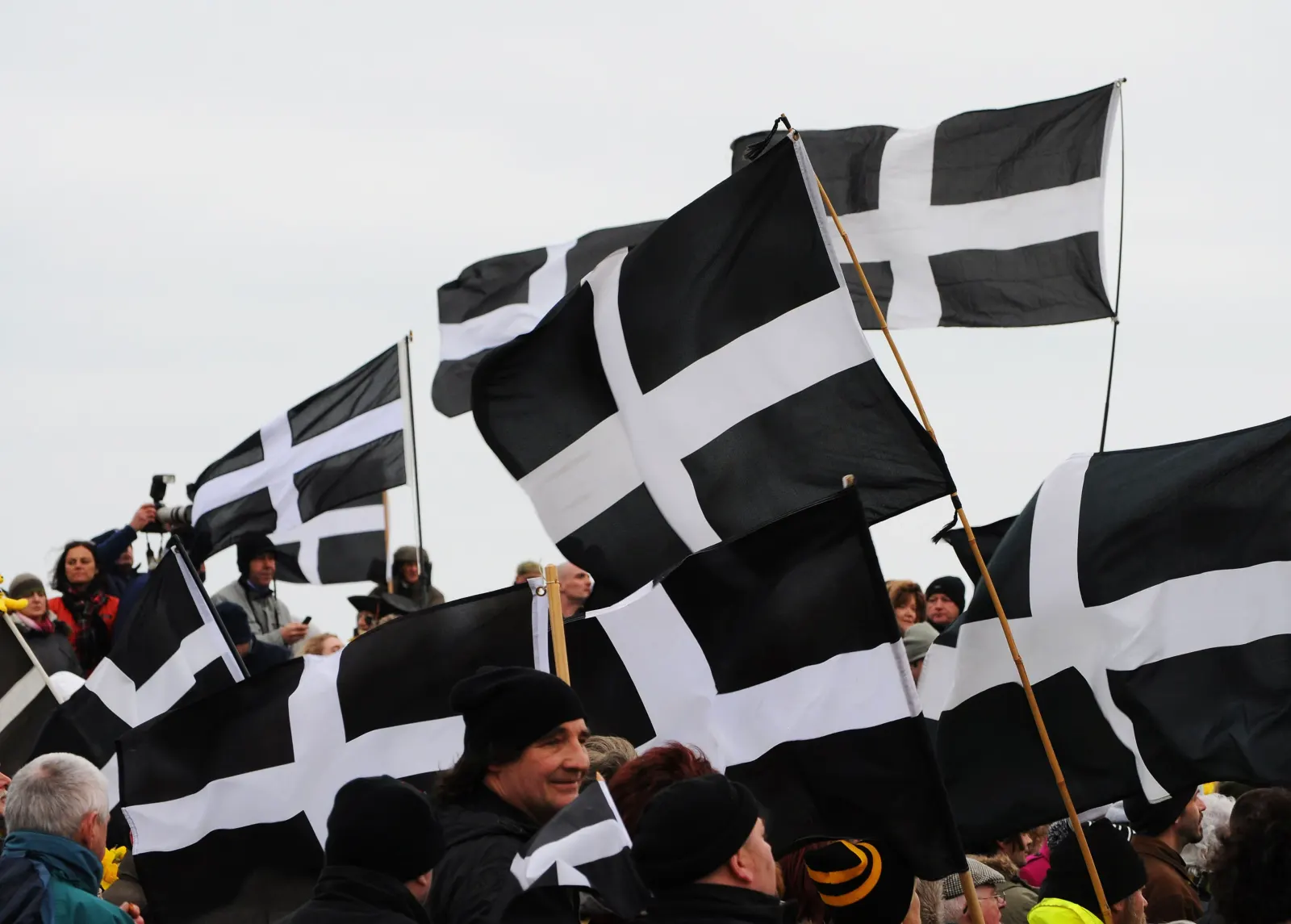
Cornwall has long maintained a unique cultural identity within the United Kingdom. Cornwall is the homeland of a Celtic people like the Irish, Scots and Welsh with their own separate language (Kernewek). Prior to the arrival of the Anglo-Saxons, Cornwall was an independent kingdom. Even after falling under the rule of English kings, Cornwall continued to be regarded as a separate nation for centuries.
Today, in this modern age of devolution, we might well ask if there a case to be made for greater Cornish independence? To answer this, it is first necessary to understand something of Cornwall’s history.
A History of the Cornish Nation and the Fight for Independence
The Loss of Cornwall’s Independence
In post-Roman Britain, the Cornish were indigenous West Britons with their own king, closely related to the Welsh and the people of Brittany. Cornwall remains an independent Celtic nation until the 9th century.
- 838 AD: A combined army of Cornish and Vikings is defeated by Egbert, King of Wessex at the battle of Hingston Down. Cornwall is increasingly subjugated by Wessex from this time and its borders become fixed at the River Tamar.1
- 1013-1035: The Danish King Canute conquers England. The Kingdom of Cornwall is permitted a period of renewed independence in exchange for an annual tribute.2
- 1070: Cornwall is given to the rule of a Norman Earl following the Conquest.3
- 1201 King John establishes four Stannary jurisdictions, incorporating Bodmin Moor, the St Austell area, St. Agnes/Truro, Kerrier and Penwith. This gives the Cornish power to convene their own Stannary Parliaments.4
- 1752: The last convening of a Cornish Stannary Parliament occurs in Truro.5
- 1891: John Davey, the last person with a working knowledge of the Cornish language, dies.6
20th Century Cultural Revival and the Birth of the Cornish Independence Movement
A revival of interest in Cornish culture, language and identity took place in the twentieth century. This raised the question of whether Cornwall should be regarded as a nation, distinctly separate from England. And, if so, should Cornwall seek full devolution along the lines of Scotland or Wales? Or should it even go so far as to seek full Cornish independence as advocated by the Cornish Nationalist Party in the 1970s??
- 1904: Celtic language scholar, Henry Jenner, publishes A Handbook of the Cornish Language. His aim is to preserve and promote interest in Cornish; a language that has all but disappeared by this time.8
- 1924: Robert Morton Nance (who was influenced by Jenner after meeting him at Falmouth) founds the Federation of Old Cornwall Societies to collect and preserve “all those ancient things that make the spirit of Cornwall— its traditions, its old words and ways, and what remains to it of its Celtic language and nationality” 9
Modern Activism the Push for Cornish Devolution
Modern activism has focused primarily on campaigning for a devolved Cornish Assembly.
- 2000 (St Piran’s Day): Mebyon Kernow launch a “Declaration for a Cornish Assembly”, supported by 50,000 people.10
- 2000 (November): The Cornish Constitutional Convention is founded to campaign for Cornish devolution and Cornwall’s own National Assembly (Senedh Kernow)12
- 2003: An Ipsos-MORI survey shows that 55% of people in Cornwall would support a devolved Cornish Assembly.11
- 2014: Cornish is recognised as a National Minority Status by the UK government.14
- 2023: Cornwall is granted Level 2 Devolution by the UK government.12
- 2025: Cornwall Council votes by 53 votes to 22 for Cornwall to be recognised as the fifth nation with the UK, on a par with the other Celtic nations (Scotland, Wales and Northern Ireland).13
Reasons Behind the Cornish Independence Movement
Cornish Cultural Identity and Language
There is no denying that Cornwall has a unique cultural heritage that gives it an identity distinct from England. Its Celtic roots and language remain very important for a significant number of Cornish people.
The UK census shows that 18.1% of people living in Cornwall identify their nationality as Cornish, up from 13.8% in 2011. Cornish identity is strongest in Penzance, Redruth, Camborne and the Lizard.14 Knowledge of the Cornish language has grown over the past century; there are now around 500 fluent speakers and a further 2000-5000 people speaking Cornish at a basic level.14 It is also the case that Cornwall was regarded as a separate nation from England for centuries, long after it became subject to the rule of English kings.
This leads Cornish Nationalists to claim that Cornwall may now be part of the UK, but its cultural heritage is as distinct from England as that of Wales or Scotland.
Nevertheless, it remains a fact that many Cornish citizens do not identify as Cornish in the census. Although, this does not mean to say they would not support greater independence.
Cornwall’s Economic Autonomy and Resources
A key question that many Cornish people are likely to want answered relates to the economic practicality of Cornish independence / devolution. Is Cornwall’s economy large and robust enough to thrive as a devolved or even an independent nation?
Cornwall’s economy is worth £13.9 billion a year based on recent estimates.14 This puts Cornwall on a par with Malta in terms of size.15 So, in theory, Cornwall is potentially large enough to survive as an independent nation. It is also the case that the Isle of Man, despite its smaller population, enjoys greater autonomy than Cornwall at present.
In terms of economic performance Cornwall has enjoyed faster growth than the rest of the UK in recent years (68% between 1998 and 2022, compared to a UK average of 43%). But on the minus side GDP per head is still only 74% of the UK average.14
Productivity in Cornwall is low primarily because key industries like tourism and agriculture are low productivity sectors. On a more positive note, Cornwall may have opportunities for improved economic performance in future, through industries such as Lithium mining.16
Cornwall has relied heavily on central government funding to fuel growth in recent years.17 In practical terms Cornwall would need to seek devolution rather than full Cornish independence to continue to benefit from this funding.
Political Representation and Cornish Devolution
Currently, one political party, Mebyon Kernow, represents the primary political movement pressing for Cornish devolution. The party has just 3 seats out of 87 on Cornwall Council. Even so, a majority of councillors voted in favour of recognising Cornwall as a separate nation in 2025 (53 to 22). This shows that there is significant support for further devolution beyond the nationalist party.
Currently Cornwall has attained Level 2 devolution within the UK. Level 3 devolution would grant Cornwall its own mayor and increased autonomy. However, a consultation by the Tory-dominated Cornwall Council in 2022 concluded that there was a lack of enthusiasm amongst the Cornish people to seek further devolved powers (especially with regard to its own mayor).21 Unfortunately, this consultation did not test enthusiasm for or against the idea of a Cornish National Assembly.
Those in favour of devolution nevertheless contend that Cornwall has suffered historically as a result of being far removed from the centre of UK government. A local assembly, they argue, would be able to focus resources far more effectively.
The composition of the council changed dramatically in 2025 and the recent vote in favour of recognising Cornwall as a nation suggests a renewed appetite for Cornish devolution moving forward.
Key Figures and Organizations Campaigning for Greater Cornish Independence
Key Organizations
- The Revived Cornish Stannary Parliament (RCSP), active from 1974 until 2008, campaigned to revive the old Cornish Stannary Parliament.
- Mebyon Kernow: A Cornish Nationalist party campaigning for greater self-government for Cornwall.
- Kernow Rydh: The youth branch of Mebyon Kernow
- Cornish Constitutional Convention: A cross-party organisation formed in 2000 to campaign for a devolved National Assembly for Cornwall.
- Cornish Democracy Unit at the Institute of Cornish Studies, University of Exeter: Working to develop democratic capital within Cornwall, deepen participation, advocate for increased autonomy and develop Cornish institutions.22
Key people
- Helena Charles: Mebyon Kernow’s first Chairperson in 1951
Support and Opposition
The Council’s consultation of 6,105 Cornish residents, released in March 2023, showed that 69% of people rejected the idea of an elected mayor. However, a representative independent survey conducted at around the same time (of 1,102 residents) showed almost the reverse result (with 65% in favour of the idea).18
In 2023 a Tory-led Cornwall Council chose to interpret the results of this consultation as reflecting a reluctance to press for further devolutionary powers. In doing so they gave precedence to the results of the consultation over an independent survey conducted at the same time.
The Council conceded that the independent survey had the advantage of being more representative of Cornish opinion (especially younger members of the community). However, they cited the following advantage for the consultation “there is a risk that participants in a representative survey can be less informed about the proposals than those who take part in a public consultation questionnaire”.24
Recent Developments
Following the local elections of 2025 the political landscape has shifted; a majority of current Cornwall Council members appear to favour greater devolutionary powers (having voted 53 to 22 in favour of acknowledging Cornwall as a nation in its own right). Reform UK councillors, however, are opposed to the idea of further devolved powers, claiming it will be a waste of money.19
A recent snapshot survey of 228 people with a Cornish connection was undertaken by PFA research in July/August 2025. This survey showed that 82% were aware the council had voted to acknowledge Cornwall as a nation. Furthermore, 71% supported this decision, with only 17% objecting. 72% also believed that Cornwall should be given a vote on whether it should have its own National Assembly. And, if there were a vote tomorrow, 64% said they would vote in favour.20
Although the sample size was small, the results align closely with the sentiments expressed in the larger independent survey undertaken at the time of the consultation. We do need to add the caveat, however, that respondents struggled to name specific benefits that a devolved assembly might bring. Nevertheless, these results would at least suggest that an appetite exists for a more serious debate regarding the pros and cons of a devolved assembly.
Conclusions: The Future of Cornish Independence
In terms of the future, the primary emphasis of the independence movement is directed towards achieving a devolved National Assembly for Cornwall. This would operate along the same lines as the devolved assemblies in Wales, Scotland and Northern Ireland.
As an interim step advocates such as the Cornish Democracy Unit has promoted the idea of establishing a Minister for Cornwall and a Cornwall Office within the UK government.15
The UK government is generally open to the concept of providing greater devolved powers to the regions. However, comments by Jim McMahon, the Minister of State for Local Government and English Devolution, at a meeting in November 2024 suggests that he favours a combined regional authority for Cornwall and Devon.21
At the time of writing, the UK Prime Minister has made no specific commitment as regards future Cornish devolution. Discussions, however, are ongoing and it is likely that a referendum will be required before a National Assembly can be formed.
Article Sources
- Fletcher, J. (2024). ‘Among the West Welsh’: Relocating and Recontextualising the Battle of Hingston, 838, Battalia: The Journal of the Battlefields Trust, Volume 2[↩]
- Wikipedia Contributors (2019). Timeline of Cornish history. [online] Wikipedia. Available at: https://en.wikipedia.org/wiki/Timeline_of_Cornish_history Wikipedia[↩]
- SeaDogIT (2023). Medieval Cornwall | Cornwall Heritage Trust. [online] Cornwall Heritage Trust. Available at: https://www.cornwallheritagetrust.org/timeline/medieval-cornwall/ SeaDogIT[↩]
- Cornish language speaking gradually declines from around half of the population in 1500 to one quarter in 1600 and just 5% by 1700.((Wikipedia Contributors (2019). Cornish language. [online] Wikipedia. Available at: https://en.wikipedia.org/wiki/Cornish_language Wikipedia[↩]
- tonia and tonia (2023). The Stannary History of Old Duchy Palace. [online] CBPT. Available at: https://cornwallbpt.org.uk/the-stannary-history-of-old-duchy-palace/ [Accessed 29 Oct. 2025] Cornwall Buildings Preservation Trust[↩]
- Wikipedia Contributors (2025). Last speaker of the Cornish language. Wikipedia. Available at: https://en.wikipedia.org/wiki/Last_speaker_of_the_Cornish_language Wikipedia[↩]
- Burack, E. (2023). Who Has Held the Duke of Cornwall Title Throughout History? [online] Town & Country. Available at: https://www.townandcountrymag.com/society/tradition/g42814083/duke-of-cornwall-title-history/ [Accessed 29 Oct. 2025] Town & Country Magazine[↩]
- Wikipedia Contributors (2024). Cornish language revival. Wikipedia. Available at: https://en.wikipedia.org/wiki/Cornish_language_revival Wikipedia Contributors[↩]
- Wikipedia Contributors (2024). Federation of Old Cornwall Societies. Wikipedia. Accessed at: https://en.wikipedia.org/wiki/Federation_of_Old_Cornwall_Societies Wikipedia[↩]
- Mebyon Kernow – The Party for Cornwall. (2022). History – Mebyon Kernow – The Party for Cornwall. [online] Available at: https://mebyonkernow.org/history/ Mebyon Kernow[↩]
- Wikipedia Contributors (2025). Revived Cornish Stannary Parliament. Wikipedia. Available at: https://en.wikipedia.org/wiki/Revived_Cornish_Stannary_Parliament Wikipedia[↩]
- Cornish Constitutional Convention (2025). Campaign for a Cornish Assembly – Senedh Kernow. [online] Cornishassembly.org. Available at: https://www.cornishassembly.org/about.htm [Accessed 30 Oct. 2025] Cornish Constitutional Convention[↩]
- Attitudes to Regional Government in Cornwall Summary Report Research Study Conducted for Cornwall County Council. (2003). Available at: https://www.ipsos.com/sites/default/files/publication/1970-01/sri-localgov-regional-government-in-cornwall-2003.pdf IPSOS[↩]
- GOV.UK. (n.d.). Cornish granted minority status within the UK. [online] Available at: https://www.gov.uk/government/news/cornish-granted-minority-status-within-the-uk GOV.UK[↩]
- Cornwall Council (n.d.). Devolution – Cornwall Council. [online] Available at: https://www.cornwall.gov.uk/people-and-communities/cornwall-devolution-deal/ Cornwall Council[↩]
- Cornwall Council (2019). Cornwall Council passes motion calling for Cornwall to be recognised as the UK’s fifth nation. [online] Available at: https://www.cornwall.gov.uk/council-news/council-budgets-and-economy/cornwall-council-passes-motion-calling-for-cornwall-to-be-recognised-as-the-uk-s-fifth-nation/ [Accessed 30 Oct. 2025] Cornwall Council[↩]
- Anon., (May 2025), The Cornwall we Know, Cornwall Council[↩]
- Climo, A. & Tregidga. (2024), G. Devolution for Cornwall: One of Britain’s Oldest Nations, Cornish Democracy Unit at the Institute of Cornish Studies, University of Exeter[↩]
- Farmer, A. and Bingham, S. (2025). Cornish mining firm makes lithium hydroxide breakthrough. BBC News. [online] 24 Oct. Available at: https://www.bbc.co.uk/news/articles/c30vqedel0do BBC[↩]
- Cornwall Council (2022). Impact of public funding clear as Cornwall and Isles of Scilly outpace UK regions with £2.1 billion economic boost, study reveals. [online] Available at: https://www.cornwall.gov.uk/council-news/council-budgets-and-economy/new-study-highlights-need-for-government-to-continue-economic-growth-funding-for-cornwall/ Cornwall Council[↩]
- Anon., (2025), Cornwall Council written evidence – English Devolution and Community Empowerment Bill, Cornwall Council[↩]
- SeaDogIT (2023). Medieval Cornwall | Cornwall Heritage Trust. [online] Cornwall Heritage Trust. Available at: https://www.cornwallheritagetrust.org/timeline/medieval-cornwall/ SeaDogIT)
- 1337 Cornwall is established as a Royal Duchy (one of only two, the other being Lancaster). As a Duchy, Cornwall enjoys a certain degree of legal independence.((SeaDogIT (2023). Medieval Cornwall | Cornwall Heritage Trust. [online] Cornwall Heritage Trust. Available at: https://www.cornwallheritagetrust.org/timeline/medieval-cornwall/ SeaDogIT)
- University of Exeter (2025). Cornish Democracy Unit | Institute of Cornish Studies | University of Exeter. [online] University of Exeter. Available at: https://www.exeter.ac.uk/research/centres/ics/research/politics/ [Accessed 30 Oct. 2025] University of Exeter
- Delayed Cornwall devolution deal survey results released. (2023). BBC News. [online] 29 Mar. Available at: https://www.bbc.co.uk/news/uk-england-cornwall-65109016 BBC
- Anon. Consultation on the proposed Cornwall Devolution Deal – Consultation Feedback Report, (March 2023), Cornwall Council
- Facebook.com. (2022). Reform UK Cornwall | CORNISH DEVOLUTION | Facebook. [online] Available at: https://www.facebook.com/groups/reformuk.cornwall/posts/1054338570148153/ [Accessed 30 Oct. 2025] Facebook
- What Cornwall Thinks, (2025), Cornwall as a Fifth Nation Survey. PFA Research, Available at: https://whatcornwallthinks.co.uk/topics/public-services/cornwall-as-the-uks-fifth-nation-heres-what-people-think/ What Cornwall Thinks
- Press Office. (2024). MK rejects ‘Devonwall’ deal – Mebyon Kernow – The Party for Cornwall. [online] Mebyon Kernow – The Party for Cornwall. Available at: https://mebyonkernow.org/news/mk-rejects-devonwall-deal/ [Accessed 30 Oct. 2025] Mebyon Kernow
Frequently Asked Questions
The current Cornish independence movement is concerned with obtaining devolved powers for Cornwall and the Isles of Scilly from the UK parliament. This would take the form of a devolved National Assembly, similar to that in Wales or Scotland.
The Cornish nationalist party (Mebyon Kernow) are the primary supporters of the independence movement. However, many councillors from other political parties (with the exception of Reform UK) are also in favour of Cornish devolution
After the Romans abandoned Britain, the west of the country retained its old Brittonic culture, whereas the east was increasingly overrun by Anglo-Saxons. Cornwall remained an independent kingdom until it was finally absorbed into the emerging Kingdom of England during the 9th and 10th centuries.
Cornwall has been ruled by English kings and later the UK parliament since late Anglo-Saxon times. Since the Norman Conquest it has been formally considered to be subject to the kings of England and later the Westminster Parliament.
Cornwall has retained much of its own unique Celtic identity, culture and language. Until the 18th century, it was still widely considered to be a separate nation. Many, especially in Cornwall, still regard it as such today.
During the Middle Ages Cornwall was granted certain privileges, including the right to its own Stannary Parliament and Duchy status. However, the UK government holds that these are relics of medieval feudalism that don’t alter Cornwall’s status as an administrative county of England, subject to the UK parliament.
No recent public opinion survey has directly measured this. A MORI survey from 2003 showed that 55% of people across Cornwall were in favour of devolution. However, no specific measure of Cornish opinion with regard to a fully devolved assembly has been published since.
The late 19th and early 20th century saw a revival of interest in traditional Cornish language and culture. This, in turn, sparked an interest in the possibility of Cornish independence. In 1951 the Mebyon Kernow (‘Sons of Cornwall’) party was founded to campaign for Cornish independence.
The only test of public opinion on this matter was a 2003 survey that showed the majority of Cornish people were in favour of devolved government for the South West. However, many Cornish politicians oppose such an idea and its appeal amongst the Cornish people has not been tested recently.
The case for Cornish independence is firstly that Cornwall’s unique cultural heritage makes it a nation in its own right. Secondly, that since Cornwall is a constitutional Duchy, this grants it the right to veto Westminster laws. And, thirdly, a precedent for devolved assemblies exists in Scotland and Wales.
Cornwall already enjoys limited devolved powers from the UK government. However, this falls far short of full independence. The next step might involve the appointment of a Minister for Cornwall as a stepping stone to establishing a Cornish National Assembly.
Written by
Paul Watts is a local writer based in Launceston with a keen interest in history and folklore, having studied A History of Folklore at Oxford University. He is the author of Myths and Legends of the Medieval World (Pen & Sword Books) as well as a leading medieval history blog (named a ‘Top blog’ by Feedspot in 2025)
9 articles published on Cornwall.co.uk
Read more from Paul Watts →



Comments (4)
Stephen Horscroft
This article confuses devolution with independence. A call for nationhood is not independence and the claim that in 2003 the majority of Cornish people backed a south west assembly is factually incorrect
Andrew Climo
I noticed that you are particularly interested in “Cornish Independence”. I hope you don’t mind me saying but this is a really, really, niche topic. From the Beaufort and similar polls, there is a strong majority in Cornwall interested in meaningful *devolution*, but this is not independence. A imagine that the number of people who want to secede from the UK must be very small, and isn’t terribly relevant. My own interactions with people across a wide range of backgrounds suggest: (i) The people(s) of Cornwall feel they get a raw deal, such as only having one district hospital and A&E (Devon = 4, Somerset = 3). (ii) The housing crisis has bitten deeply and there is a feeling that forcing large numbers of houses to be built in Cornwall (more than planned for Devon), without any attempt to resolve housing for Cornish residents is unreasonable. (iii) There’s almost no police presence in Cornwall, who seem to be paying for bobbies on the beat in Plymouth and Exeter. (iv) We’re back to digging up minerals, but will see no benefit, since the battery plants are in Somerset and Sunderland. (v) Were still waiting for a proper University with science and technology courses and a science park, which every other part of the UK seems to have. I mention these things not because there’s a culture of grievance (there isn’t), but there’s a feeling that Cornwall gets missed out, and will continue to as long as decisions that affect people on the ground are being made in Exeter, Swindon, London, or who knows where. To me, this implies having control of housing, planning, economic development, education and the NHS. Pretty low-key stuff, but potentially transformational. That’s my take anyway!
Rob
Hi Stephen, thank you for your comments – we greatly appreciate your input. We don’t believe the article confuses independence with devolution. As it deals with the historic background it needs to talk about independence (as Cornwall was an independent nation in the early Middle Ages). The current political movement focuses on devolution today, this is true, so no one is seriously talking about full independence now. If you look at it from a current political perspective only, then the issue is purely devolution. But historically it also encompasses a story of independence. So, we struggle to see where the confusion arises, unless you are arguing that the article should be changed to speak exclusively about devolution? That might be appropriate if we were talking purely about the current political issue of devolution, but the article is more wide ranging than that.
Rob
Thank you for such a thoughtful and grounded comment — we genuinely appreciate it. We completely agree that there’s an important distinction between full constitutional independence and meaningful devolution. As you note, polling (including Beaufort) consistently shows stronger support for greater self-government within the UK than for outright secession. Support for independence in Cornwall is clearly a minority position at present. But we don’t think that makes the discussion irrelevant. What you’ve outlined — health provision, housing pressures, policing allocation, mineral extraction without downstream benefit, the long wait for a comprehensive university and science infrastructure — are exactly the kinds of structural issues that tend to generate debates about autonomy in the first place.
Leave a comment
Your email won’t be published. Comments are checked before they appear.