


35 articles
If you walk into a Cornish pub and raise a glass, there’s one phrase that will make you stand out straight away – “Yeghes da!” It’s the Cornish way of saying “cheers,” it literally means “good health,” and simple enough, so say it with a smile and you’ll almost always get a smile back.
Cornwall is proud of its past and its language, and using even a single word is noticed. Don’t worry, nobody’s expecting you to be fluent in Cornish – it’s a tough one to get your head around anyway. What people notice is the effort. Drop a “Yeghes da!” at the right moment and suddenly you’re not just a visitor, you’re part of the chat. It can turn strangers into drinking mates and give you a proper feel for Cornish humour and warmth.
The Cornish Word for Cheers – “Yeghes da!”
“Yeghes da” belongs to Kernewek, the Cornish language, which is part of the Celtic family, related to Welsh and Breton,1 and like those cousins it’s got a history of being suppressed, forgotten, and then brought back. For a long time people thought it had disappeared altogether, especially since, in the 18th century Dolly Pentreath of Mousehole2 was often described as the last native speaker. But the truth is, scraps of the language survived in families, songs, and place names, and over the last century, campaigners and teachers have revived it, and now you’ll see Cornish on road signs and hear it in classrooms.
Among the words that have crossed over into everyday life, “Yeghes da” is one of the most useful, and it’s become the standard toast, whether at a family gathering, a pub, or a wedding. It doesn’t matter if you stumble a little on the pronunciation – what matters is that you try.
How to Pronounce It
At first glance the spelling can trip people up, but once you’ve heard it spoken it clicks. The sound is closer to “yeh-hess dah.” The first part, “Yeghes,” has a breathy “h” in the middle, almost like saying “yes” with a little extra push of air. The second part, “da,” is the easy bit – just “dah,” exactly as it looks.3
Say it slowly the first time. You’ll probably laugh at yourself, and so will whoever’s standing next to you at the bar, but that’s half the fun, and it’s likely that after a pint or two it’ll roll out more naturally. And if you want to check yourself, listen to a Cornish speaker online before you travel – there are recordings on YouTube, and even the odd TikTok tutorial.
Other Useful Drinking Phrases
Once you’ve got “Yeghes da” in your pocket, a few extras will help. If you’re ordering at the bar, “Pint pleasya” – a pint, please – will always raise a smile, and when the glass is handed over, “Meur ras” – thank you – is the polite follow-up. And if you’re drinking with a group, you can’t go wrong with “Onen hag oll,” meaning “one and all,” Cornwall’s county motto.4
Local dialect slips into pub life too. You might hear someone say “proper job” if something’s gone well, or “geddon” as a cheerful encouragement. Plus “ansom” is a favourite, used for anything from a tasty pasty to a well-poured pint. And then there’s “wasson,” the Cornish equivalent of “what’s up?” Say it to someone at the bar and you’ll sound far less like a tourist. And of course, it’s always polite to say “mar pleg” (please) whenever you order something.
Cornish Pub Culture
A Cornish pub isn’t only about the beer on the bar; in a small village it might be the only place with the lights still on after dark, and in town it still works like a big living room. People don’t just drink there – they trade stories, share news, mark birthdays and farewells, and keep the place buzzing.
Music plays a huge role. On some nights you’ll find folk groups5 in the corner, fiddles and accordions filling the room. On others, it’s sea shanties bellowed out by a crowd, the kind that can shake the rafters. And almost every pub worth its salt will have a quiz night during the week, with rounds on local history alongside questions about pop culture.
Pub life in Cornwall has its own rhythm. You get your round in when it’s due, you let the band play without shouting over them, and you don’t make a big show of yourself. The humour can be sharp but it’s never cruel, and if you join in without forcing it, you’ll usually find yourself welcomed like an old mate.
Beyond Cheers – Fun Phrases to Slip Into Conversation
Once you’ve got “Yeghes da” down, there are plenty of other words that can liven up an evening. “Oggy oggy oggy!” is the famous Cornish chant, usually answered with “oi oi oi!” It began as a pasty-seller’s cry (“oggy” being slang for pasty) and it’s since become a shout at rugby matches and festivals.6
“Drog” is another Cornish word worth knowing. It means bad or evil, but it’s often used lightly, as in “that was a bit drog,” the equivalent of saying something was a poor effort. Or try “splann,” which means brilliant. Drop it into conversation and you’ll probably get a nod of approval.
For greetings, “dydh da” works by day and “nos da” by night. And if you want to surprise someone on their birthday, “penn-bloodh lowen” – happy birthday – is guaranteed to do it.
Everyday Ways to Impress Locals
Not everything revolves around the pub. If you want to impress outside with a few cultural touchpoints, there are plenty of easy wins:
Cream tea etiquette: It’s jam first, then cream.7 Do it the Devon way (cream first) and you’ll never live it down.
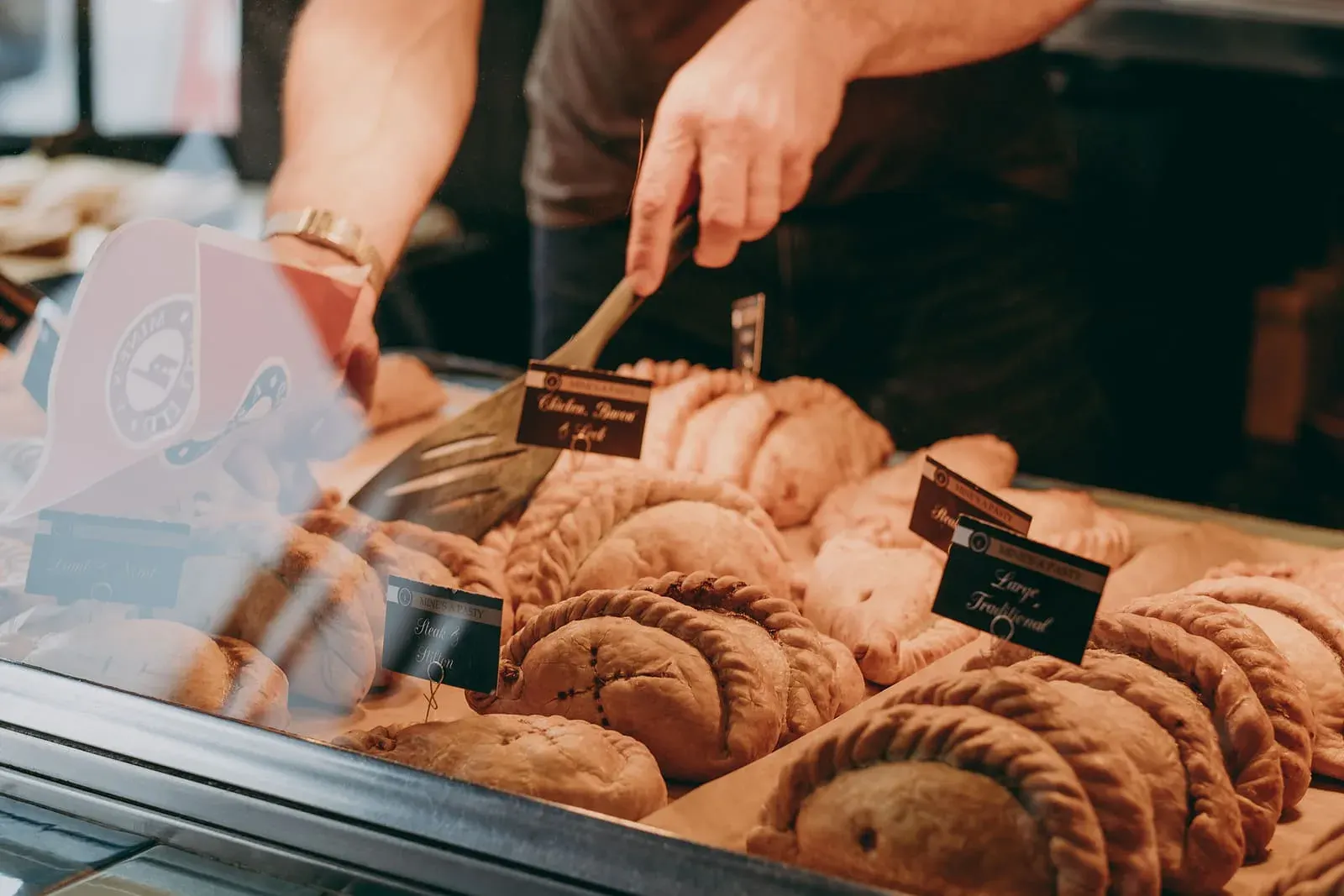
Cornish pasty loyalty: Know that a real Cornish pasty has beef, potato, onion, and swede8 – nothing fancy. Call it a “Cornish pasty” outside Cornwall and expect an eye-roll.
Place names: Take a moment to learn how to say them. Fowey is “Foy,” Launceston is “Lanson.” Even locals argue about some, but showing effort matters. And you can always say, “drog yw genev” (I’m sorry) if you make a mistake.
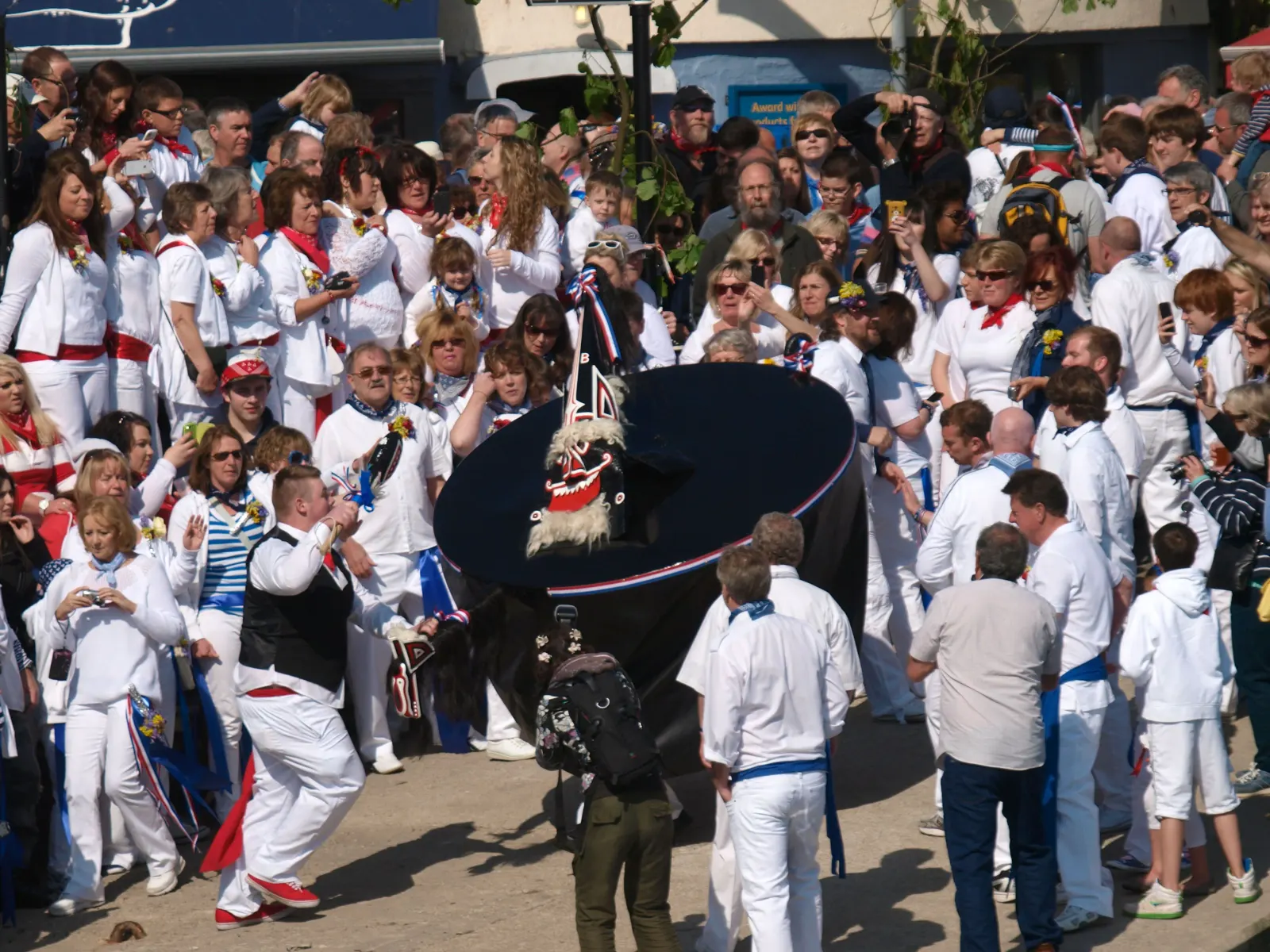
Festivals: If you’re in Padstow for May Day9 or Penzance for Golowan,10 join in. Don’t just watch the parades, follow the music, clap along, and let the chaos sweep you up. And even if you just miss one, there’s more than likely one happening dreckly (in the future).
These little details might seem small, but they’re the things locals notice.
Cultural Etiquette Tips
Folks in Cornwall are warm, but they don’t go in for big displays. A bit of effort is plenty. If you can drop a Cornish phrase into the chat when it feels natural, it’ll be great. Force it every five minutes and it’ll sound off, but use it lightly and people will usually be pleased you tried.
Another tip: laugh at yourself. Cornish humour is quick and teasing, and you’ll often get a lighthearted comment back if you mispronounce something, and if that happens, just roll with it – it’s all part of the exchange. And if you’re lucky enough to be invited into a locals’ round of drinks, don’t forget your turn – nothing ruins goodwill faster than dodging the next order.
Cornish Beverages to Try
Of course, to say “Yeghes da” you’ll want something in your glass, and the good news is Cornwall has plenty of options, and many are deeply tied to the land and sea.
Beer lovers should try Tribute, brewed by St Austell Brewery, or Doom Bar, a favourite from Sharp’s. Cider drinkers often reach for Rattler, which is strong, sharp, and not for the faint-hearted. And perhaps surprisingly mead, that ancient honey drink, is still made here too, tying Cornwall to its Celtic roots.
In recent years, Cornwall has become known for gin, and Tarquin’s Cornish Gin, distilled near Padstow, has won awards worldwide. And for something sparkling, Camel Valley Vineyard produces wines that have been compared favourably to Champagne. Each drink carries a story, shaped by Cornwall’s geography and its sense of identity.
Cheers!
Learning to say “Yeghes da” is more than just picking up a pub trick – it’s a way of stepping into Cornwall’s living culture, and of showing you see more than the coastline and whatever’s on social media. Pubs are still where people gather in Cornwall, for the music, the stories, the laughter, but that’s not the only way in. You can cheer “Kernow bys vyken!” at a rugby game, or just get your cream tea right with jam first. Little things like that show you’ve paid attention.
So next time you’re in Kernow, don’t just sip quietly. Raise your glass and say it the Cornish way like a Cornishman would: “Yeghes da!” Then try a few extra words, join a festival crowd, or just share a laugh with someone over a pasty because that’s how you impress locals – by joining in, even just
Article Sources
- A comparison of the Celtic languages (no date) omniglot.com. Available at: https://www.omniglot.com/language/celtic/comparison.htm Omniglot[↩]
- Dolly Pentreath – The last native speaker of the Cornish Language (2016) Cornwall Guide. Available at: https://www.cornwalls.co.uk/history/people/dolly_pentreath.htm Cornwalls.co.uk[↩]
- Yeghes da Pronunciation (2017) Howtopronounce.com. Available at: https://www.howtopronounce.com/yeghes-da (Accessed: 11 September 2025) How To Pronounce.com[↩]
- Cornwall Community Foundation» Cornwall Place Board (2021) Cornwall Place Board. Available at: https://cornwall.uk/cornwall-community-foundation Cornwall.uk[↩]
- Folk in Cornwall: Music and Musicians of the 60s revival (2025) Artcornwall.org. Available at: https://www.artcornwall.org/features/Rupert_White/Folk_in_Cornwall.htm (Accessed: 11 September 2025) Art Cornwall[↩]
- History Of The Cornish Pasty (no date) Proper Cornish. Available at: https://www.propercornish.co.uk/history-of-the-cornish-pasty Proper Cornish[↩]
- Cornish cream tea etiquette (2025) Cornish Secrets. Available at: https://www.cornishsecrets.co.uk/guide/cornish-cream-tea-etiquette/ (Accessed: 11 September 2025) Cornish Secrets[↩]
- Make your own Genuine Cornish Pasty | Cornish Pasty Association | Genuine Cornish Pasty (no date) Cornish Pasty Association. Available at: https://cornishpastyassociation.co.uk/about-the-pasty/make-your-own-genuine-cornish-pasty/ Cornish Pasty Association[↩]
- Padstow May Day | (2025) Cornwall For Ever! Available at: https://www.cornwallforever.co.uk/year/padstow-may-day (Accessed: 11 September 2025) Cornwall Forever[↩]
- Home – Golowan (2024) Golowan. Available at: https://golowanfestival.org Golowan[↩]
Frequently Asked Questions
In Cornish, a common way to say hello is:
-
Dydh da (pronounced roughly dith da) – literally “good day”
Other greetings you might also hear are:
-
Myttin da – good morning
-
Gorthugher da – good afternoon
-
Nos da – good night
It comes from a contraction of “Go on then” → “Go ‘ed on” → “Geddon”.
In Cornwall, people use it like a casual hello, encouragement, or even as a cheer, a bit like saying:
-
“Alright!”
-
“Let’s go!”
-
“Come on!”
It comes from Kernow, the Cornish name for Cornwall, and the suffix -ek, which means relating to or of. So literally, Kernowek = “Cornish (thing)” → specifically used to mean the Cornish language.
Ansom (sometimes spelled ‘ansome) is Cornish dialect English, not the Cornish language (Kernewek).
It means “great,” “excellent,” “lovely,” or “attractive.”
It’s often used as a friendly compliment, a bit like saying “nice one” or “mate”.
Examples in Cornish dialect:
-
“Proper job, me ‘ansome!” – “Well done, my friend!”
-
“Alright, ‘ansome?” – “Hello, how are you?”
In Cornish, “hello” is Dydh da, “goodbye” is Dha weles, and “thank you” is Meur ras. These simple greetings are easy to use in daily conversation and help you connect with Cornish culture.
You can learn Cornish online through resources like Kernowek.org and the Cornish Language Board, or via apps, courses, and local language classes in Cornwall. These offer lessons for beginners and advanced learners to speak, read, and write Cornish.
As of the 2021 UK Census, 563 people reported Cornish (Kernewek) as their main language in England and Wales. However, Cornwall Council and language surveys estimate that 2,000–5,000 people have at least basic Cornish speaking ability, with a few hundred more fluent or advanced speakers, thanks to ongoing revival efforts.
In Cornish, toasts and drinking expressions include “Yeghes da!” (Cheers) and sayings like “Bys vyken” (A long life) or “Gwell yw peus an bro” (Better is peace in the country). These phrases reflect Cornwall’s friendly, traditional drinking culture.
Written by
Lisamarie is a writer and researcher with a long-standing love for Cornwall – its towns, coastlines, folklore, and everything in between. Most of her work involves blogging and articles, often focused on places and people, which pairs neatly with her fiction writing since both sides of her work let her balance research with imagination (and indulge a fondness for obscure facts). She lives with her husband, daughter, and a cat called Cheryl in a cottage in the Kent countryside, where she writes, paints, and watches horror films.
35 articles published on Cornwall.co.uk
Read more from Lisamarie Lamb →
Comments
No comments yet — be the first to share your thoughts.
Leave a comment
Your email won’t be published. Comments are checked before they appear.